I had the great fortune of working with three very accomplished futurists in the production of our upcoming course titled: Reimagining the Future – A Journey through the Looking Glass. SAP’s Susan Galer interviewed these futurists in support of the course launch on May 23rd. The SAP Post provides a glimpse into the course, with thoughts from futurists and industry leaders. Here are several quotes from the post.
Author: Frank Diana
Human Traits in an Exponential World
Our exponential world puts increasing pressure on our capacity to innovate and the speed and quality of idea flow. This dynamic coupled with the speed at which automation is likely to occur brings our right brain characteristics front and center. Creativity, imagination, big picture vision, emotional and social intelligence, empathy, and other human characteristics are critical to navigating in this emerging future. As automation accelerates, these human traits become even more critical. In a recent report by Citi on Technology at Work, the authors point to our propensity for social interaction, communication, and empathy being something machines can never replace.
Continue readingDigital: We’ve Only Just Begun
“Digitization has barely started, and so has the accompanying upheaval”
– Jacques Bughin, Mckinsey
That’s a scary thought – but accurate. That thought comes from a recent Mckinsey Insights post titled: Think digital is a big deal? You ain’t seen nothing yet. Thanks to Heidi Schwende for sharing this article.
Their research finds that digital technologies and processes have penetrated only about 35% of an average industry, which says that a third of the products and operations that could be digitized have been. Yet this is more than thinking about digitizing the other 65% – it’s a moving target. The phrase “You ain’t seen nothing yet” captures that well. As the innovation accelerators that I describe in my Anchor Visual accelerate, digital is merely the foundation. A reimagined world is built on that foundation – and without it, organizations cannot participate in Reimagination. Here are other key insights from the Mckinsey post:
Reimagining the Future – A Journey Through the Looking Glass
I have spent the better part of two months filming an online thought leadership course focused on our emerging future. The free course will be available starting May 23rd. I had the pleasure of working with futurists Gerd Leonhard, Gray Scott, and Chunka Mui. In addition, I was joined by Element Fleet Management executive Michele Cunningham, as well as TCS CTO Ananth Krishnan, and BRP CIO Hassan El Bouhali.
A video promo of the course along with the course description are available here. I hope you take the time to journey with me through the looking glass. course summary and bios for my guests are also included below.
How will we Interact in the Future?
In recent post on the transformation of interaction, I talked about the changing ways in which we interact with our machines and each other. These changes combine with the emergence of ecosystems to complicate the experience journey. Well, if you saw my last post on our possible future, that journey could get very complicated. I’ve expanded my original visual to incorporate three additional categories of interaction, and some of what science and technology have in store (potentially) for our interaction paradigms. Continue reading
A Glimpse into a Possible Future
I saw a glimpse into a possible future in a book titled Homo Deus, written by Yuval Noah Harari in 2016. Before his journey forward, the author explores the past. His conclusions challenged my core belief system in a very uncomfortable way. His arguments were logical and thoughtful (whether I agree with them or not), and based on a foundation of life science, algorithms, and biotechnology. This look forward once again raises the question of Ethics. The author himself makes this point when he says:
“The rise of AI and biotechnology will certainly transform the world, but it does not mandate a single deterministic outcome. All the scenarios outlined in this book should be understood as possibilities rather than prophecies. If you don’t like some of these possibilities you are welcome to think and behave in new ways that will prevent these particular possibilities from materializing.”
I’ve given the main themes of this possible future a label and provide a quick look using excerpts directly from the book. You decide for yourself if this future represents an enhanced or diminished humanity.
See the Future, Rehearse it and Adapt to the Inevitable Shifts
In my last post, I described a Sense and Respond model that sits at the heart of several activities, including scenario, opportunity, and risk analysis. As complexity and pace continue to intensify, uncertainty increases. To survive in this Emerging Future, we must embrace a framework for future thinking, and an organization that can adapt as it shifts. In essence, we must see the future, rehearse it, continuously monitor for shifts, and adapt as the shifts occur. A sense and respond model sits at the core of the framework – but represents the biggest cultural challenge.
Uncertainty Drives the need to Sense and Respond
“The rhythm of technology is changing the rhythm of business, and we’re all going to need to adapt” – Jeff Gothelf and Josh Seiden, Authors of Sense and Respond
Back in 2013, in a post on sense and respond systems, I talked about the drivers that would push organizations towards a sense and respond paradigm. There are no bigger drivers than volatility and uncertainty, and nearly four years since that post, that fact is becoming clearer. In a recent book by Jeff Gothelf and Josh Seiden, they elevate sense and respond to a position that is core to achieving an adaptive enterprise. They see feedback loops and a movement away from command and control as the enabling mechanisms that allow us to thrive in the digital age.
Continue readingWho Owns Your Data?

Intersections Promise to Drive Multiple Paradigm Shifts
Since the time I completed this post on Disruptive Power and Intersections, it continues to receive attention. It is by far the most effective component of any Future Thinking effort. Given the continued traffic to this two year old post, I am updating with current content. The visual below connects the intersections of 8 combinatorial scenarios. This is not an exhaustive set of connections; it is strictly intended to describe the scenarios at a high level. 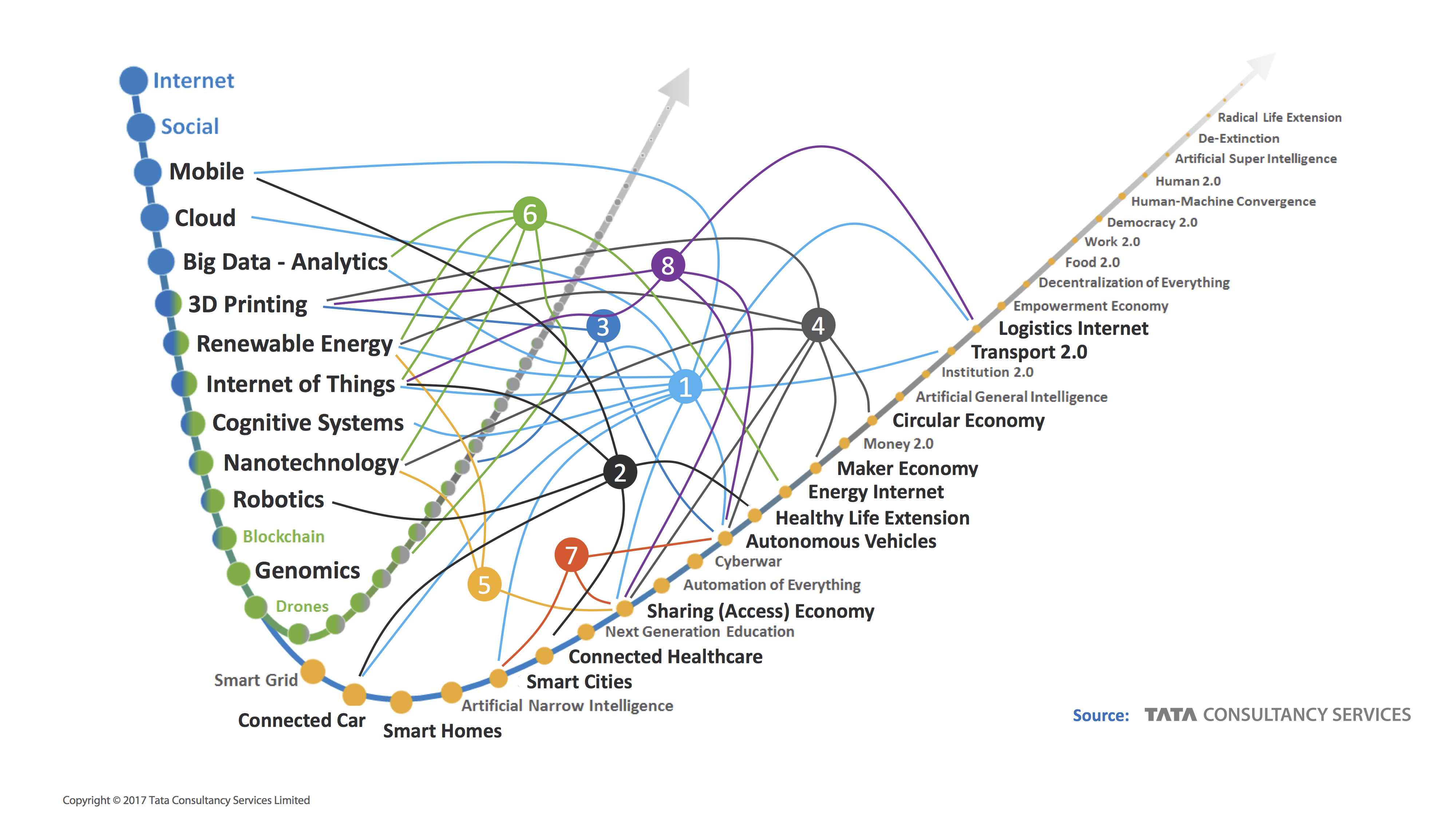
Figure 1: Intersections amplify both power and impact
The Experience Journey Gets Complicated
My ongoing work on emerging future scenarios has driven a renewed focus on experience. Several factors are converging to shift the experience end game; specifically, the evolution of Ecosystems and the transformation of Interaction. These two forces – themselves the result of combinatorial innovation – are converging. While the way we interact continues to shift, a parallel evolution towards ecosystems is occurring. This ecosystem evolution introduces systemic complexity and combines with a shifting interaction paradigm to alter the way we think about experience.
 Figure 1: Phase One of a pending shift in interaction paradigms
Visualizing our Emerging Future
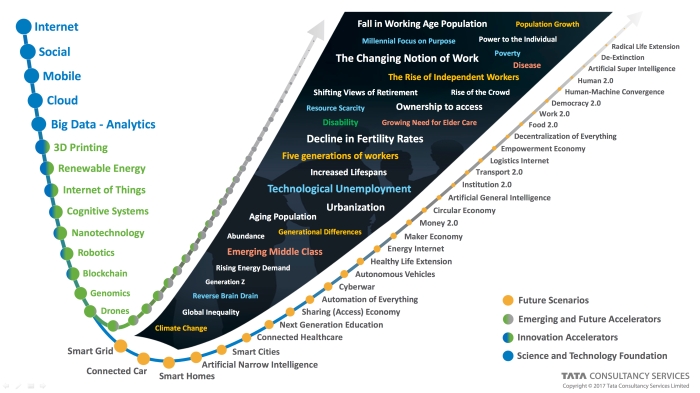
As the pace of science, technology, and societal change accelerates, a vision of our future is emerging. Many future scenarios are viewed as science fiction, or thought to have timelines that are too far into the future to worry about. I hold a firm belief that these timelines are collapsing and future scenario analysis is critical both at a business and societal level.
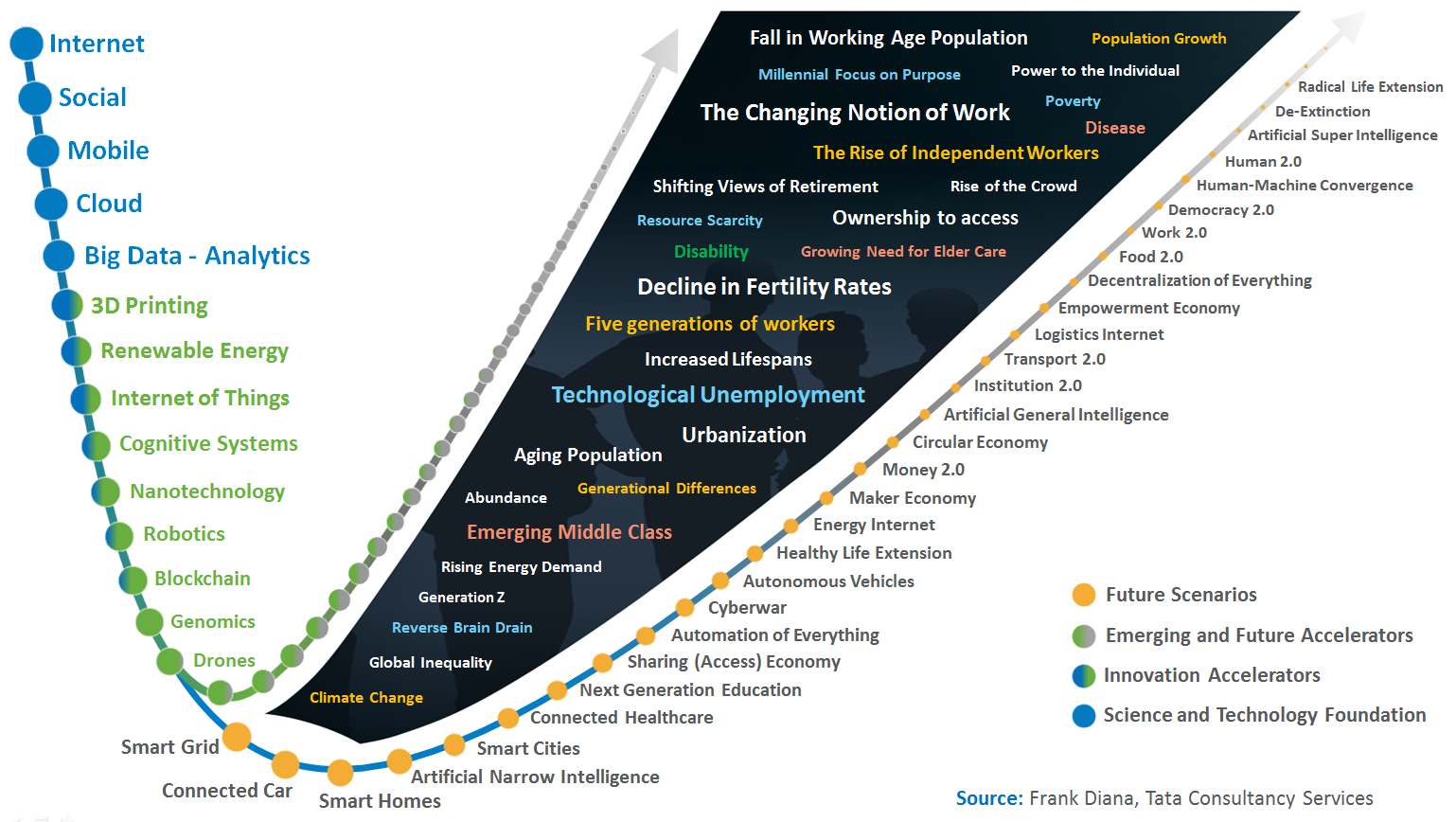
I have used this visual as a driver of future scenario analysis. It has been captured and utilized in workshop and events. It is described in a post on Connecting Dots, which I view as a critical leadership trait.
The Collapse of Traditional Structures: An Ecosystem Evolution
In my previous post on the Transformation of Interaction, I mentioned the emergence of ecosystems and their likely impact on how we experience life. Together, the evolution of interaction and ecosystems plays a significant role in how we view experiences going forward. I referred to this in 2013 as the movement towards Next Generation Experiences. In the coming months, I will share a point of view that captures a finite set of future ecosystems. To position that discussion, it is helpful to look at how this evolution may ensue.

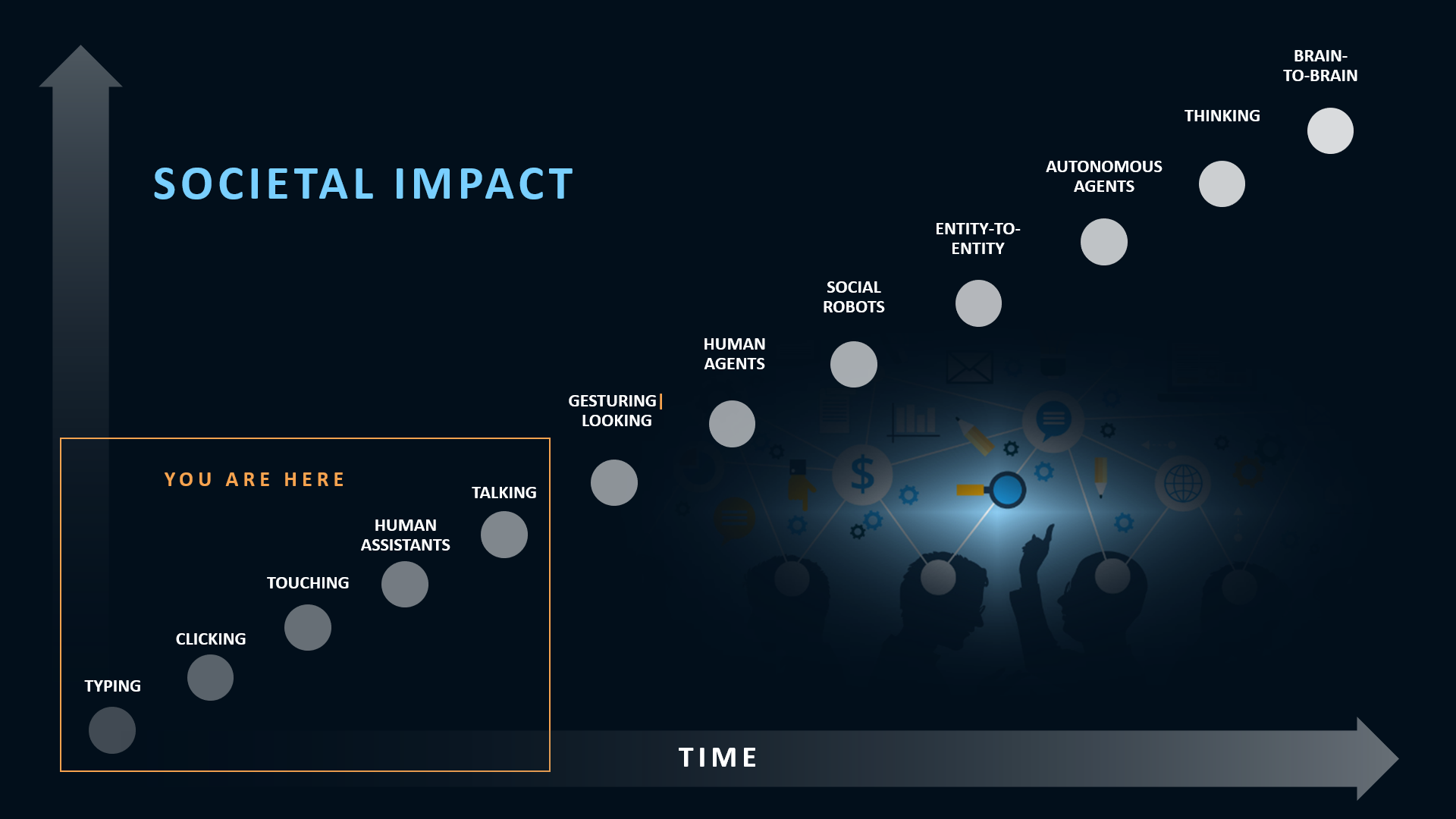
The Transformation of Interaction
Back in 2013, as Smartphone use was growing, I wrote about Next Generation Experiences; viewing customer experience through a lens of constant change, where failure to address foundational elements meant falling further behind. Since then, our mode of interaction witnessed a third transformation, as touch became a critical piece of our everyday experiences. Now, we find ourselves approaching the next significant change in interaction paradigms: the Fourth Transformation driven by mixed reality.
The Growth of the Autonomous Car Market
In the last three years, I have written about the emerging Mobility Ecosystem and its Disruptive Potential. In 2016, we witnessed the acceleration of this future scenario and the movement from science fiction to something that feels very real. Here is a great infographic that looks broadly at the autonomous car market, the many financial, practical and scientific challenges involved in the development of these vehicles, and these other topics:
- The history of autonomous cars
- The challenges involved in engineering the coveted autonomous car
- How DARPA have been involved in testing driverless cars
- The advent of Google X
- The science behind autonomous vehicles
- What the future holds for the autonomous car market
- Which car brands have driving patents for autonomous vehicles
- The projected launch date for driverless card (for test or commercial purpose)
- Projected market penetration of autonomous cars in the UK
- SAE levels explained
Technological Tipping Points
The World Economic Forum’s annual meeting occurred last week in Davos with a theme of responsive and responsible leadership. The session had me thinking back to research conducted by their Global Agenda Council in March 2015 on the Future of Software & Society. The research focused on technological tipping points and the perception of when these tipping points would occur. The responses from a community of over 800 executives and experts from the information and communications technology sector were used to produce a timeline of possible tipping points ranging from 2018 to 2027.
Continue reading
AI and the Conversational Era
On January 17, I had the pleasure of participating in another Game Changers show Presented by SAP focused on partnerships: Changing the Game for Digital Transformation. I was joined by Robin Kearon, SVP Channels and Alliances, Kore Inc. The show was once again expertly moderated by Bonnie D. Graham. You can listen on demand at your convenience.
TOPIC / EPISODE TITLE
Connecting People to Technology: AI and the Conversational Era
Podcast with Gerd Leonhard
This morning I had the pleasure of discussing the future with Gerd Leonhard. Gerd was listed by Wired Magazine as one of the top 100 most influential people in Europe. His recent book on Technology vs Humanity begins the dialog on ethics in an exponential world.
Our theme was reimagining the future and the topics ranged from artificial intelligence to exponential progression.
2017 Predictions
“I am blown away by how palpable the feeling of exponential change has become. I’m also certain that 99.999% of humanity doesn’t understand or appreciate the ramifications of what is coming”
-Peter Diamandis
On Wednesday January 4th, I participated in a Game Changers radio program focused on predictions for 2017. The program, hosted by Bonnie D. Graham, included 15 other guests in an hour long show made up of four segments. A rebroadcast can be found here.
 Reimagining the Future