The Driverless Car: Fast Lanes or Speed Bumps?

The driverless car is one of many emerging future scenarios that drive multiple paradigm shifts. As these shifts converge, they intensify the critical need for leaders to think differently about a world where the future arrives faster than people think. This speed is unappreciated, undermining the levels of urgency required to survive in this exponential age. I sat with Chunka Mui recently to discuss these shifts, using the driverless car to explore the challenges of our emerging future.

Chunka Mui is the managing director of the Devil’s Advocate Group, a consulting group that helps organizations design and stress test their innovation strategies. As a consultant on strategy and innovation, Mr. Mui has spent considerable time analyzing the driverless car scenario. He asked a question in his book The New Killer Apps about autonomous vehicles and what happens if traffic accidents are reduced by 90% as Google predicts. This simple question makes visible the broad and deep implications of these future scenarios. As society responds to their implications, new ecosystems emerge that alter our world. In this case, the driverless car is one of numerous components of an emerging mobility ecosystem that is defined by the responses that are playing out right now.

I will share insights from our interview in a series of posts, starting with this one. In this segment of the interview, Mr. Mui and I discussed the growing need to rehearse the future.
Continue reading

Women Leadership in an Exponential World

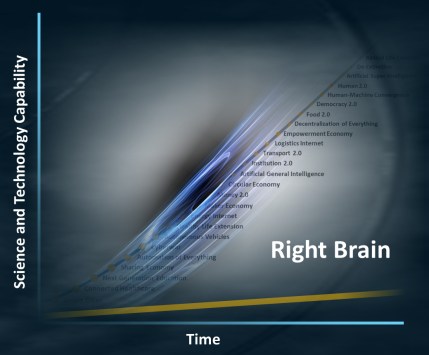
I was honored to deliver the opening keynote at the SIM Women Executive Leadership Forum on Thursday May 5th. SIM Women Founder Kristen Lamoreaux did a wonderful job organizing the program. I met some fascinating leaders that selflessly give their time to their communities and society in general. As we look at the challenges that face our world, these are the type of leaders I want to stand with. In a room full of outstanding women, I saw the leaders of our future. As our exponential pace accelerates, a gap widens between exponential progression and our linear and incremental progress. This gap represents disruptive stress or opportunity – and increasingly, it is our right brain characteristics that help determine which.

Linear to Exponential Shift

Creativity, imagination, big picture vision, emotional and social intelligence, empathy, and other human characteristics are critical to navigating in an exponential world. As automation accelerates, these human traits become even more critical. In a recent report by Citi on Technology at Work, the authors point to our propensity for social interaction, communication, and empathy being something machines can never replace. Women excel in these areas, positioning them as leaders of our emerging future. In a different Citi report on Women in the Economy, they highlight the importance of women in the labor market, where a 50% reduction in the gender gap can lead to a 5% increase in global GDP. Women are uniquely positioned to play a critical role in the digital economy.

At this SIM event, I focused on our emerging future and the unlearning that it requires. The last time we faced a similar scenario was a century ago, as a shift occurred from the steam engine era to the electricity era. That transition did not go well – something I’ll explore in future posts. We find ourselves approaching another transitory point in history. Will we learn from history? My focus remains on this transition and the mindset shift so crucial to navigating the change. This time, I believe women leadership could be the difference. You can view the presentation Here.

Our Emerging Future

In my last post, I added more future scenarios to this visual describing the complexity and impact of our emerging future. The one piece left unfinished was the expansion of innovation accelerators to include emerging and future accelerators. With input from TCS CTO Ananth Krishnan, I have added a number of accelerators to the visual.

emerging-and-future-accelerators

Continue reading

Cyberwar, De-Extinction, and Precision Agriculture

Click to Enlarge

I’m wrapping up another book titled The Industries of the Future. Author Alec Ross explains the advances and stumbling blocks that emerge in the next ten years, and describes a way to navigate them. He is one of America’s leading experts on innovation, serving four years as Senior Advisor for Innovation to Secretary of State Hillary Clinton. Mr. Ross is currently a Distinguished Visiting Fellow at Johns Hopkins University. His book identified three future scenarios that I have added to the visual below. These scenarios are Cyberwar, Precision Agriculture, and De-Extinction.

Continue reading

The Modern Workforce: Four Crucial Shifts

Here is the summary of a recent article I wrote for the Insurance Innovation Reporter. Please visit their site to see the full Article.

Accelerating advancements in science and technology have set the foundation for massive shifts in the decades ahead, yet we continue to operate on a platform meant for a different time. This platform has hit a productivity wall, and a new emerging platform has changed the expectations of those we engage with. As they advance, these shifts will challenge our long held beliefs and intuition, while changing long standing business models across industries. In the face of this, organizations must unlearn what they know and embrace new ways of thinking. This is especially important in our approach to the workforce and the evolution of our management paradigm. How we lead the modern workforce will require change, and it starts with four crucial shifts: embrace a new way of working, move towards a collaborative management paradigm, value human characteristics, and plug into the emerging platform.

Technology, Social Change, and Future Scenarios

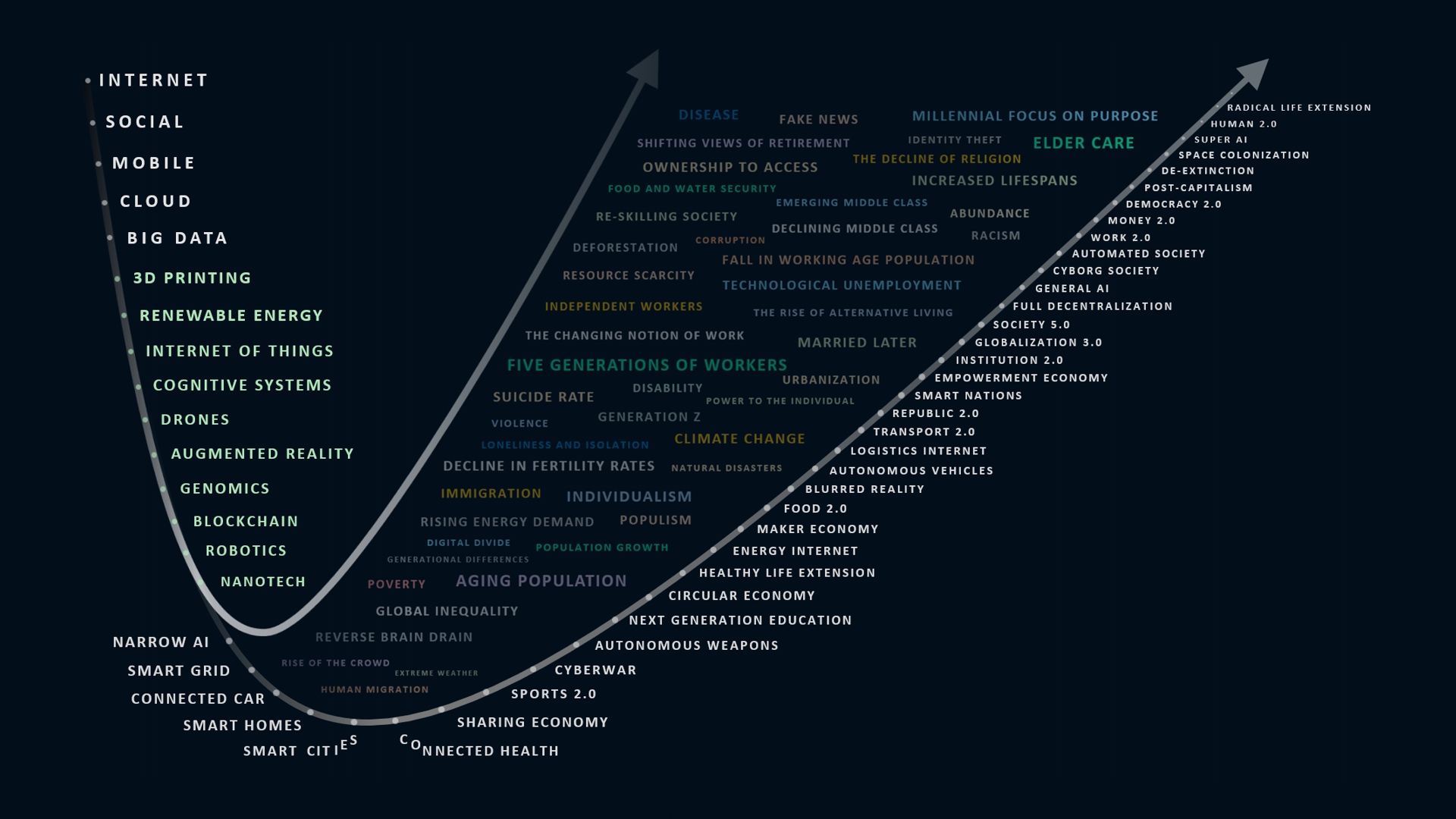
If we are to Think about the Future in a way that helps us thrive in that future, we must excel at connecting dots. I developed the Future Scenarios visual in an attempt to help visualize the dots, as well as the various intersections that amplify the impact of those dots. In parallel with this scenario view, I have looked at various aspects of social change that both influence and impact these scenarios – and vice versa – but until now, those views were separate. Convergence is occurring not just across the technology and future scenario curves, but also the various aspects of social change. So in the interest of maximizing future thinking impact, I have combined the two views and will describe a connecting the dots scenario. First, the new future scenario visual:

emerging-future

Continue reading

Transforming the Automotive Industry

A new McKinsey report focuses on the Disruptive trends that will transform the auto industry. Their work suggests that the world economies are dramatically changing via developments in emerging markets, the exponential pace of technology, sustainability policies, and changing consumer preferences around ownership. They see the rise of four disruptive trends in the automotive sector: diverse mobility, autonomous driving, electrification, and connectivity. For me, these findings underscore the movement from our current automotive industry to the future Mobility Ecosystem. If we can make the mental model shift from our long standing view of Industry and competition, to this emerging view of ecosystem and shared value, we can begin to visualize the different ways value will be created and captured in the future.

Continue reading

Game-Changers Radio Focuses on the Rising Billions

I enjoyed participating in another episode of Coffee Break with Game-Changers this morning. The show’s title was: The Digital Economy is about to get more connected: The Rising Billions. I hope you get the chance to listen to the rebroadcast. The show was expertly moderated by Bonnie D. Graham, and my fellow panelists included Dennison DeGregor, the Worldwide Group Executive for CX Services at HP, and Paul Donovan, Senior Director in Solution Management at SAP.

The show abstract: According to Peter Diamandis of Singularity University, the most dramatic (positive) change in our global economy is about to occur between 2016 and 2020. He says that 3 to 5 billion new consumers, who have never purchased anything, never uploaded anything and never invented and sold anything, are about to come online and provide a mega-surge to the global economy. He calls this group the “Rising Billions.”

Technology giants like Google, Facebook, and SpaceX are all working hard to make this happen, and when it does, connectedness will take on new meaning. What will it mean to have a connected business in 2020? Now is the time for your company to begin addressing the fast-approaching era of hyper-connectivity in your business networks and turn it into sustainable growth opportunities. If you thought you were challenged to create the “The Internet of Me” today, that challenge is about to get much more complex.

Continue reading

Creating a Wellness Ecosystem

I am a firm believer that platform supported ecosystems will ultimately displace our current industry constructs. Given the uncertain nature of this transition, Future Thinking is a critical skill for any leader or organization to embrace. I have used the Driverless Car scenario as a way to describe future thinking and in this case, the progression towards a mobility ecosystem. I did a similar piece on Connected Health, which is likely the early manifestation of an emerging wellness ecosystem. This recent report on The Future Health Ecosystem provides a glimpse into the transition towards this wellness ecosystem. The author describes an expected shift of $1 trillion of the $3 trillion spent on healthcare to new players and business models; which could have devastating consequences for incumbents.

A Forbes article on this recent report looks at the major life transitions that the two largest generations in history are in the midst of – and the profound impact it will have on healthcare. Some of the very interesting findings – and clear drivers of a wellness ecosystem – are:

Continue reading

3 Billion more People Online by 2020

Join me on Game Changers radio on Wednesday February 10th at 11:00 EST. We will be discussing the rising billions and their world changing implications

The buzz: Acting hyper. Peter Diamandis predicts the most dramatic positive change in our global economy will occur between 2016-2020, when 3–5 billion new consumers–who’ve never purchased, uploaded, invented or sold anything–come online, sparking a hyper-connectivity mega-surge. Who are they? The “Rising Billions.” Tech giants Google, Facebook, and SpaceX are working to make this happen. How will your company turn the resulting complex hyper-connectivity into sustainable growth opportunities? The experts speak. Frank Diana, TCS: “Three billion new minds are about to join the global conversation” (Peter Diamandis). Dennison DeGregor, HP: “By end of 2017, the CMO will have larger budgets for technology than the CIO” (Gartner). Paul Donovan, SAP: “The day science begins to study non-physical phenomena, it will make more progress in one decade than in all the previous centuries of its existence” (Nikola Tesla). Join us for The Rising Billions: Business Networks and the Digital Economy.

Source: Coffee Break with Game-Changers | VoiceAmerica™

The Rising Billions

According to Peter Diamandis of Singularity University, the most dramatic change in our global economy is about to occur between 2016 and 2020. He says that 3 to 5 billion new consumers, who have never purchased anything, never uploaded anything and never invented and sold anything, are about to come online and provide a mega-surge to the global economy. He calls this group the “Rising Billions.”

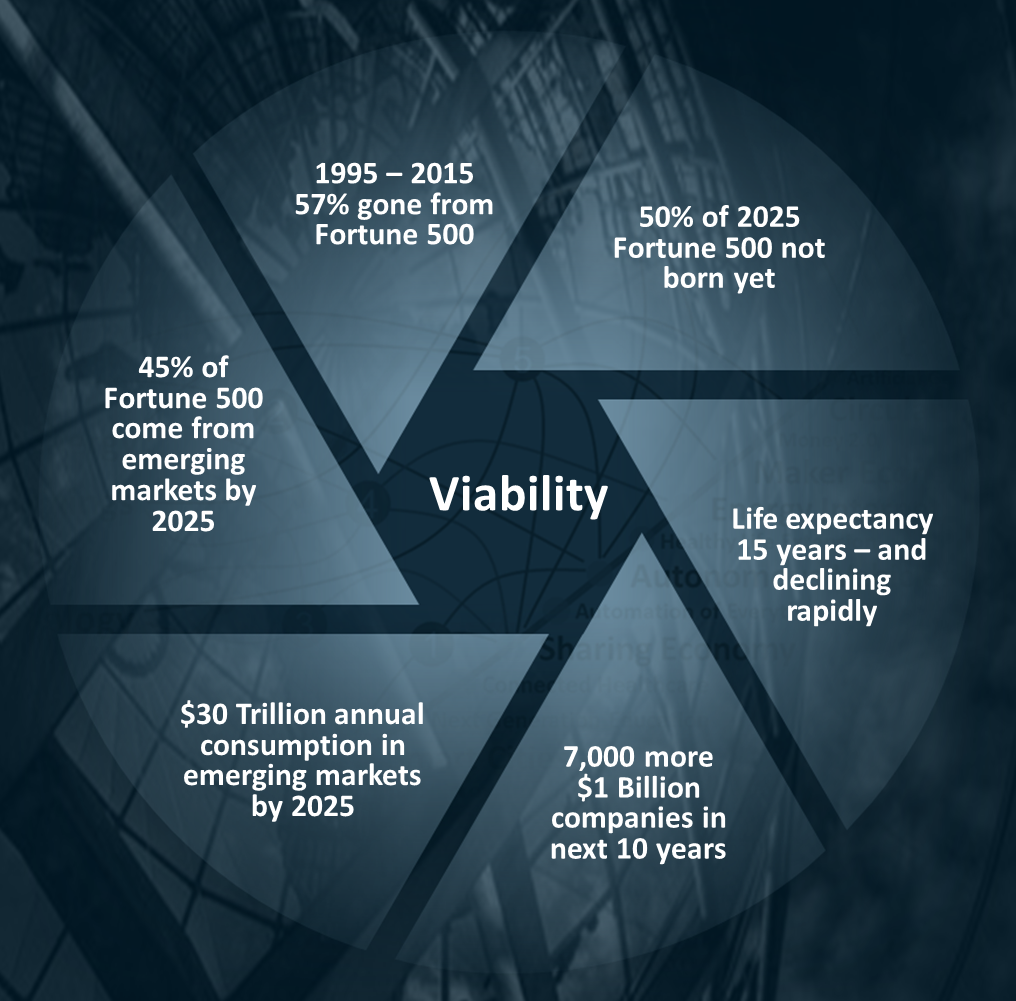
Technology giants like Google, Facebook, and SpaceX are all working to connect the world. Once connected, this exploding online community introduces new markets, creating a $30 trillion consumption opportunity by 2025 – and emerging markets will grow 75% more rapidly than developed markets. As discussed in a recent post on Changing Beliefs, this shift from developed to emerging markets requires a change in the approach used to win in these markets, as products and services from developed markets cannot simply be transplanted into emerging markets. But these rising billions are more than a market opportunity. They are a source of ideas, innovation, knowledge, skills, capacity, passion, learning, insight, and foresight.

Continue reading

The Future of the Future with Game Changers

I participated today in a new SAP sponsored thought leadership series titled the Future of the Future. Here is a snippet from the opening talking points:

The buzz: Wow! McKinsey estimates the 2025 potential annual economic impact of the Internet of Things at $11 trillion, 11% of the world economy.

The rebroadcast of the radio show is now available.

Source: The Future of the Future with Game Changers, Presented by SAP | VoiceAmerica™

A deeper dive into the world of the Internet of Things can be found here.

The Future of the Professions: Institution 2.0

In a recent book titled The Future of the Professions, the authors describe an emerging paradigm shift in what I view as The Year of Shifts. They see significant change in the way expertise is made available to society, and envision a time when professionals will no longer be the dominant interface between lay people and the expertise required to address their own particular circumstances. The main hypothesis explored centers on a technology-based Internet society, and increasingly capable machines. These machines operating on their own or with non-specialist users, will take on many of the tasks that have been the realm of the professions. They predict an incremental transformation in the short term, with an eventual dismantling of these traditional professions.

This line of thinking fits with the Structural Change enabler as viewed through the lens of transformation in the digital age. It has prompted me to add another future scenario to my scenario visual, this one labeled “Institution 2.0”.

Continue reading

IoT: Unleashing the Mother of all Infrastructures

On a January 26th Game Changers Radio show, a panel of Futurists will focus on the Internet of Things (IoT) and its world changing implications. Here are some of my thoughts in advance of that discussion. I’ll start with a quote from Carl Bildt, Chair of the Global Commission on Internet Governance and a member of the World Economic Forum’s Global Agenda Council on Europe:

“Very soon the Internet of Things will become the Infrastructure on which all other infrastructures are based.”

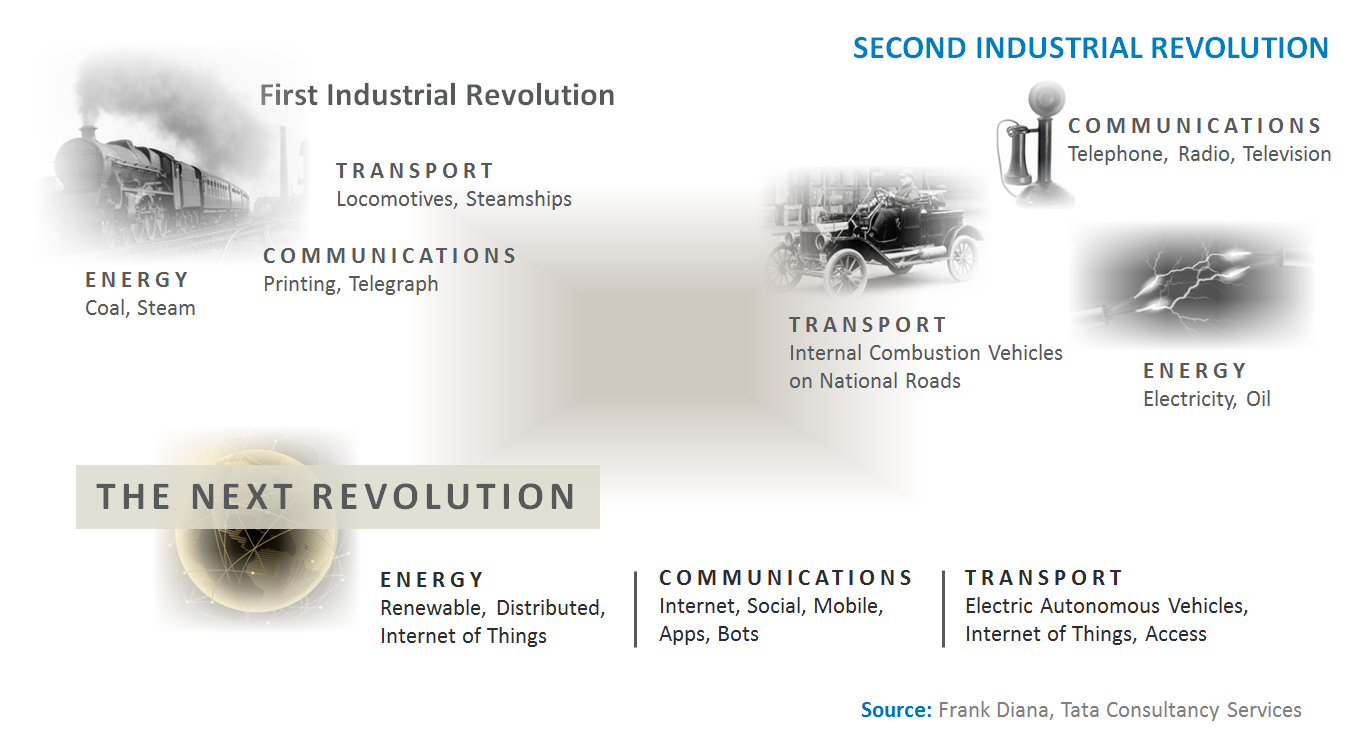
That bold statement supports thinking in some circles that a General Purpose Technology Platform (GPT)  is emerging, the foundation of which is The Internet of Things. This emerging GPT likely alters our world more dramatically than the GPTs of the first and second Industrial Revolutions:

general-purpose-technology-platform

Continue reading

The Year of Shifts

The year of shifts is upon us. 2016 will ultimately be viewed as the bridge to a different future; a year where our intuition and beliefs will be reset. Accelerating advancements across science and technology have set the foundation for these shifts. Driven by societal and economic challenges, we will leverage this foundation to change current institutions and build new ones. To succeed, organizations of all types must view transformation through a different lens; one that enables their role in this future. In my current series, I am focusing on the thirteen (13) key enablers of future viability. The first post explored Structural Change. In this post, I will look closer at the pillars of transformation, and delve into the second enabler: a holistic digital foundation.

the-pillars-of-transformation

Continue reading

2016 Predictions

On Wednesday December 16th, I will participate in another Game Changers radio program with host Bonnie D. Graham. She will be joined by 16 guests that will share their predictions for 2016. To prepare for the show, I pulled together my predictions across six broad categories. These predictions are a mixture of leading indicators and hope. Here it goes…

Emerging Platform

Digital today has a bolt-on feel to it. Dominated by Marketing, the initial focus was channel oriented, isolated in nature, and layered on top of that which existed. It expanded to support a narrow customer experience and efficiency agenda. I say narrow, because digital is primarily applied to existing process, as opposed to leveraged to re-imagine process. As the main digital forces converge (Social, Mobil, Big Data, Analytics, and Cloud), a platform emerges to enable re-imagination. Yet Digital to date remains isolated on two levels: within company silos and across the main forces.

Continue reading

Future Structures

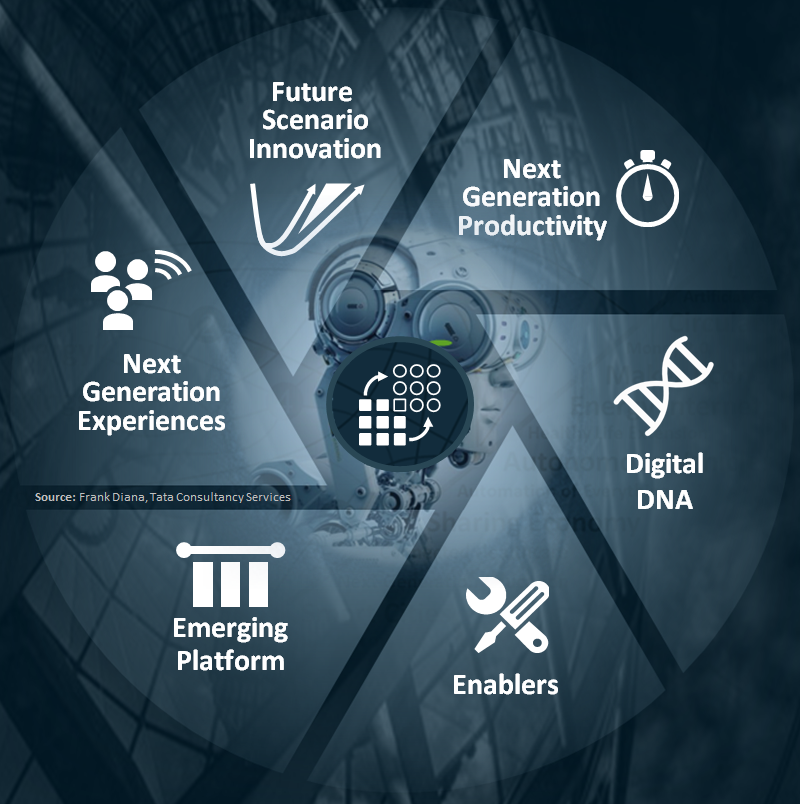
Some time ago, I did a series on the enablers required to propel organizations into tViabilityhe future. With the passage of time, and after considerable dialog, the time has come to update that point of view. In continuing with this future of business series, the next several posts will provide an updated list and perspective on these enablers. Leaders must effectively manage the exponential forces that drive them on a path to viability. In the absence of a burning platform, the growing gap between these exponential forces and the linear constructs of our day should spur leadership action. Continue reading

Competing in the Age of Disruption

This future series continues with a look at a new book by Geoffrey Moore titled Zone to Win: Organizing to Compete in an Age of Disruption. In my last post on Emerging Models, I looked at a model based on business type. The model explored by Mr. Moore is based on zones, and came to life in his work with Salesforce.com and Microsoft. With Salesforce, the model supported a focus on disruption (offense), and with Microsoft, it supported a posture against disruption (defense). The four zones as identified by the author are depicted in the visual below:

Continue reading

Emerging Models for the Future

This future series continues with a look at a Deloitte report titled “The hero’s journey through the landscape of the future”. The report focuses on the organizational journey required to re-position for viability in the future landscape. As the landscape simultaneously fragments and consolidates, the authors see these forces and others changing the nature of relationships among businesses. A very good framework for this re-positioning is presented, along with great descriptions of the big shifts that are driving the need. The report sets the stage by identifying the main drivers of this future business landscape:

  • Pressures on companies
  • Pressures on individuals
  • Eroding barriers: Lowered barriers to entry, commercialization, and learning
  • Fragmentation: Staying niche, nimble, and small is the new goal for many
  • Concentration: Emerging scale-and-scope operators will fuel and benefit fragmentation
  • The need for mobilizers to connect and mobilize the ecosystem

Continue reading

A Report on Creative Disruption

A recent report by Bank of America Merrill Lynch sheds more light on our future focus. The authors see cyclical and secular trends transforming the world at a rapid and meaningful pace. They find a common denominator in the form of three Ecosystems of Creative Disruption, and see them reducing barriers to entry for new businesses. These ecosystems allow companies to improve productivity and time-to-market while allowing broader customer reach. In a big shift, the ecosystems redefine competitive advantage by leveling the playing field between large and small companies.  Success is therefore dictated by imagination and ability to maximize the ecosystem. The three ecosystems are:

Continue reading