The first five posts laid the foundation for understanding why the world feels dense, fast, and tightly connected. We explored the sense that something in the operating logic of civilzation is shifting. We looked at phase transitions, the four-stage pattern that repeats across history, and the seven domains that structure civilization. The last post introduced the three deep drivers that push civilizations across thresholds: growing convergence, system-shaping technologies, and the acceleration of knowledge. Taken together, they help explain why pressure builds, why systems couple, and why some ages move differently than others.
(more…)Tag: Technology
-
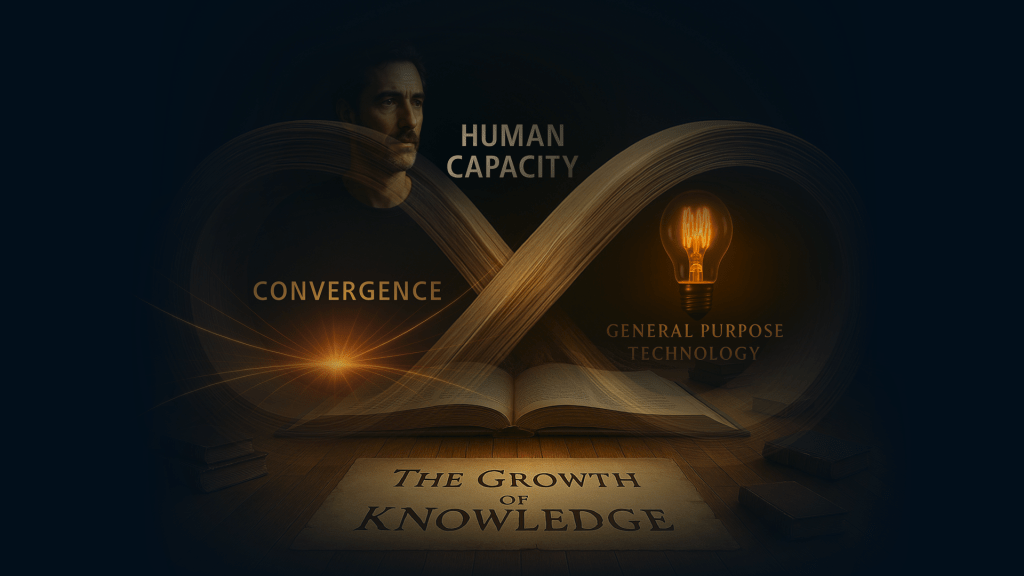
The Three Drivers That Push Civilizations Across Thresholds
(more…)
The earlier posts introduced the sense that the world’s operating logic is beginning to shift, explored what compression feels like in daily life, and laid out the four-stage pattern that has shaped every major transition in history. Post Four explained why those transitions do not come from singular breakthroughs but from the interaction of multiple domains moving together. Before we can measure that interaction in today’s world, we need to understand the deeper forces that give convergence its power. These forces have shaped every civilizational transition across the long arc of history. They determine when pressure accumulates, how tightly systems couple, and what pushes society toward a threshold. -

Why No Single Force Changes The World
RECAP FROM THE SERIES SO FAR
In the first post, I described the sense that the world’s operating logic is turning over. In the second, I explored what that feels like in daily life — the tightening, the pressure, the sense that everything is connected. The third post revealed the pattern beneath these moments: a four-stage rhythm of accumulation, compression, instability, and reordering that has shaped every major transition in history.
This post turns to a deeper question. If these shifts are so powerful, what triggers them? The answer is rarely what we expect.
(more…) -
The Ambient City: When Intelligence Becomes Infrastructure
Across every domain I have explored – from education and energy to health, governance, and human longevity – one pattern keeps reappearing whenever society encounters a General Purpose Technology. These are the rare breakthroughs that do not simply make us more efficient but fundamentally restructure how civilization operates. Language, writing, the printing press, the steam engine, and electricity each changed not only what we did, but who we became. Artificial intelligence may join that lineage.
(more…) -
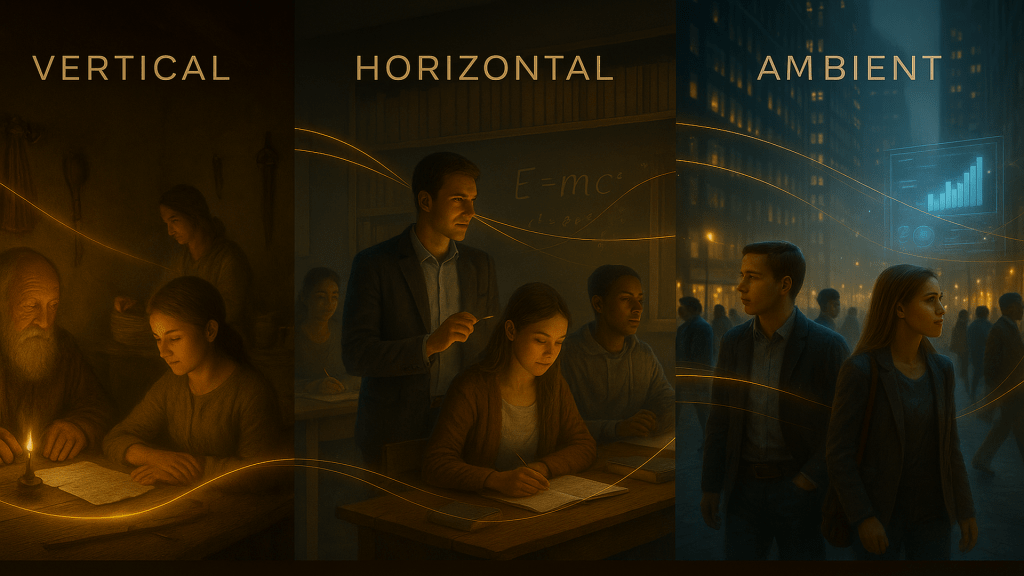
The Evolution Of Learning: From Vertical To Horizontal To Ambient
For most of human history, learning was vertical. Knowledge flowed downward, generation to generation, through families and traditions. A farmer taught his child the rhythms of the land, a craftsperson trained an apprentice at the workbench, a parent passed on rituals of faith and culture. The family was the classroom, and survival depended on what could be remembered and repeated.
(more…) -
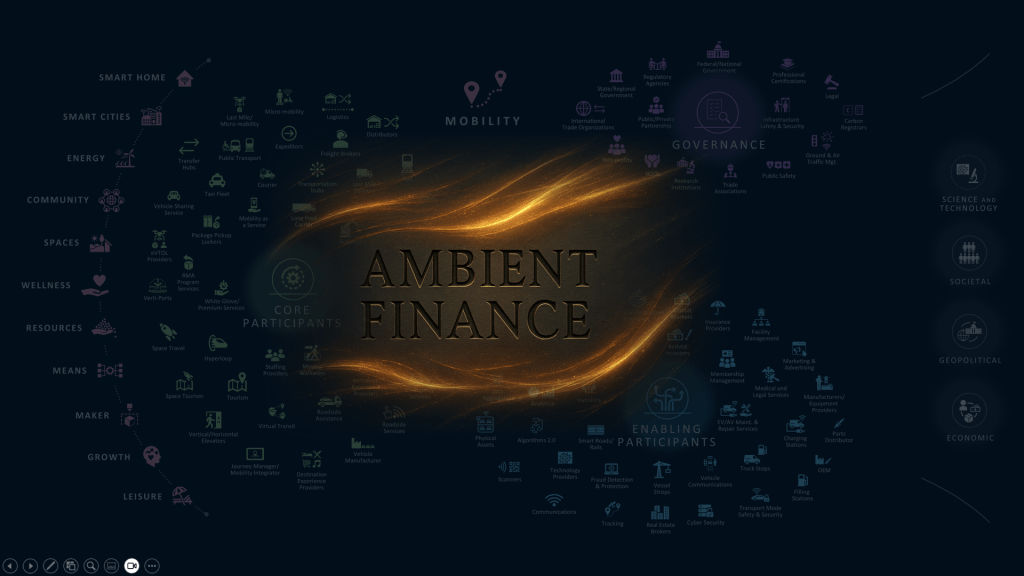
From Apps To Avatars: The Four Stages Shaping Banking’s AI Future
For decades, banking has been a place you go, a brand you see, and an interaction you initiate. In this current state, even though much of it is now digital, the model still revolves around channels – apps, websites, and branches – where customers show up to make things happen. AI has entered the picture in narrow, tactical ways: a fraud alert here, a chatbot there, a dashboard with basic insights. Helpful, yes – but far from transformational.
(more…) -
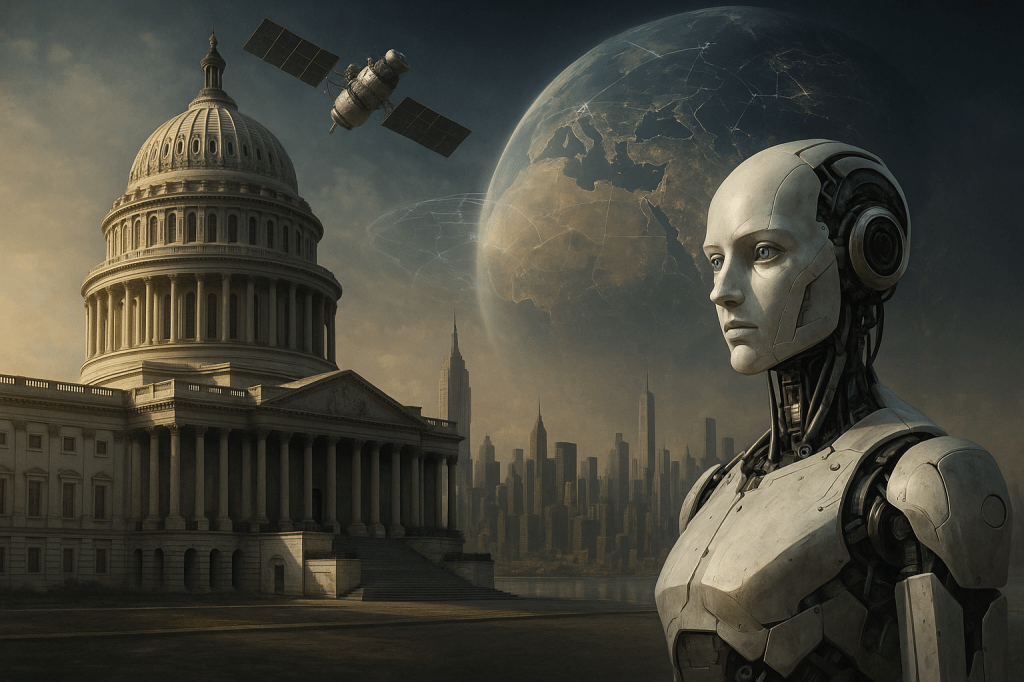
The Nation-State Under Pressure: Who Governs The 21st Century?
When we talk about the future of global governance, we tend to start with the world we inherited – not the one we’re building. And the world we inherited was largely shaped by an idea born in 1648, at the signing of the Peace of Westphalia: the nation-state. It was a radical organizing principle for its time – one territory, one government, one sovereignty. This model didn’t just define borders; it defined identity, allegiance, and the rules of the game for centuries.
(more…) -
Bot Shoppers Are Coming — And They’ll Rewrite the Rules
I had a great conversation with Evan Schuman, author of a recent article on bot shoppers. As the article describes, bots are autonomous AI agents that compare, select, and buy on behalf of people – are expected to become common within 2–3 years. The piece argues most retailers aren’t ready and will need to redesign the full buying journey for machines: product data, pricing, promotion, checkout, returns, and post‑purchase support. Key challenges flagged include returns at “bot scale,” who earns loyalty points, and new fraud/liability norms (analogous to early e‑commerce’s “Zero Liability” programs).
(more…) -
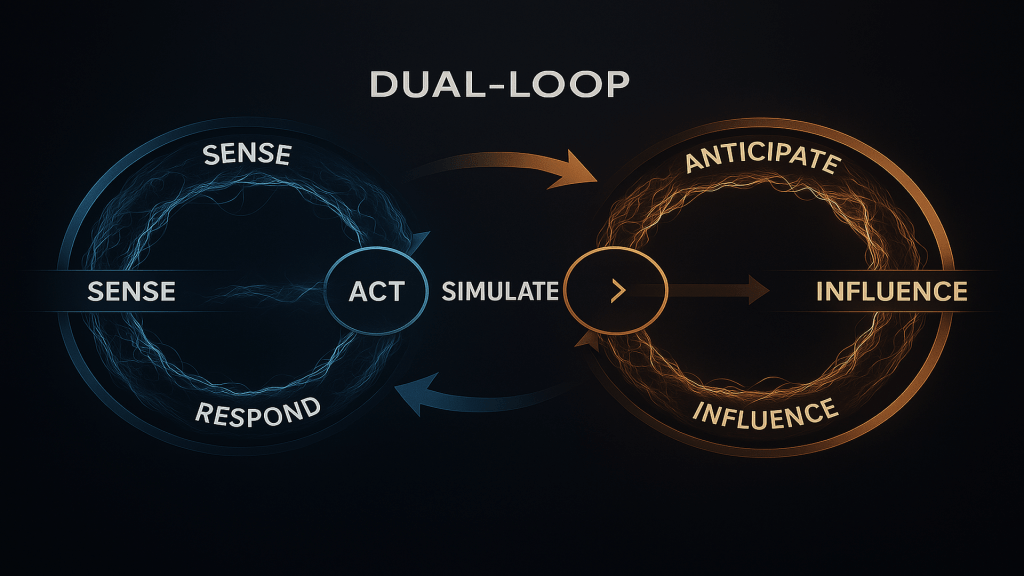
From Sense And Respond To Anticipate and Influence
In my recent post, Sense and Respond: A Survival Trait for a Converging World, I explored how the ability to detect and react to change in real time has become essential to survival. As convergence accelerates the pace of disruption across industries, systems, and geographies, the ability to sense what’s happening and respond effectively is no longer optional. It has become a core operating principle for organizations navigating uncertainty. But as the landscape continues to evolve, a deeper strategic shift is emerging—one that calls us to go beyond reacting quickly and begin shaping what comes next.
(more…) -
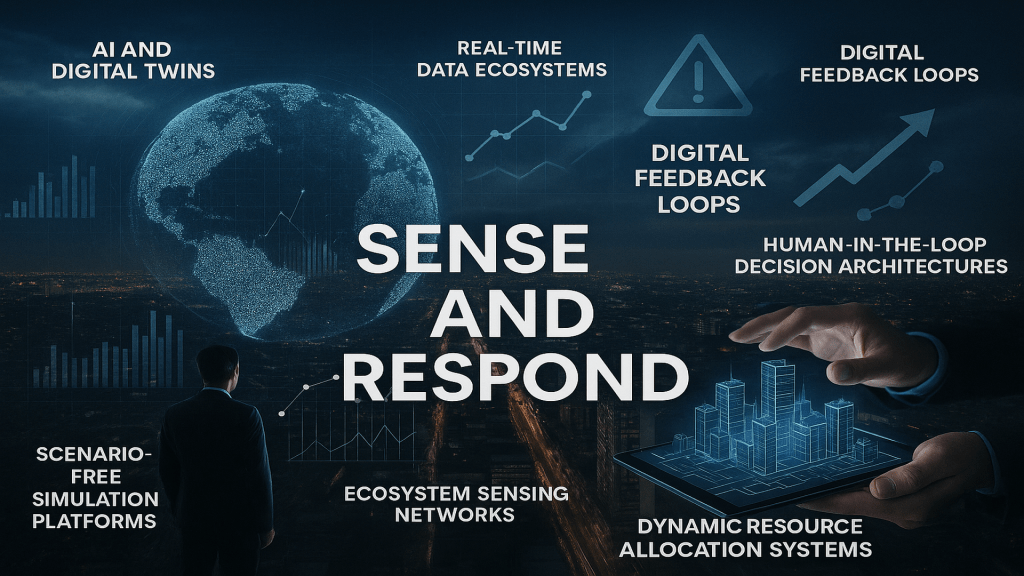
Sense And Respond: A Survival Trait For A Converging World
In an era shaped by accelerating change, convergence across domains, and an ever-expanding possibility space, traditional methods of prediction and planning have become increasingly inadequate. The static nature of scenario planning—once a cornerstone of strategic foresight—fails to keep pace with the velocity and complexity of today’s world. What’s needed instead is a living, breathing approach. One that adapts, evolves, and acts in real time.
(more…) -
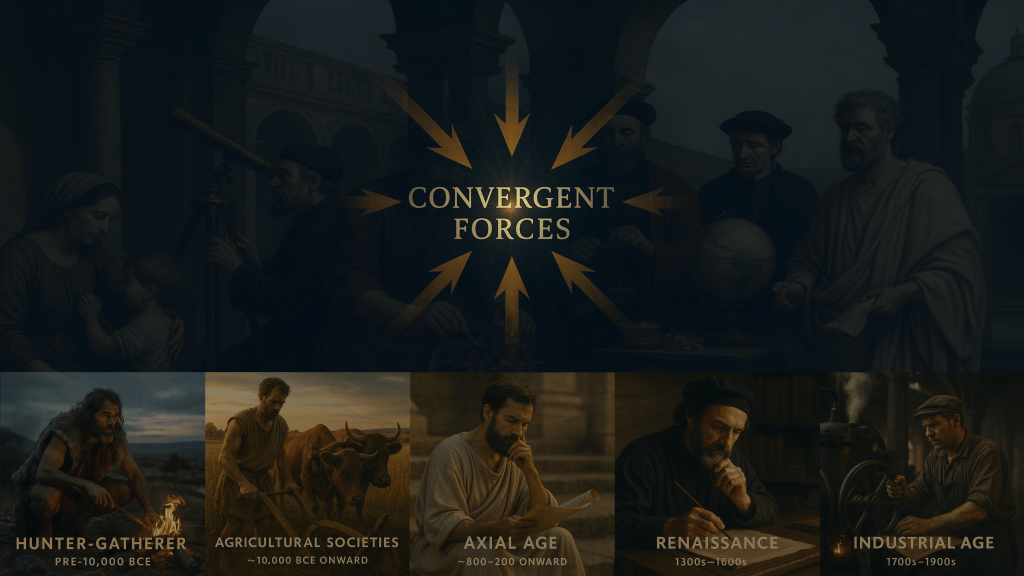
From Campfires To Code: The Systemic Shifts That Shaped Humanity
Human history has been anything but linear. While centuries can pass with relative stability, there are rare moments where everything changes—moments where converging forces across domains give rise to entirely new paradigms. These are not just periods of change. They are systemic transitions that reshape how we live, work, relate, and make sense of the world.
(more…) -
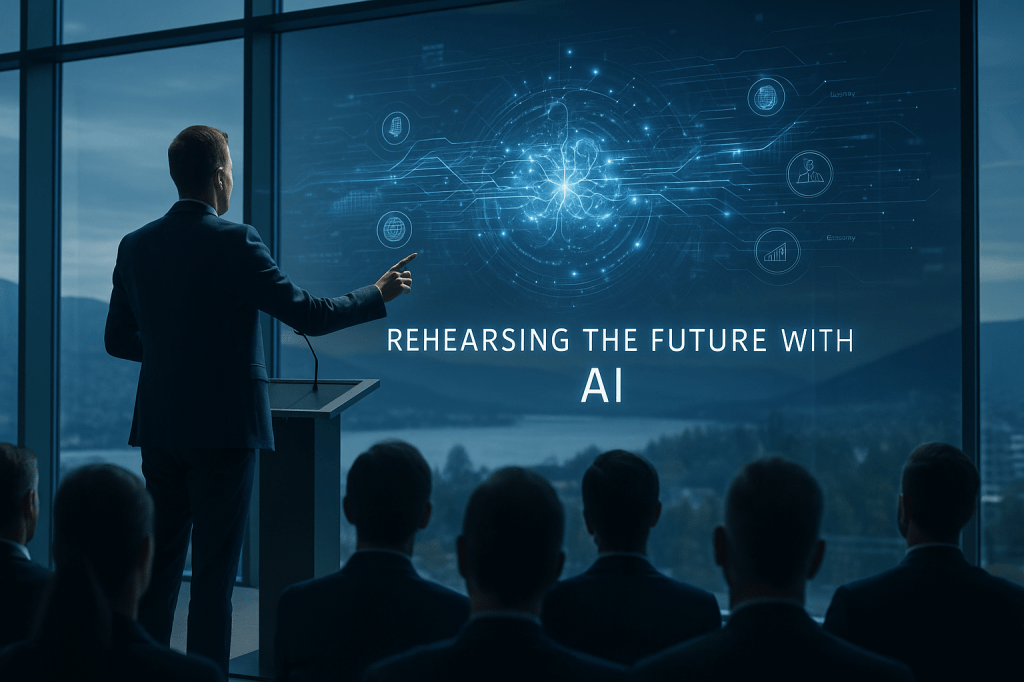
Reflecting On Zurich And The AI Strategy Forum
Last week, I had the opportunity to keynote the AI Strategy Forum hosted by C-Level in Zurich – a gathering of senior leaders exploring how artificial intelligence is reshaping business, strategy, and society. It was a timely and important conversation. We are rapidly moving beyond AI as a tool for automation and optimization. What’s emerging is a deeper, more systemic shift – one that challenges the very foundations of how we think about intelligence, work, value creation, and the role of human agency.
(more…) -
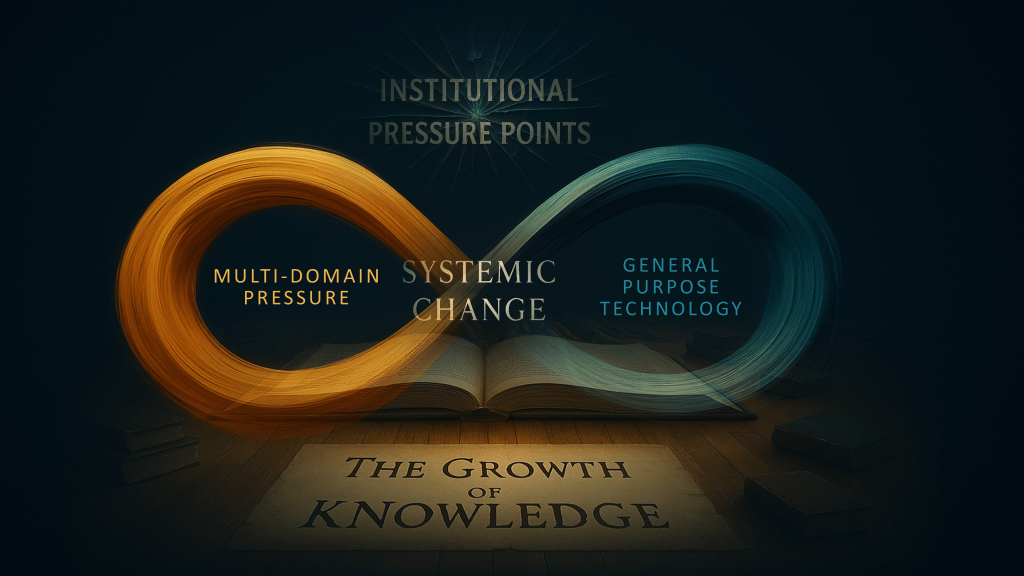
When Systems Shift: The Rare Alignment Driving Change Today
History is filled with moments of disruption and reform. But true systemic change – when the very foundations of society are redefined – has been rare. These periods of profound transition are not triggered by short-term trends. They emerge when multiple deep forces move in tandem, setting in motion the restructuring of the societal platform itself.
(more…) -
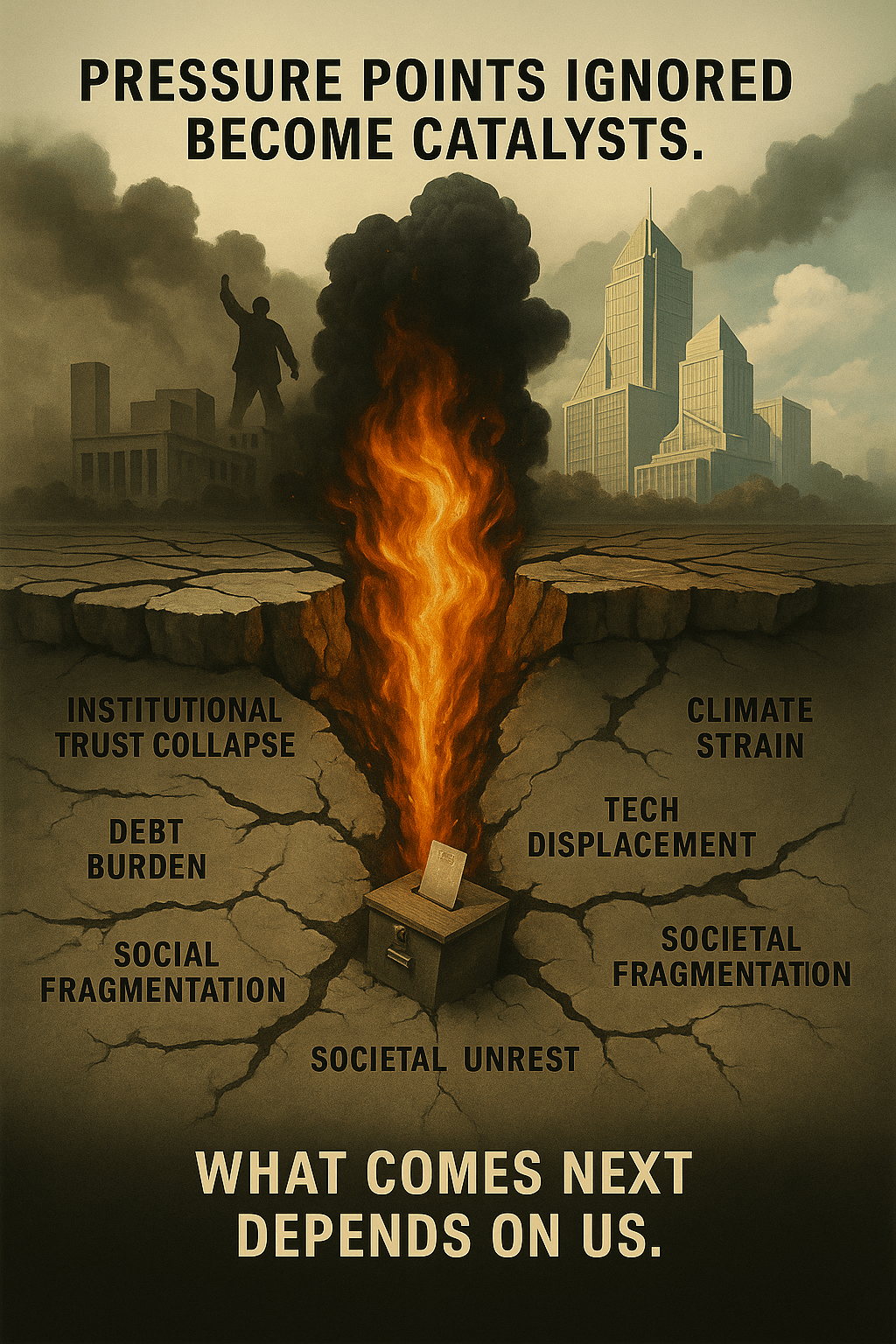
Pressure Points And Catalysts: Shaping Our World
I introduced the notion of pressure points and catalysts in an earlier post. Here are the results of my analysis.
Introduction
The trajectory of human civilization is not merely a linear progression but a complex interplay of forces that build, converge, and occasionally erupt into periods of profound transformation. Understanding these dynamics requires a framework centered on Pressure Points and Catalysts – concepts crucial to comprehending how global systems evolve and redefine themselves.
(more…) -

Building Possibility Chains: Mapping Disruption Across A Converging World
As I’ve explored in Post One and Post Two of this series, history doesn’t move in straight lines. It moves in cycles of buildup and release – of pressure and systemic change. Across time, humanity has navigated moments when systems fray, institutions falter, and norms break down. These moments are rarely surprises. They’re preceded by converging signs – warning lights blinking across domains that something foundational is under strain. We are in such a moment now.
(more…) -
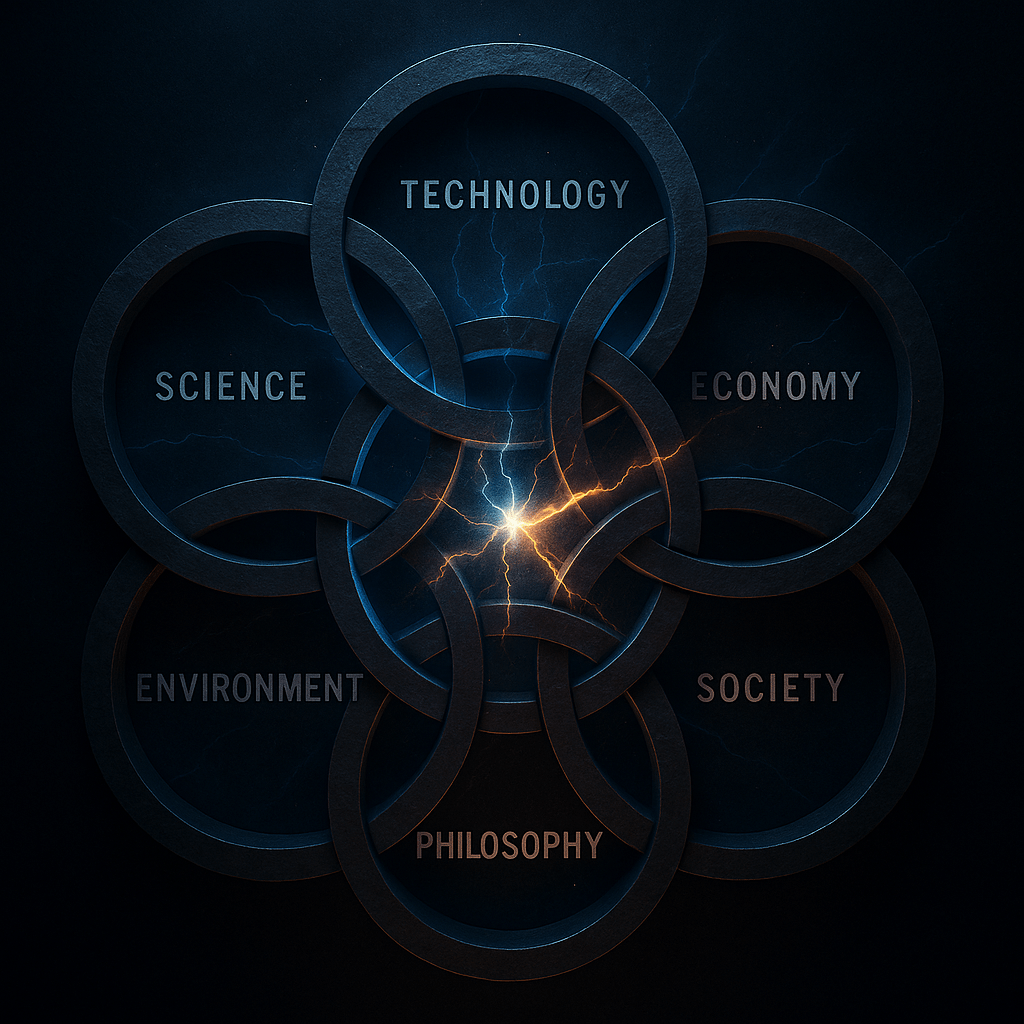
When All Domains Move At Once – Understanding The Convergent Instability Of Our Time
In the first post of this series, I explored the expanding possibility space – the widening range of plausible futures shaped by more than 1,700 convergent forces unfolding across time and across domains. That post introduced the structural lens for understanding how pressure builds, how pathways emerge, and how catalysts may eventually reshape the system. This post focuses on what makes that possibility space so expansive in the first place: the simultaneous instability across seven foundational domains. Science, technology, economy, society, geopolitics, philosophy, and environment are not shifting sequentially or in isolation. They are all in motion, at the same time, and in constant interaction.
(more…) -

A World Of Expanding Possibilities – And Accelerating Pressure
The world feels unfamiliar – more volatile, more complex, and harder to navigate than at any point in recent memory. That sense is not misplaced. It reflects the reality of a system under strain.
Across seven domains – science, technology, society, geopolitics, economy, philosophy, and environment – more than 1,700 convergent forces have been identified and mapped between 2025 and 2030, with the list continuing to grow. These forces are directional, accelerating, and deeply entangled. Together, they are expanding the possibility space – the set of plausible futures – faster than most institutions can observe, let alone act.
(more…) -

Introducing the Next Phase: Pressure Points, Catalysts, and the Forces That Shape Them
History doesn’t move in straight lines. It moves in cycles of buildup and release – of pressure and transformation. Across time, humanity has navigated moments when systems fray, institutions falter, and norms break down. These moments are rarely surprises. They are preceded by converging signs – warning lights blinking across domains that something foundational is under strain.
(more…) -
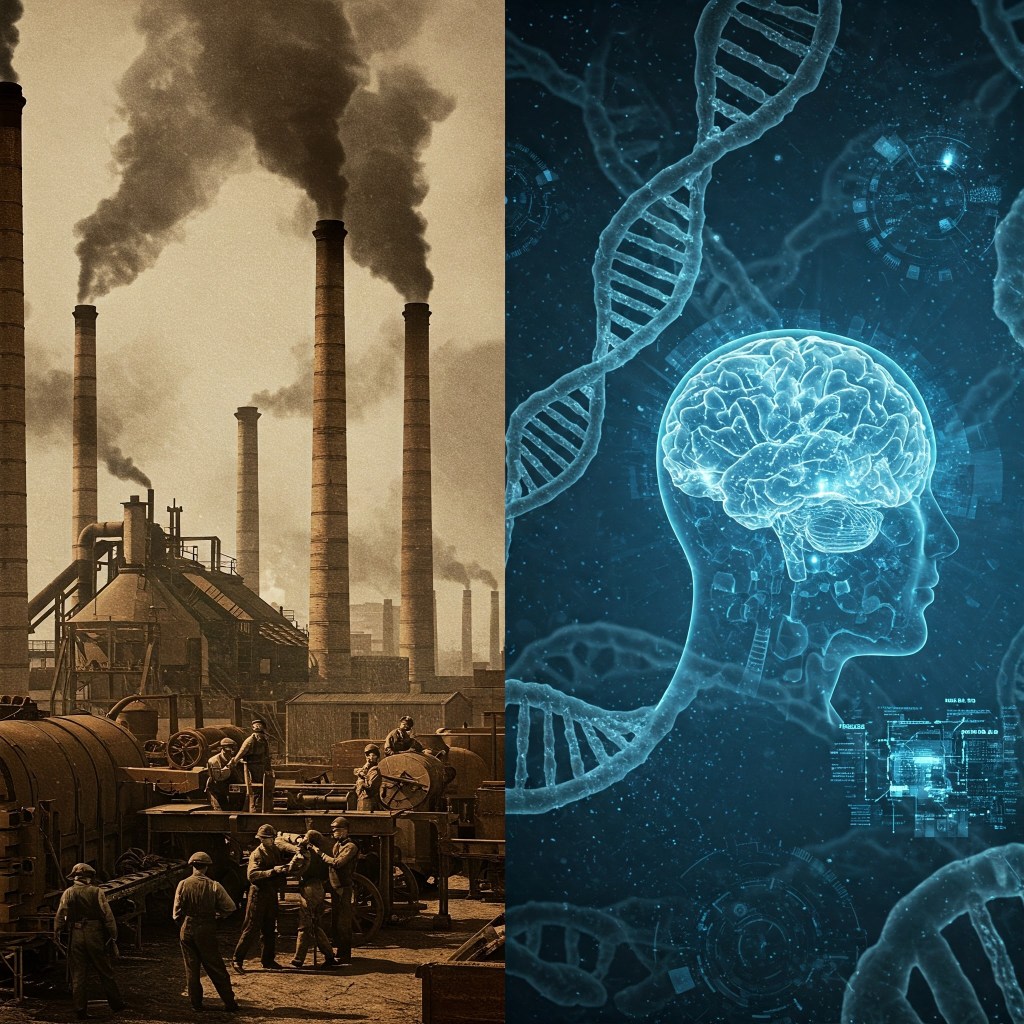
Rehearsing The Future: Beyond The Fourth Industrial Revolution
As we stand at the threshold of another profound technological shift, many refer to this moment as the “Fourth Industrial Revolution.” Historically, we’ve used the term “industrial” to describe revolutions centered primarily on advances in production, efficiency, and the scaling of physical labor – whether through steam-powered machines, electrical infrastructure, or digital automation. Each industrial revolution significantly reshaped how we lived and worked but always remained anchored in improving productivity and mechanization.
(more…) -

Book Review: Technology And The Rise of Great Powers By Jeffrey Ding
Why Diffusion, Not Invention, Determines Who Leads in the Age of Transformative Technologies
In an era obsessed with technological “firsts,” Jeffrey Ding’s Technology and the Rise of Great Powers delivers a counterintuitive revelation: the nations that dominate the future won’t necessarily be those that invent the most, but rather those that diffuse innovations the fastest. By shifting the spotlight from invention to diffusion, Ding fundamentally reframes the debate on global competitiveness – with profound implications for policymakers, businesses, and societies.
(more…)

