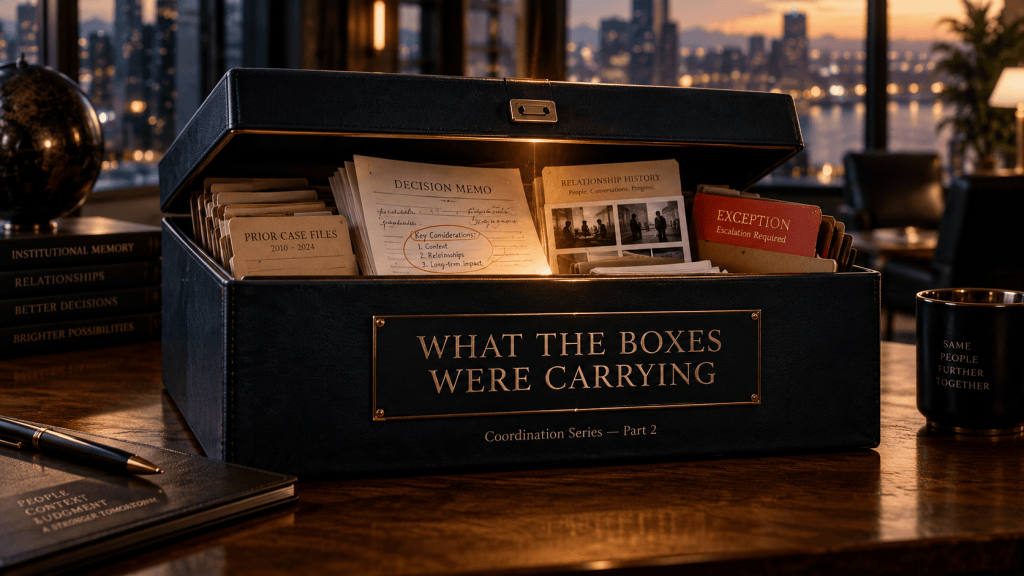
Part two of a three-part series on the changing architecture of coordination.
In Part One, I described a small-business credit decision in which the numbers showed two quarters of weakening receivables. The person who knew the business also knew that its largest customer had temporarily extended payment terms during an acquisition while orders remained strong. The numbers were accurate, but they did not carry the full meaning of what was happening.
(more…)