Banking on Disruption: TCS and the Clayton Christensen Institute

TCS and the Clayton Christensen Institute have collaborated to produce a series of articles and whitepapers that explore the future of industries through the lens of a set of fundamental theories developed by Harvard Business School Professor Clayton Christensen (Mr. Christensen is a TCS Board member). The theories offer a form of what-if analysis that leaders can leverage to better understand the cause and effect between actions and results. These theories include Disruption Theory, the Theory of Jobs to Be Done, and Modularity Theory. In this case, the author focuses on the disruptive potential of innovation, and this first piece in the series tackles Disruption in the Banking Industry.

Continue reading

Uncertainty Drives the need to Sense and Respond

“The rhythm of technology is changing the rhythm of business, and we’re all going to need to adapt”Jeff Gothelf and Josh Seiden, Authors of Sense and Respond

Back in 2013, in a post on sense and respond systems, I talked about the drivers that would push organizations towards a sense and respond paradigm. There are no bigger drivers than volatility and uncertainty, and nearly four years since that post, that fact is becoming clearer. In a recent book by Jeff Gothelf and Josh Seiden, they elevate sense and respond to a position that is core to achieving an adaptive enterprise. They see feedback loops and a movement away from command and control as the enabling mechanisms that allow us to thrive in the digital age.

Continue reading

Intersections Promise to Drive Multiple Paradigm Shifts

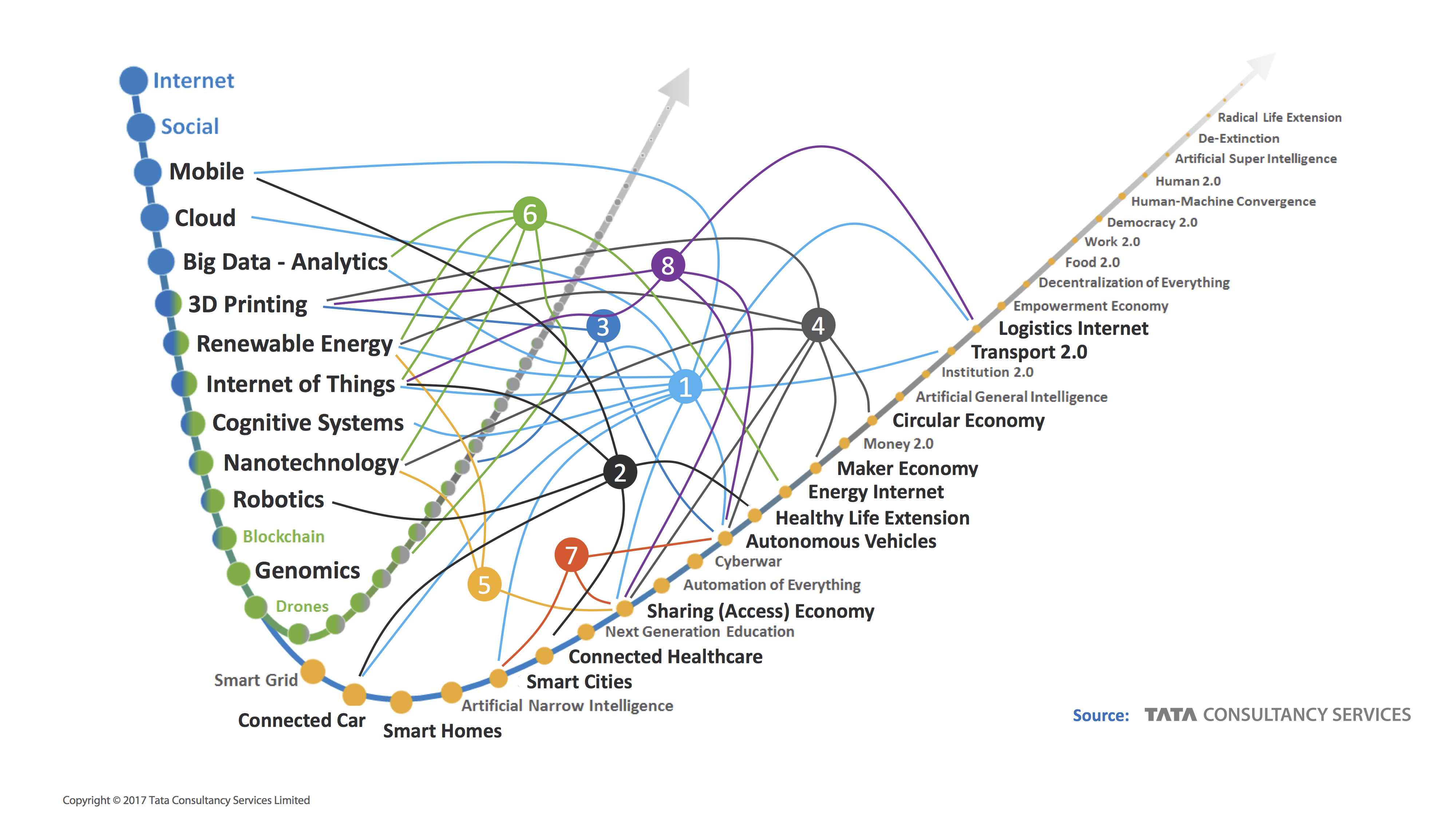
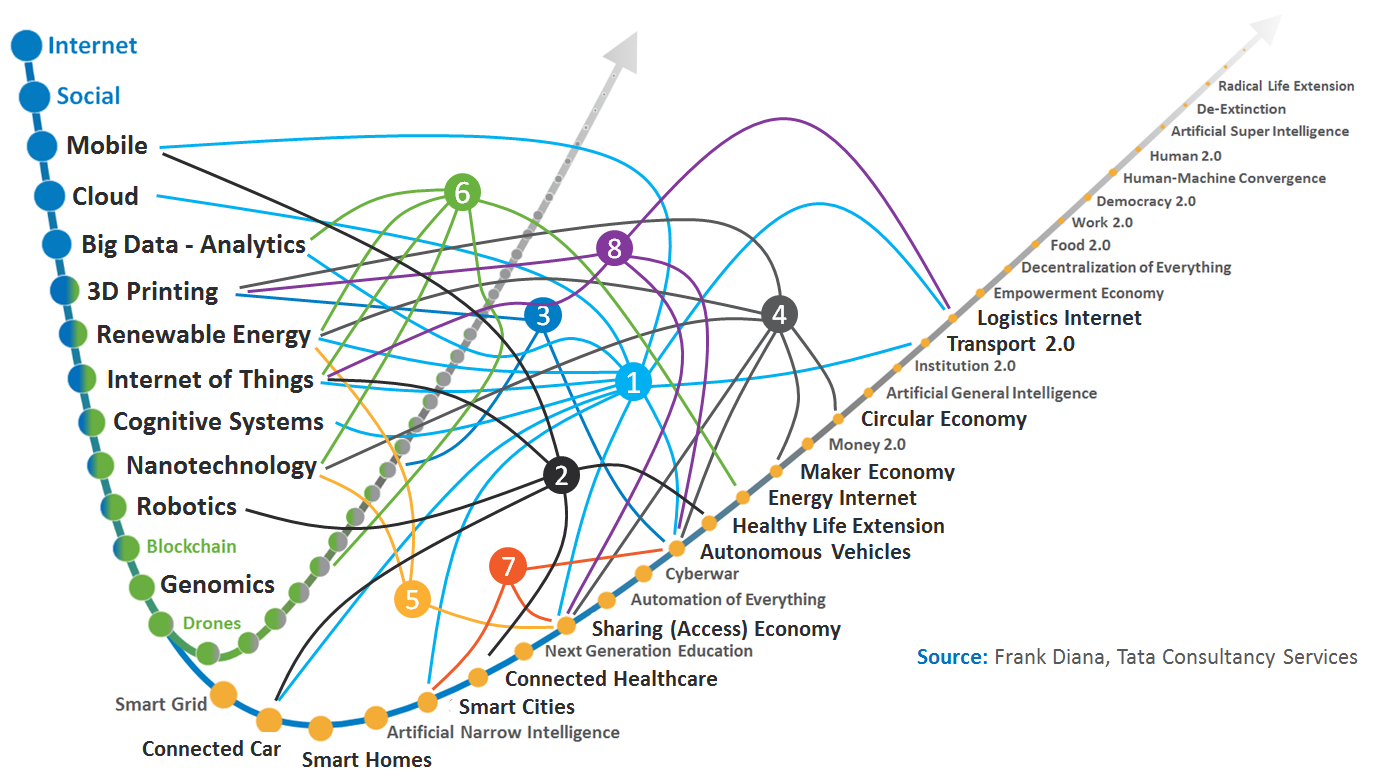
Since the time I completed this post on Disruptive Power and Intersections, it continues to receive attention. It is by far the most effective component of any Future Thinking effort. Given the continued traffic to this two year old post, I am updating with current content. The visual below connects the intersections of 8 combinatorial scenarios. This is not an exhaustive set of connections; it is strictly intended to describe the scenarios at a high level. disruptive-power

Figure 1: Intersections amplify both power and impact

Continue reading

The Collapse of Traditional Structures: An Ecosystem Evolution

In my previous post on the Transformation of Interaction, I mentioned the emergence of ecosystems and their likely impact on how we experience life. Together, the evolution of interaction and ecosystems plays a significant role in how we view experiences going forward. I referred to this in 2013 as the movement towards Next Generation Experiences. In the coming months, I will share a point of view that captures a finite set of future ecosystems. To position that discussion, it is helpful to look at how this evolution may ensue.

Ecosystem Maturity Model

Continue reading

Coffee Break with Game Changers: An Innovation Explosion

On November 30th, I had the pleasure of participating in another Game Changers show. I was joined by Futurist Gerd Leonhard and SAP Innovation executive Timo Elliott. The show was expertly moderated by Bonnie D. Graham, starting with her positioning of the topic: “Impossible is not a fact. It is an opinion” (Muhammad Ali). A unique clustering of inventions in the century after the U.S. Civil War improved the American and European standard of living – human well-being – more than any period before or after, with advances in everything from food and energy to health and work. Can our current innovation explosion have a similar impact despite unintended consequences? 

Continue reading

Revolution and the Innovation wheel

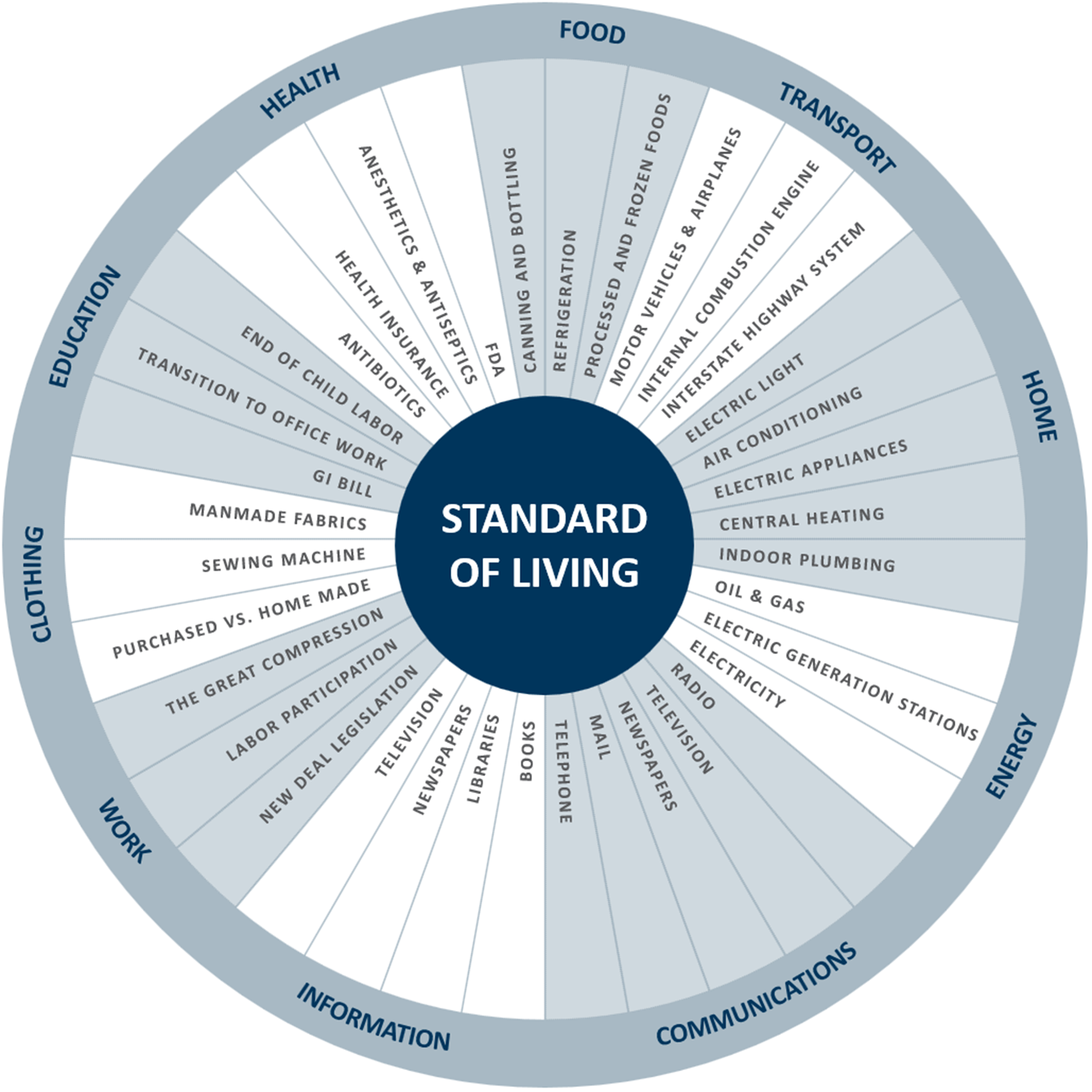
In a brilliant journey through the economic history of the western world, author Robert J. Gordon looks at The Rise and Fall of American Growth. This recent book focuses on a revolutionary century that impacted the American standard of living more than any period before or after. Our standard of living is typically viewed as the ratio of total production of goods and services (real GDP) per member of the population. But this measure fails to truly capture enhancements to our well-being. Human well-being is influenced by advances in the areas of food, clothing, shelter, energy, transport, education, health, work, information, entertainment, and communications. The special century (1870 – 1970) that followed the Civil War was made possible by a unique clustering of what the author calls the great inventions. Clearly – as the visual I developed depicts – the great inventions of the second industrial revolution significantly improved our well-being:

Second Revolution Innovation Wheel

Continue reading

Balancing the Opposing Forces of Innovation

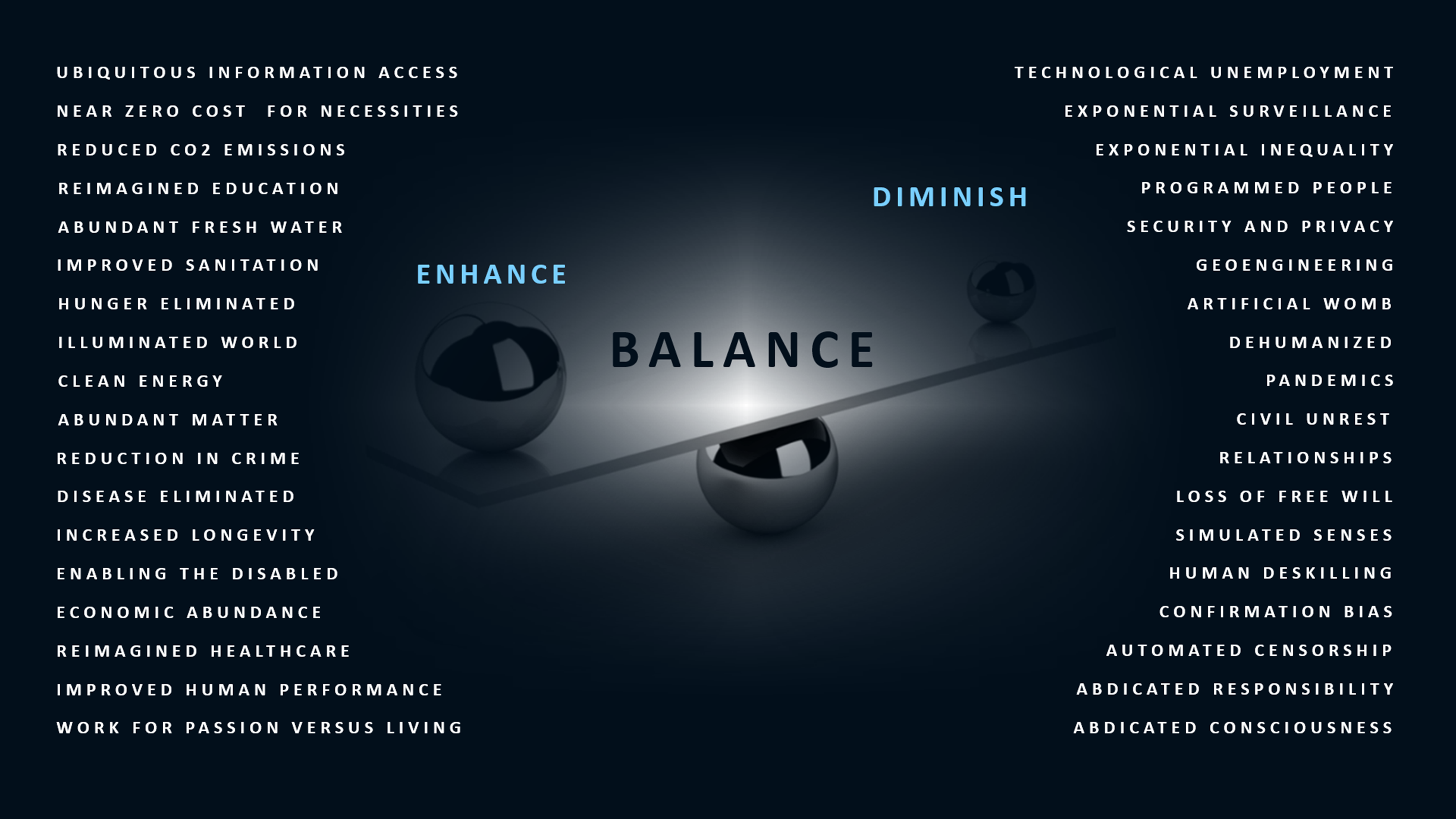
Balance the Opposing Forces of Innovation

The unabated exponential progression of science and technology has driven a staggering pace of innovation. The building blocks are mostly there, allowing creative minds to combine them in ways that attack the world’s most difficult challenges.

Continue reading

Innovation Killer Organization Chart

Heidi Schwende recently shared a picture on LinkedIn that perfectly captures the challenges facing large traditional companies. Exponential progression, the pace it is driving, and the capacity of companies native to digital to innovate put the traditional company at a severe disadvantage.

Continue reading

The Year of Shifts

The year of shifts is upon us. 2016 will ultimately be viewed as the bridge to a different future; a year where our intuition and beliefs will be reset. Accelerating advancements across science and technology have set the foundation for these shifts. Driven by societal and economic challenges, we will leverage this foundation to change current institutions and build new ones. To succeed, organizations of all types must view transformation through a different lens; one that enables their role in this future. In my current series, I am focusing on the thirteen (13) key enablers of future viability. The first post explored Structural Change. In this post, I will look closer at the pillars of transformation, and delve into the second enabler: a holistic digital foundation.

the-pillars-of-transformation

Continue reading

Disruptive Power Lies at the Intersections

The content of this post was updated on February 16, 2017 in a new post titled Intersections Promise to Drive Multiple Paradigm Shifts


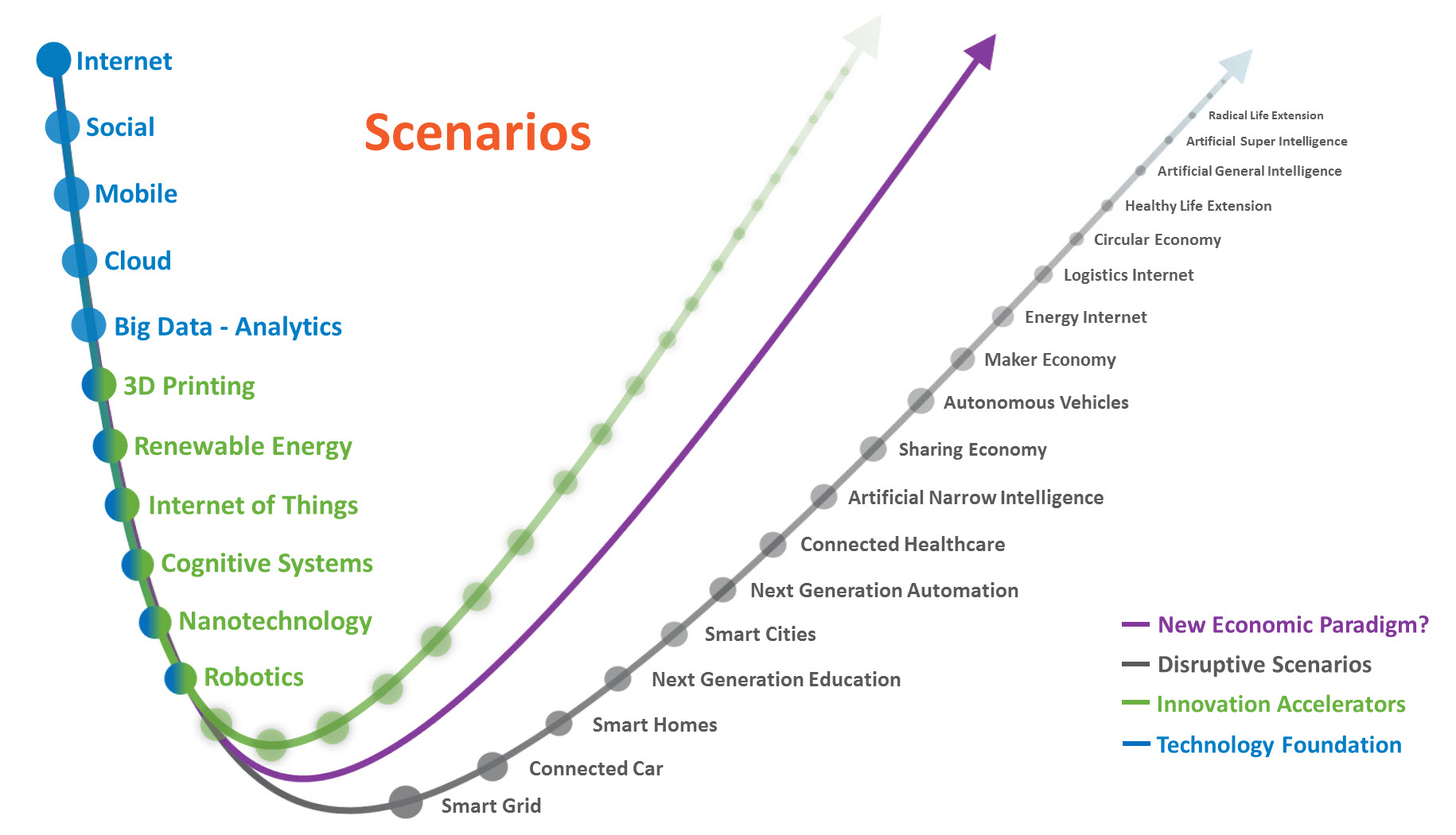
When I first started using the term “Combinatorial”, people thought I was making words up. Although I’d like to take credit for the word, I first came across it when reading The Second Machine Age, a fascinating book by Andrew McAfee and Eric Brynjolfsson. I remember thinking that it was a perfect word to capture the amplification of both innovation and its disruptive power. By now, readers of this Blog have seen the foundational Visual that describes the digital foundation, innovation accelerators, and disruptive scenarios. What the visual does not convey without the associated narrative is the power of combinatorial.

If we build on top of the visual, we begin to see the complexity at the intersections, the amplification of disruptive power, and the broad implications for the future.

intersections-and-amplification

The best way to describe this phenomenon is through examples, so let’s look at six combinatorial scenarios as an overlay. The visual is a bit overwhelming, so a better way to follow the various paths is via this PDF. Here is a description of each scenario. The numbers in the visual above map to the scenarios below, and the colors show the combinations: 

Continue reading

Ecosystem Thinking

The notion of value creation and capture is a core component of business and the models that drive it. While historically viewed with a traditional product mindset, several emerging forces will alter this basic tenet of business. At its core, the way businesses create and capture value will change – the degree of change ranges from transformative to historical. The last several posts focused on the historical – namely Jeremy Rifkin’s view that we are heading towards A New Economic Paradigm. The foundation of Mr. Rifkin’s argument is a Third Industrial Revolution (TIR) platform that takes the marginal cost of production to near zero. Enabled by the Internet of Things, this General Purpose Technology (GPT) Platform could alter our landscape more dramatically than previous GPTs (steam-locomotive-printing press, electricity-auto-telephone). What happens to value creation and capture in a near zero marginal cost scenario?

Continue reading

Connected Health

In my continued look at disruptive scenarios, the focus shifts to Connected Health. In a recent White Paper, the term is used as an umbrella description that covers digital health, eHealth, mHealth, telecare, telehealth, and telemedicine. Analyst firm IDC defines it as “a broad spectrum of technologies that use telecommunications to facilitate the exchange of health information and delivery of care across a geographic distance as well as manage chronic conditions and promote health and wellness.”

There are several drivers that make this both a viable and desperately needed scenario. According to the IBM Institute for Business Value, inefficiency in the Healthcare ecosystem wastes over 2 trillion USD per year. According to the popular Internet Trends Study produced by Mary Meeker each year, healthcare costs have reached 17% of the U.S. GDP and 27% of health spending is wasted. The same study found that over 25% of family income is likely to go to health spending in 2015, and 50% of bankruptcies are driven by health costs.

Continue reading

Large Companies and Innovation

“The pace of innovation is about to surge – and more powerfully than ever before”

That sentiment comes straight from a new book titled: The New Killer Apps: How Large Companies Can Out-Innovate Start-Ups. As obvious as that statement seems, many leaders still act as if nothing is really changing – or any impact to their business is too far into the future to worry. This well written book focuses on the problem with this kind of thinking. Anyone that has worked in a corporate setting will resonate with the challenges identified in this book. Behavior at every level of an organization is the biggest obstacle to innovation and the identification of what the authors call “Doomsday Scenarios”. Most of us are familiar with traditional company politics and turf-driven behaviors. The authors conclude as I have, that most bias in an organization goes toward keeping the status quo.

Continue reading

Digital Transformation

A new short Video featuring Tonya McKinney and I is now available on the TCS website. The focus of the video is the broadening role that Digital will play in the future enterprise. It’s no secret that I still see too many companies limiting their digital perspective to Marketing. Digital will eventually be viewed as the biggest disruptive force business has ever seen. Yet so many companies still have a business as usual view of the world. You can read about our perspective on the critical path forward via this Blog or through the TCS Perspective Series.

Social CRM in the Insurance Industry

I recently participated in the writing of an article on Social CRM for the Insurance industry. The piece is now available online via the Insurance Networking News. The Insurance industry is showing a great deal of interest in social business – and I hear it in most discussions with industry executives. It is clear that the industry is beginning to understand that insight from social channels can drive better decision making. Companies like Farmers Insurance are driving new growth, new product development, and customer retention by sharing information from Twitter, FaceBook and LinkedIn with their network of Agents.

A recent study indicates that 56% of companies are planning future Social CRM initiatives, while Gartner indicates that 30% of companies will extend their Social Networking efforts to Social CRM processes within the next two years. As I note in the article, social computing will enable a powerful sales, marketing and customer service platform that improves the customer experience and elevates brand identity. The full article is a worthwhile read, and provides some insight into the future use of Social CRM in the Insurance industry.

A look at 2011

As 2010 winds down, it is time to look ahead to 2011. I have high expectations as the calendar turns, and I believe 2011 will be the year of adoption. I believe we’ve reached a point where cash will come off the sidelines and I expect to see technology investments focused on revenue generation and value creation. With that as a backdrop, I’ll Label 2011 as the year of collaboration and intelligence – the two areas that I believe align very well with pressing business priorities. So here are my thoughts on 2011.

Continue reading

Reinventing Customer Relationships

CEOs believe that the time has come to reinvent customer relationships. That’s one of the key findings in IBM’s 2010 CEO Study titled “Capitalizing on Complexity”. This belief is based on the following observations: 

  1. The world is massively interconnected, thereby making customer intimacy a priority
  2. Customers have more options due to globalization and dramatic increases in available information
  3. Differentiation will come from innovation and co-creation with customers
  4. The information explosion presents a great opportunity to develop deep customer insights 

Continue reading

Fascinating Social Media Statistics

I recommend this very well done Social Media for Business presentation. There are some fascinating statistics provided in the material. These numbers give you an appreciation for just how massive this social wave has become. For instance:

Continue reading

Gartner’s views on ROI and 2011

In this great Blog post by Robert Mitchell titled ROI fading fast as measure of IT success, Mr. Mitchell discusses the key messages planned for this weeks Gartner Symposium/ITxpo.  I walk away with several key messages:

Continue reading

Social Technologies and Innovation

I have long believed that social technologies would usher in a new era of innovation. Terms like crowd sourcing, the wisdom of crowds and collective Intelligence, all speak to the notion that innovation is not an organizational function, but the ideas of an organization, community, or society. Social technologies and new emerging forms of analytics allow us to create an environment for idea creation, and an ability to quickly capture the resulting insight. User generated content has long existed in the world of social media – and new ways to capture relevant insight are evolving. What’s exciting is the growing use of social technologies inside the enterprise. Once the environment for collaboration and idea generation is established, the next step us harnessing all of the insight available both inside the enterprise and out. This article on Social Technologies and Innovation does a good job of describing the growing role of social technology inside the enterprise.