
At the start of 2019, I Articulated three macro-level forces that I believed would set the stage for a very disruptive decade ahead. They were: Acceleration, Convergence, and a Burst of Possibilities. Here we are during a pandemic, and all three are alive and well. The one that stands out is acceleration. There are many examples of acceleration driven by COVID-19 that demonstrate what we can accomplish when driven by a Catalyst. Innovation windows have collapsed considerably, and we are witnessing accelerated adoption of scenarios that although inevitable, were slowed by societal resistance. For example, the embrace of digital learning has accelerated, and while many employers resisted the move to remote work due to fears of productivity loss, those fears have proven unfounded.
Continue readingAuthor: Frank Diana
Dancing Robots – How Do You React?
By now, many of you may have seen this video of dancing robots. Yet another remarkable accomplishment delivered to us by Boston Dynamics. The reaction to this video has been varied. Many view it with fascination, while others fear. Those reactions reflect the broader response to possible emerging futures. This recent Article views dancing robots as a really big problem, going as far as calling them unethical. This One sees them as fun and games – until they murder us. Yet Another sees them as eerie, yet marvels at the accomplishment. Finally, this Look at the video calls it unsettling. What about you? What is your immediate reaction when viewing this video? Take the poll below and select your initial reaction.
Artificial Intelligence And The Pursuit Of Global Power
A Sputnik moment: events that cause nations to suddenly realize they must work urgently to bridge or surpass a gap that’s arisen between them and a competitor. A book I recently finished titled “T-Minus AI”, reflects on the moment in history when that phrase was born. On October 4th, 1957, the United States was taken by surprise. The Soviet Union, under the leadership of Nikita Khrushchev, had just launched the first artificial satellite into space. As the book describes, Sputnik, a beachball-sized, silver metal sphere that weighed 184 pounds, was in orbit 495 miles above Earth. Speeding through space at 18,000 miles per hour, Sputnik crossed directly over the US mainland with each new orbit.
Continue readingTen Lessons For A Post-Pandemic World
“There are decades when nothing happens and weeks when decades happen.” – Vladimir Lenin
That quote is highlighted in a new book by best-selling author Fareed Zakaria. In “Ten Lessons for a Post- Pandemic World”, Mr. Zakaria helps readers to understand the nature of a world that emerges after the pandemic: the political, social, technological, and economic consequences that may take years to unfold. He does this by focusing on ten lessons:
Continue readingTransformers Prioritize AI Investment
There are many examples of COVID-19 serving as an Accelerant. History and necessity tell us that automation is one of those examples. According to a Business Insider survey of 53 leaders featured in the Transforming Business series, AI and Cloud are at the top of the list of transformation that companies will invest in during 2021. It’s on the agenda of 47% of those surveyed. The connection to the pandemic can be seen in examples of where automation is applied. This recent Article describes a scenario where social distancing requirements are met through automation. Author Joe Mullich points to the kitchen of a burger joint, where a hard-working fry cook named “Flippy” is paving the way for greater use of artificial intelligence and cloud technology in the restaurant industry.
Continue readingA Survey Of Runners And A Look Into The Future
As I mentioned in a Post last week, I had the privilege of participating in the Mass Participation World Conference 2020. The theme of the event was “Changing the Narrative: Solutions to help us move from Surviving to Thriving”. The video below captures some highlights from TCS’ This Run Tech Survey , and a look into the future of sports.
Watch A Robot Perform Surgery On A Banana
As we march relentlessly towards an Automated Society, scenarios emerge to provide signals. How far will we take this automation scenario? My post last week focused on sports and a robot that Shoots Baskets with stunning accuracy. My post for today looks into robotic surgery, which is traditionally defined as any surgery done with a complete robotic surgical system. It was originally developed for the military so that surgeons could remotely do open surgery on wounded soldiers in the field. This Article on the topic describes it this way:
Continue readingNanobots To Improve Our Health and Someday Connect Our Minds
Nanotechnology is defined as the manipulation of matter with at least one dimension sized from 1 to 100 nanometers. Wikipedia had this to say about the field:
Nanotechnology may be able to create many new materials and devices with a vast range of applications, such as in nanomedicine, nanoelectronics, biomaterials energy production, and consumer products. On the other hand, nanotechnology raises many of the same issues as any new technology, including concerns about the toxicity and environmental impact of nanomaterials, and their potential effects on global economics, as well as speculation about various doomsday scenarios. These concerns have led to a debate among advocacy groups and governments on whether special regulation of nanotechnology is warranted.
Continue reading
Non-Obvious Mega Trends
I just completed another book titled “Non-Obvious Mega Trends”. Author Rohit Bhargava focuses on seeing what no one else sees, and helping his readers do the same. Per the Amazon abstract, in the past ten years, his signature annual Non-Obvious Trend Report has helped over a million readers discover more than 100 trends changing our culture. The opening section focuses on the art of non-obvious thinking. From there, he explores the five mindsets of non-obvious thinkers, and reviews his Haystack Method for curating non-obvious Ideas.
Continue readingCOVID-19 Accelerates Innovation In Healthcare
We owe so much to the frontline heroes that serve society in critical times. The pandemic has shown us just how important and under-appreciated these individuals are. We owe them a debt of gratitude. Healthcare is one of those areas where we see both heroics and exposure. The lack of digital progress has been exposed across sectors by the virus. That is the bad news. The good news is that extreme events like this can serve as accelerants. This recent Article describes the turning point that COVID-19 likely represents for healthcare. Rethinking healthcare for the digital age should be a top priority (as it should across all industries).
Continue readingBasketball Shooting Robot Sets World Record
One future scenario that I describe is called an Automated Society. There is always much skepticism when the scenario is discussed. Our mind tells us that humans do things that automation simply cannot replace. I use sports as a good way to explore the possibility of automating anything we set our minds to. Take for example a robot sinking a hole in one.
Continue readingCOVID-19 Impacts University Enrollment
A recent Study found that the number of students enrolling in college immediately after high school plunged nearly 22% this past fall over last year. The future of education is a big discussion topic, as the pandemic is threatening the viability of education organizations and models. Key findings include:
Continue readingEnvisioning The Future Of Sports
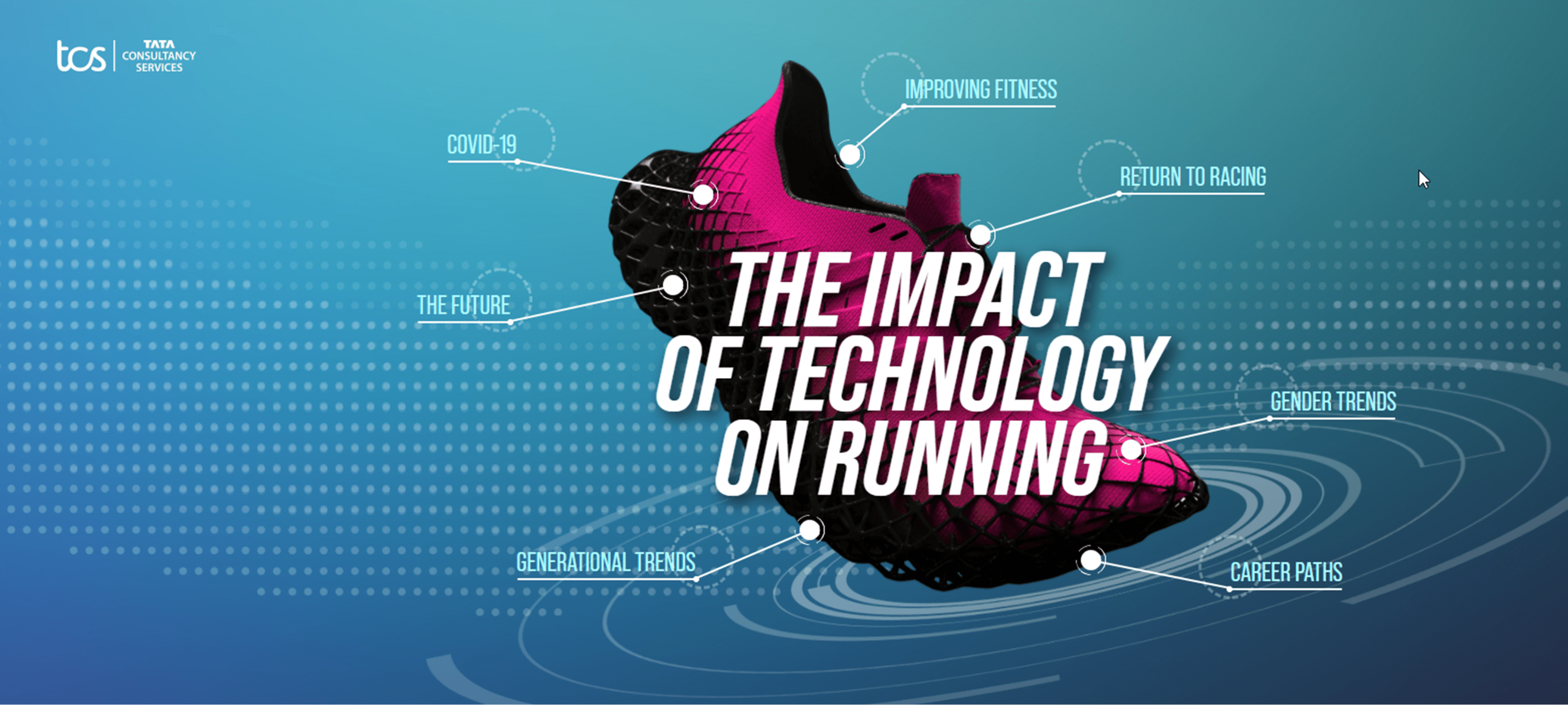
Last week, I participated in the Mass Participation World Conference 2020. The theme of the event was “Changing the Narrative: Solutions to help us move from Surviving to Thriving”. We shared the results of a recent survey of runners. The TCS This Run Tech Survey reveals that technology is powering runners through the pandemic. The survey was geared towards uncovering running technology trends amid COVID-19 and helping shape how TCS can best support runners and races in the future. TCS sponsors marathons around the world, including the NYC Marathon.
As a follow up to my presentation on the Future of Sports, this Article envisions the future of athletics and society. Reimagine the future of sports along with us – I’d be interested in your thoughts.
Colliding Trends Reshape 2030
A recent book explores aspects of a broader Convergence story. The book – 2030: How Today’s Biggest Trends Will Collide and Reshape the Future of Everything – was authored by Mauro F. Guillen. In exploring a number of trends, he shows how the only effective way to understand the global transformations underway is to think laterally. Said another way, we need to think at the systems level. Understanding pieces in isolation blinds us to the combinatorial nature of change. The book abstract says it this way:
Continue readingEight Trends Amplified By COVID-19
I just finished another book and added it to my Library. Pandemic, Inc. explores eight trends that are amplified by the current pandemic. Author Patrick Schwerdtfeger believes we will see more change in the next 12 months then we saw in the last 12 years. He views the current crisis through an optimistic lens, seeing a time of incredible change, but also opportunity.
Continue readingOrganizing For Disruption
Back in 2015, I was looking at emerging organization models for a societal shift to a very different era. While organizations have experimented with many of these, the truth is, most still struggle with this critical structural change. One impactful model was positioned by Geoffrey Moore in his book titled Zone to Win. Given how relevant the topic is today, I am reposting my synopsis of the book below. In addition, here are three additional posts on the topic:
Continue readingReversing The Aging Process
Advances in life sciences have scientist believing that the first person to Live to 200 has already been born. This Healthy Life Extension scenario has major societal implications. In this scenario, we are not just enabling people to live longer, but we will also be healthier. This healthy longevity challenges traditional views of retirement, wealth, savings, our social contract, and the phases of our lives, among other things. Now, you may ask, how is it possible to extend our lives in a healthy manner? In a Post from 2018, I shared a perspective from Johnty Andersen, Biotechnology, Nanotechnology and Anti-Aging Medicine researcher:
Continue readingThe New Map
I just finished another book and added it to my Library. Author Daniel Yergin explores the convergence of energy, climate change, and a world where an existing power is confronted by an emerging power. The New Map helps us understand global dynamics, historical perspectives, the entrenched role of oil and gas, the forces that are driving an energy transition, and the impact of a raging pandemic.
Daniel Yergin is a highly respected authority on energy, international politics, and economics, and a Pulitzer Prize-winning and bestselling author. He is vice chairman of IHS Markit, one of the leading information and research firms in the world, a member of the board of the Council on Foreign Relations, a senior trustee of the Brookings Institution, and has served on the Secretary of Energy Advisory Board under the last four presidential administrations.
Continue readingBill Gates Looks At Life After COVID-19
Back in April and May, there was a lot of crystal ball gazing going on. Will COVID-19 change our world forever? This Post, among others I wrote in the early days of the pandemic, explored the various ways the world may change. In the post, I reflected on a key warning sign: most predictions of a post-crisis world have historically been wrong. I pointed to an Article authored by Rob Walker, where he stresses that thoughtful speculation about the future helps us cope with the present and identify potential challenges and opportunities. He adds however that history tells us that most predictions will be wrong. In looking back at predictions post 9/11 and the great recession, Mr. Walker provides supporting evidence for this statement.
Continue readingReimagining The Future Of Sports
This week, I had the pleasure of participating in the Brandweek Sports Marketing Summit. The event, which continues through November 19th, provides an opportunity to hear from leading sports figures on and off the field, court, and track, on how they successfully navigated a very difficult year.
Continue reading Reimagining the Future