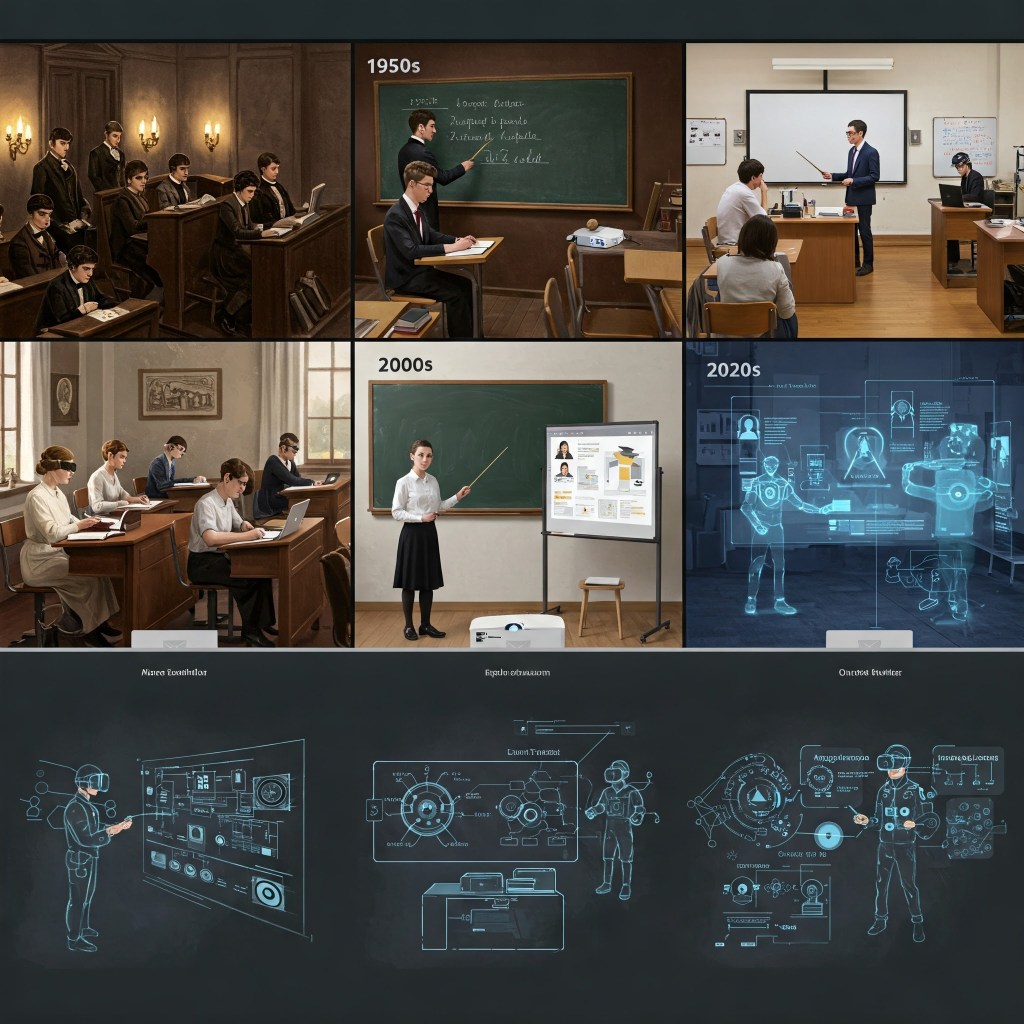
In the late 19th century, industrialization compelled the world to reconsider the relevance of its educational systems. Traditional classical education – rooted in Latin, philosophy, and abstract theory – proved inadequate for the practical demands of a rapidly industrializing society. In response, new institutions emerged, including Worcester Polytechnic Institute, Stevens Institute of Technology, and the land-grant colleges established through the Morrill Acts. These institutions championed a radical notion for their time: education should be practice-oriented, embedded in real-world contexts, and designed to prepare individuals not for abstract contemplation, but for active participation in an evolving industrial economy.
(more…)Tag: Artificial Intelligence
-
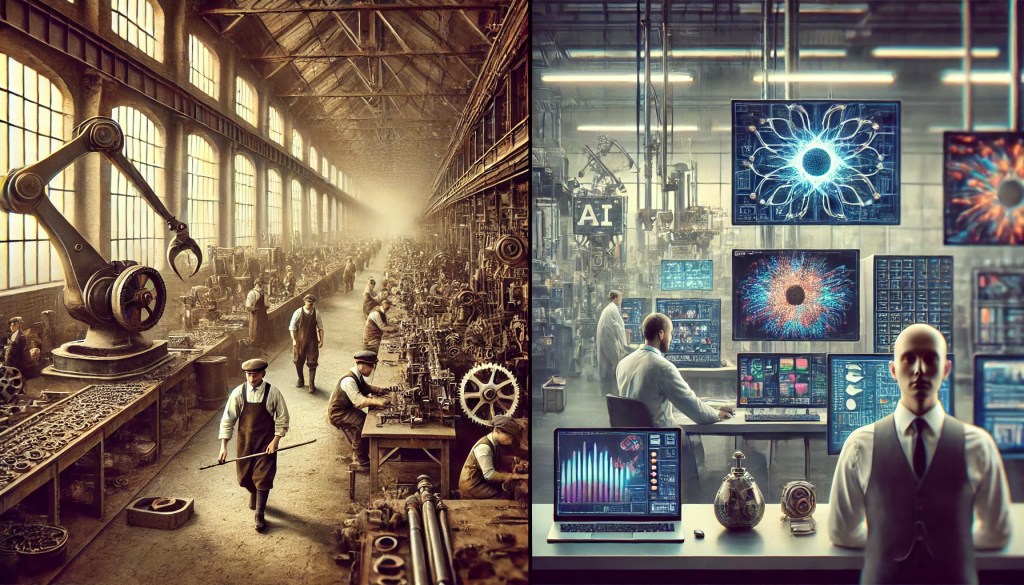
A Different Kind Of Disruption: Skills, Invention, And The Future Of Work
As the world enters what may be the most transformative period since the dawn of industrialization, comparisons to past eras of great invention are both understandable and necessary. The steam engine, electrification, and mass production systems redefined economies, reshaped societies, and triggered massive employment shifts. Today, artificial intelligence, quantum computing, and synthetic biology are poised to do the same. Yet beneath the surface of these historical parallels lies a crucial divergence – one that could reshape not just work, but the social fabric itself.
(more…) -

The Next Phase Of Power Transitions
My latest series of posts are driven by what I believe are two of the biggest forces that ultimately determine our future: General Purpose Technologies and geopolitical dynamics. In a previous post, I described the role of Necessity, Invention and Convergence in driving the diffusion of general purpose technologies. Necessity drives invention, but true trasitions occur when necessity and invention converge across industries, economies, and societies. However, as technological competition accelerates, particularly in artificial intelligence (AI), a deeper question emerges: What determines the diffusion of transformative technologies, and how does that shape global power dynamics?
(more…) -
Will This General Purpose Technology Cycle Accelerate System-Level Change Faster Than Ever?
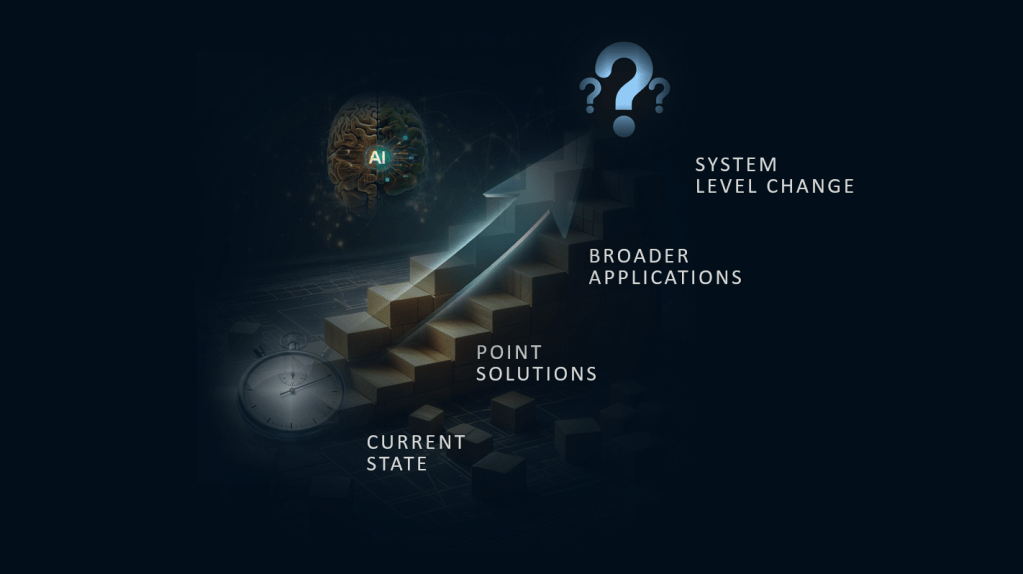
Throughout history, General Purpose Technologies have reshaped economies, industries, and societies. Steam power, electricity, and computing all followed a familiar trajectory – initial invention, slow diffusion, and eventual transformation that restructured industries and economies. Each of these transitions took decades, often constrained by infrastructure needs, workforce adaptation, and institutional resistance. Yet today, as we stand at the intersection of artificial intelligence, synthetic biology, and quantum computing, the question arises: Will this General Purpose Technology cycle break historical patterns and accelerate system-level change faster than ever before?
(more…) -
The New Era Of General Purpose Technologies: Why Ecosystems, Not Industries, Will Define The Future
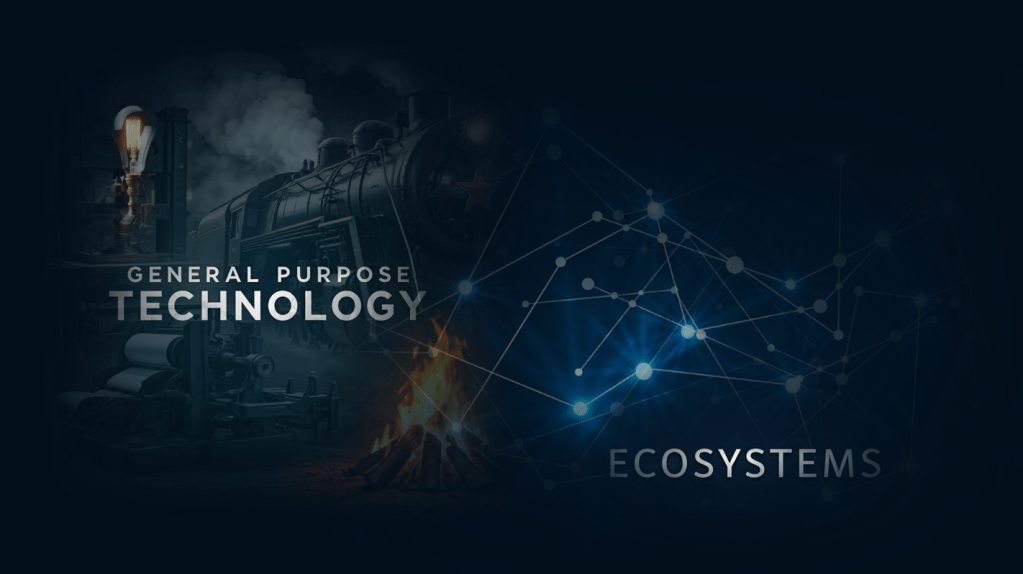
Throughout history, General Purpose Technologies (GPTs) have reshaped economies, industries, and societies, driving profound shifts in how value is created and distributed. Yet, while the transformative nature of GPTs is widely acknowledged, the inevitability of ecosystems as the dominant economic structure of the future is not fully appreciated. Traditional industries, once defined by clear boundaries, will slowly be replaced by interconnected ecosystems where businesses, institutions, and governments collaborate to solve challenges that no single entity or sector can address alone. This shift is not merely a byproduct of technological advancement – it is an economic and structural necessity.
(more…) -
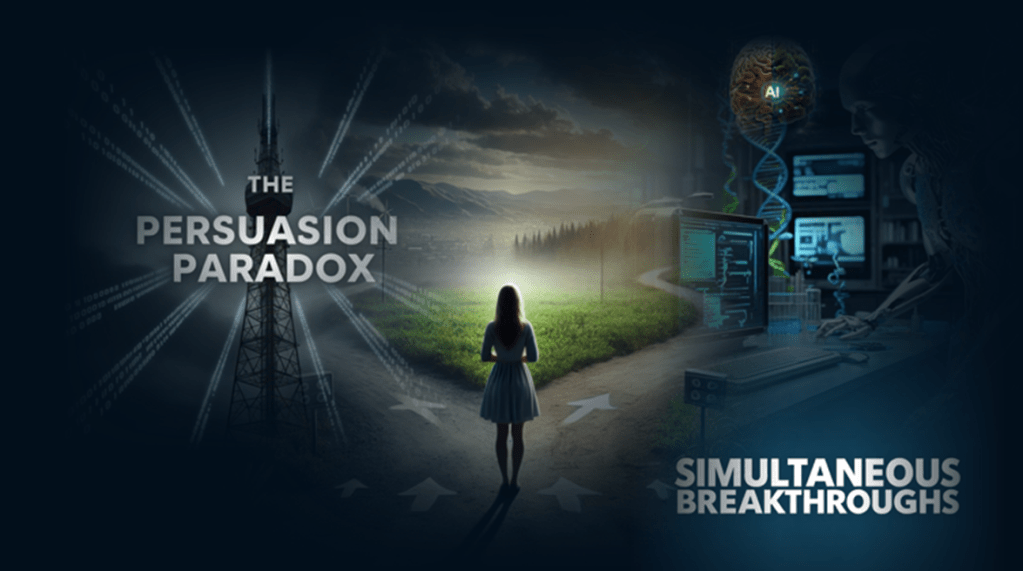
The Fork In The Road: Navigating The Future
Throughout history, progress has been shaped by pivotal choices – moments where society stands at a fork in the road, with two distinct paths ahead. One path leads toward advancement, where invention, innovation, and human action address humanity’s most pressing challenges. The other veers toward fragmentation, where barriers to progress emerge, often in the form of resistance, skepticism, or unintended consequences of new technologies.
(more…) -

China’s AI Breakthrough: What Does Manus Really Signal For AI’s Future?
A recent article described the launch of Manus, an autonomous AI agent developed in China. It has generated debate. in some circles. Some label it a leap in self-directed AI, while others see it as building on existing multi-agent frameworks. Speculation abounds about its true capabilities and how much of the attention is genuine progress versus media-driven hype. Throughout history, we have observed similar moments when an emerging technology prompts sweeping claims that may not align with its real-world limitations.
(more…) -
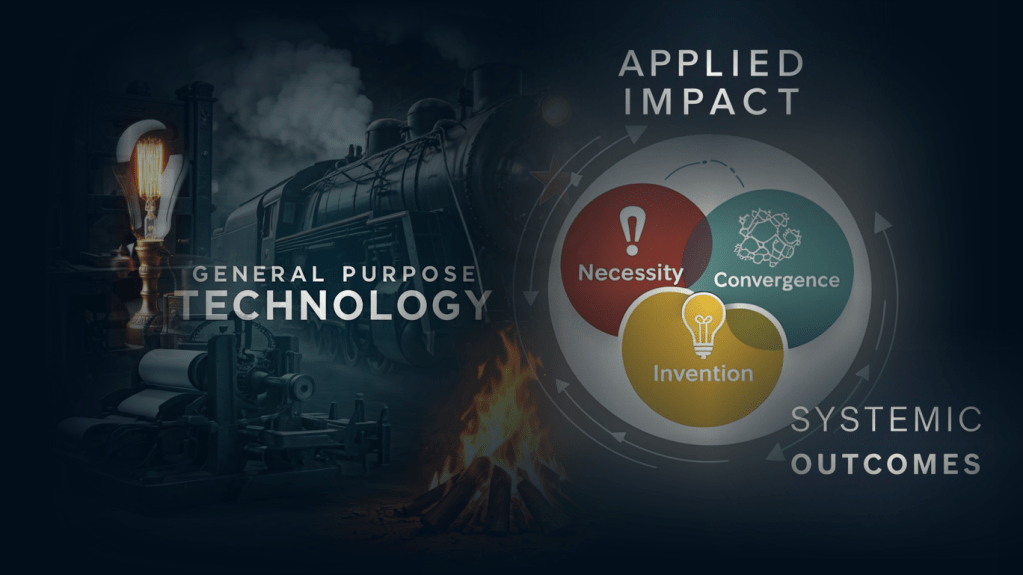
When General-Purpose Technologies Intersect With Necessity, Invention, And Convergence
History teaches us that transformative technologies do not emerge in isolation, nor do they reshape the world overnight. Instead, they follow a discernible pattern – an evolutionary journey that unfolds in response to human needs. Two phenomena help us understand this journey: the Evolutionary Phases of General-Purpose Technologies (GPTs) and the role of necessity, invention, and convergence (NIC). When viewed together, they provide a powerful lens for understanding not just how technologies evolve, but why they emerge and when they reach their full potential.
(more…) -
The Great AI Shift: Services As Software
I came across a very good article that describes the emerging phenomenon that some have termed Services-as-Software. For decades, businesses have structured their operations around human-driven services – coders developing applications, analysts interpreting data, consultants optimizing workflows. Software has long played a supporting role, but the core work remained in human hands. That paradigm is shifting. Here is a summary of the article.
Artificial intelligence (AI) is transforming the very nature of services. What once required teams of specialists is increasingly being handled by AI-powered systems capable of executing tasks autonomously. This transformation isn’t just about automation – it’s about redefining how businesses consume and deliver services. The emerging model, as mentioned, is often called Services as Software, and it marks a profound departure from the past: software is no longer a tool for human workers; in many cases, it is the worker.
(more…) -
The Persuasion Paradox – Reclaiming Truth In The Age Of Digital Persuasion
At the heart of the Persuasion Paradox lies a profound contradiction between the transformative promise of the Information Age and its unintended consequences. Initially, the internet was envisioned – and widely celebrated – as a revolutionary tool for democratizing knowledge, dismantling barriers to information access, and fostering global understanding. Yet, we now face a reality starkly different from that optimistic vision. The abundance of information, rather than elevating clarity and truth, has birthed a “noise-to-signal” problem, where misinformation, disinformation, and emotionally charged narratives often obscure the truth. This phenomenon resonates deeply with themes I’ve explored previously – the democratization of knowledge and the unintended consequences inherent in rapid technological and societal transitions.
(more…) -
The Converging Forces Of Progress: Necessity, Invention, And Systemic Outcomes
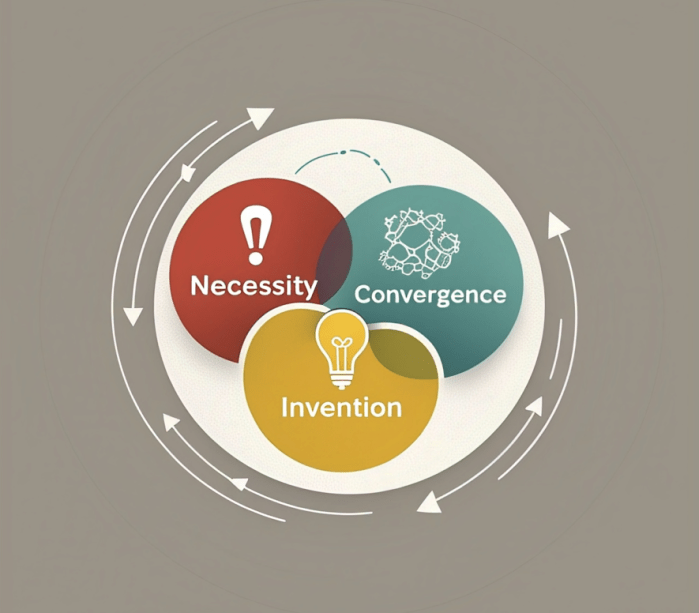
What if the very inventions that propel humanity forward also sow the seeds of our greatest challenges? History shows that progress is rarely a straight line. Instead, it moves in cycles: necessity sparks invention, and inventions converge to reshape society. From the steam engine’s role in the Industrial Revolution to the internet’s impact on globalization, each wave of transformation has brought profound change – economic shifts, new social structures, and unintended consequences. These disruptions, from rising inequalities to environmental crises, often take decades to address. As we stand on the brink of the next great convergence – whether in AI, biotechnology, humanoid robots, cyber, climate or health – we must ask – how can we harness innovation to create a more equitable and sustainable future?
(more…) -
The Necessity-Invention-Convergence Framework
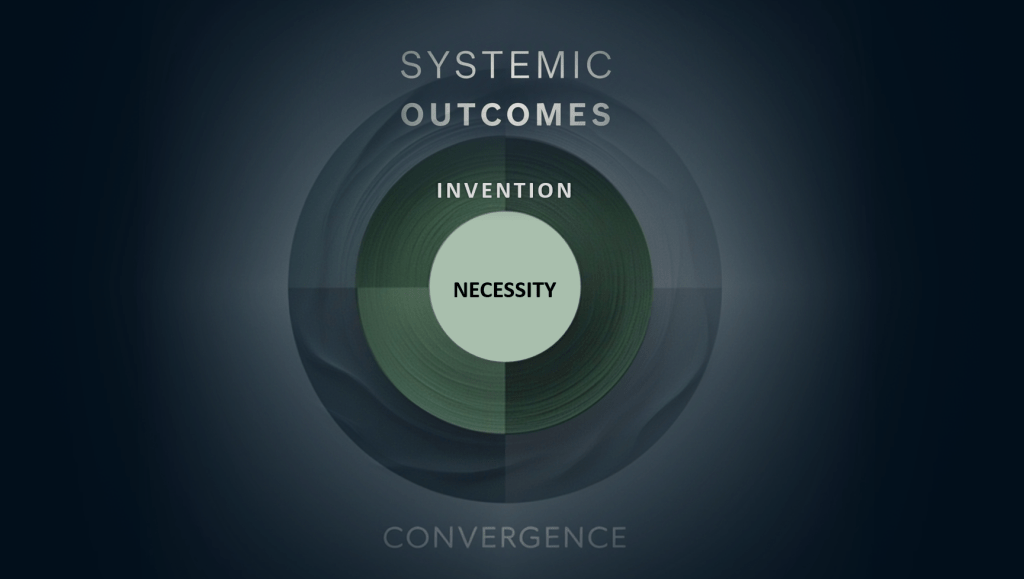
The Necessity-Invention-Convergence Framework provides a structured way to analyze the forces that drive human progress. At its core, necessity serves as the fundamental driver of change, arising from pressing challenges, constraints, or demands. Whether economic, social, environmental, or geopolitical, necessity compels action and forces innovation. Throughout history, this dynamic has played out in transformative ways. The Industrial Revolution was fueled by labor shortages and an increasing demand for goods, just as the Digital Revolution emerged in response to the need for faster, decentralized communication. Today, the global energy transition is being shaped by the necessity of addressing climate change and resource limitations.
(more…) -
Polyintelligence: The Fusion Of Nature, Human Ingenuity, And AI
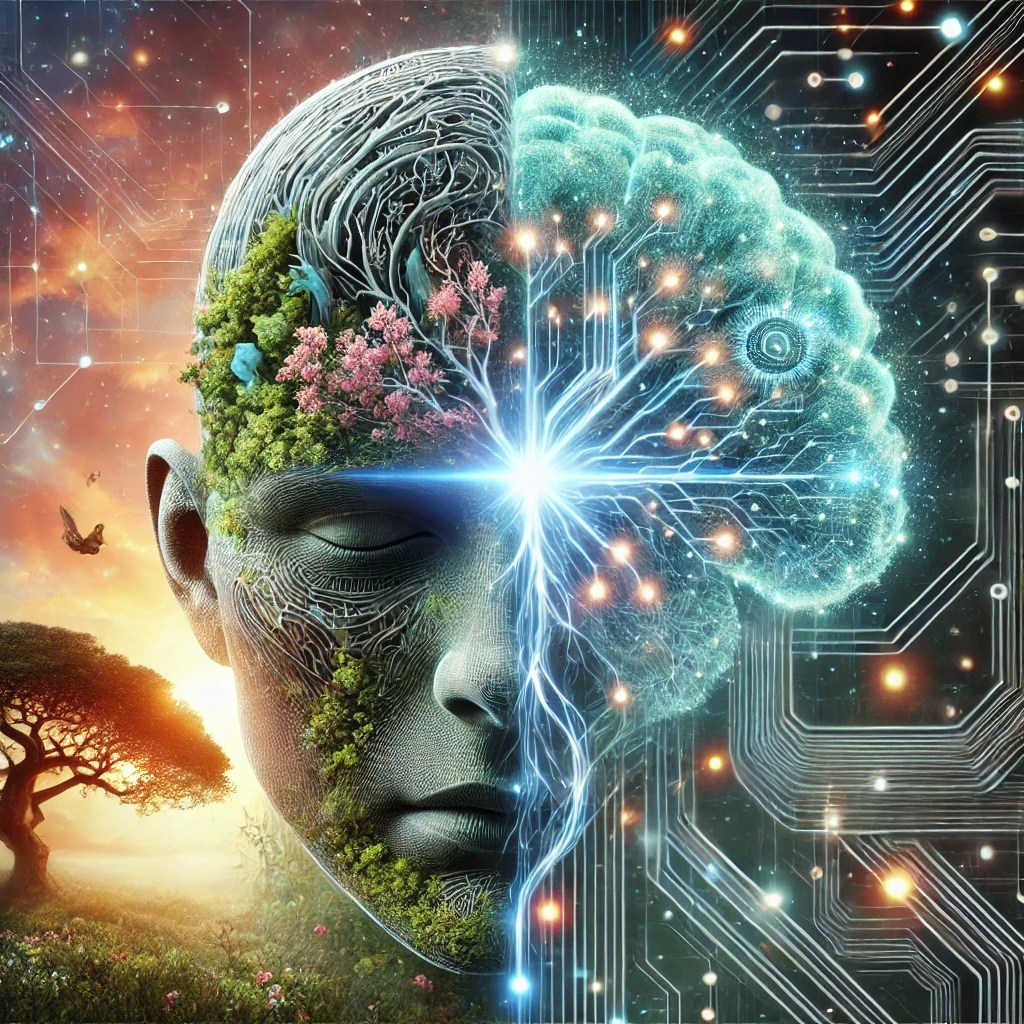
In recent discussions across media, business, and academia, much has been said about the convergence of human and artificial intelligence. This powerful combination is already leading to remarkable discoveries. However, there is another form of intelligence that often goes unrecognized – nature’s intelligence.
A recent article I came across highlights this critical dimension, introducing the concept of polyintelligence – an integrated framework of natural, human, and machine intelligence. The notion that nature itself embodies intelligence, with its ability to learn, adapt, and encode knowledge, aligns closely with the interdisciplinary approach I have long advocated. It also reinforces the need for a lateral, ecosystem-driven perspective – one that transcends silos and embraces holistic thinking.
(more…) -

Sensing And Responding: How AI Is Helping Us Navigate An Uncertain World
Over the years, I’ve chronicled how rapid change and pervasive uncertainty have become the hallmarks of our times. In my previous writings, I argued that survival in this dynamic environment depends on a sense and respond approach – rapidly detecting meaningful signals and acting decisively. Today, that vision is evolving into reality. With the convergence of generative and agentic AI, we’re not only theorizing about this paradigm; but moving towards a practical reality that allows us to navigate complexity and turn uncertainty into opportunity.
(more…) -
The Evolution Of AI Perception: From Skepticism To Conviction
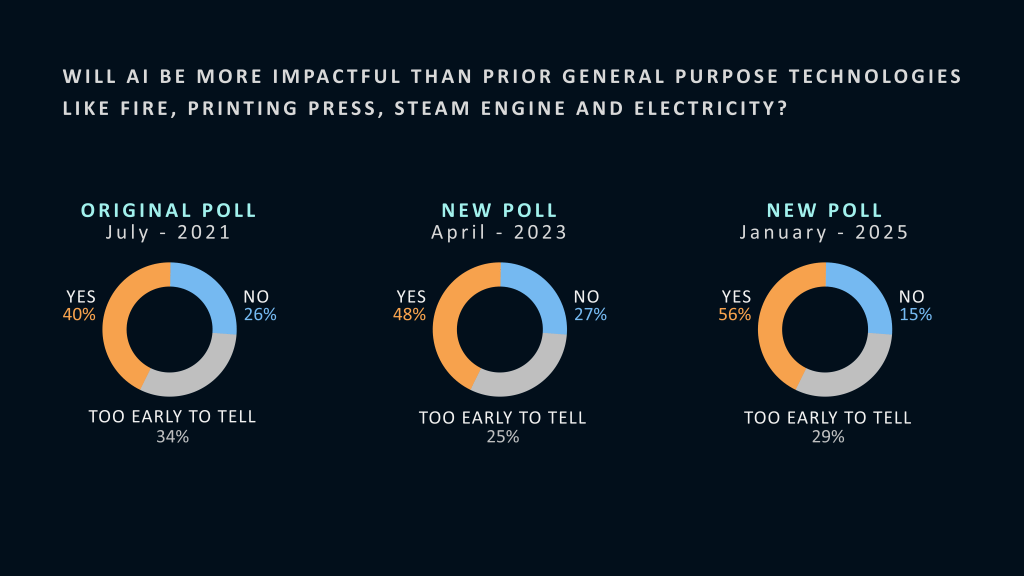
In 2021, I conducted a poll to gauge public sentiment on the transformative potential of artificial intelligence. I posed a bold question: Will AI be more impactful than prior general-purpose technologies like fire, the printing press, the steam engine, and electricity? Respondents had three choices: Yes, No, and Too Early to Tell. The results reflected a world still grappling with AI’s potential—40% answered Yes, 26% No, and 34% felt it was Too Early to Tell.
(more…) -
Book Review: Genesis: Artificial Intelligence, Hope, and the Human Spirit
Genesis: Artificial Intelligence, Hope, and the Human Spirit is a rare and thought-provoking collaboration among a statesman whose influence has spanned decades, Henry Kissinger, and two technology visionaries, Eric Schmidt and Craig Mundie. Together, they present a sweeping examination of artificial intelligence (AI) – its towering promises, its urgent perils, and its profound implications for human identity, governance, and morality.
(more…) -
Genius Across The Ages: From Renaissance Icons To AI
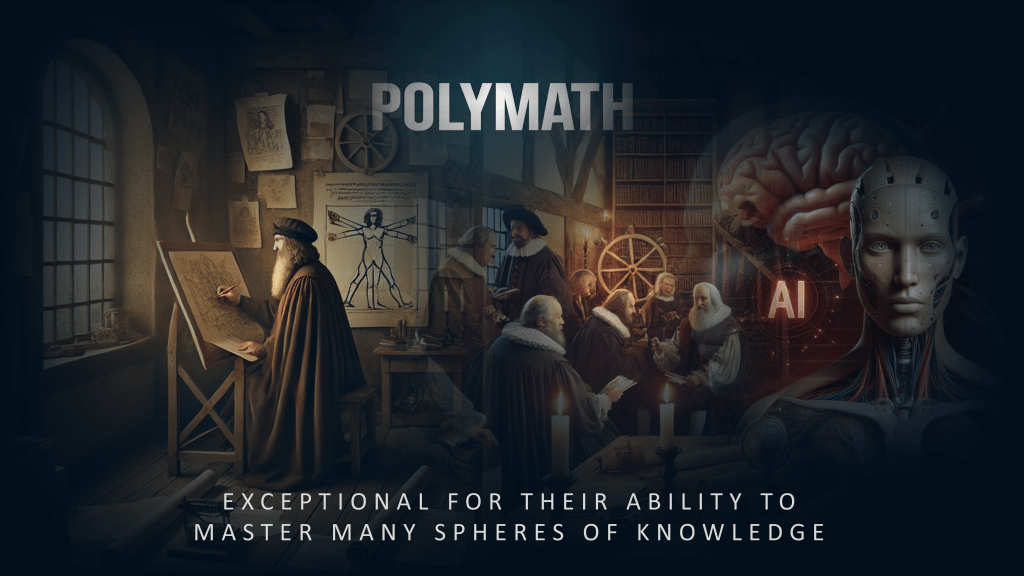
In his final book, Genesis: Artificial Intelligence, Hope, and the Human Spirit, Henry Kissinger reflects on the historical significance of polymaths – those extraordinary individuals whose mastery spans multiple disciplines – and their profound role in shaping human civilization. He argues that polymaths, with their expansive intellectual reach, have served as essential engines of progress and innovation, continually moving humanity forward.
(more…) -
A Sweeping Narrative Of Human Progress
In How Economics Explains the World: A Short History of Humanity, Andrew Leigh, a Harvard-trained economist, presents a comprehensive and engaging narrative that delves into the profound impact of economic forces on human history. This book, though concise at under 200 pages, spans a vast timeline from the advent of agriculture to the present day, including the era of artificial intelligence.
(more…) -

The General-Purpose Technology Evolution Framework
General purpose technologies, from the steam engine to electricity, have historically followed a predictable evolutionary path. Each GPT begins at the status quo, disrupting established ways of operating. Next, it moves to point solutions, where its application enhances specific areas without fundamentally transforming broader systems. Over time, these point solutions give way to broader applications, where the technology begins to reshape processes on a larger scale. Finally, the journey culminates in system-level change, where the technology redefines the way society, industries, and systems function as a whole.
(more…) -

The Power Of The Network: How Information Shapes Our World
In his latest work, Nexus, Yuval Noah Harari takes us on a thought-provoking journey through the profound interplay between information networks and humanity’s destiny. From the oral traditions that once bound ancient societies to the digital platforms reshaping our global communities today, Harari unveils the transformative power of information networks – how they have built civilizations, redefined power, and molded individual identities.
At its core, an information network is far more than a collection of nodes and links. It is a living ecosystem, continually expanding and contracting as it facilitates the exchange, evolution, and amplification of ideas. Over millennia, these networks have taken countless forms: the passing of legends around a village fire, the delicately inked manuscripts in medieval monasteries, the printing presses that sparked the early modern information revolution, and now the dazzling web of the Internet. These networks are the lifeblood of human progress – driving innovation, enriching cultures through exchange, and catalyzing the growth of economies. They are how we remember the past, navigate the present, and envision the future.
(more…)

