At the heart of the Persuasion Paradox lies a profound contradiction between the transformative promise of the Information Age and its unintended consequences. Initially, the internet was envisioned – and widely celebrated – as a revolutionary tool for democratizing knowledge, dismantling barriers to information access, and fostering global understanding. Yet, we now face a reality starkly different from that optimistic vision. The abundance of information, rather than elevating clarity and truth, has birthed a “noise-to-signal” problem, where misinformation, disinformation, and emotionally charged narratives often obscure the truth. This phenomenon resonates deeply with themes I’ve explored previously – the democratization of knowledge and the unintended consequences inherent in rapid technological and societal transitions.
Continue readingInformation
Book Review: Genesis: Artificial Intelligence, Hope, and the Human Spirit
Genesis: Artificial Intelligence, Hope, and the Human Spirit is a rare and thought-provoking collaboration among a statesman whose influence has spanned decades, Henry Kissinger, and two technology visionaries, Eric Schmidt and Craig Mundie. Together, they present a sweeping examination of artificial intelligence (AI) – its towering promises, its urgent perils, and its profound implications for human identity, governance, and morality.
Continue readingInnovation And Our Well-Being

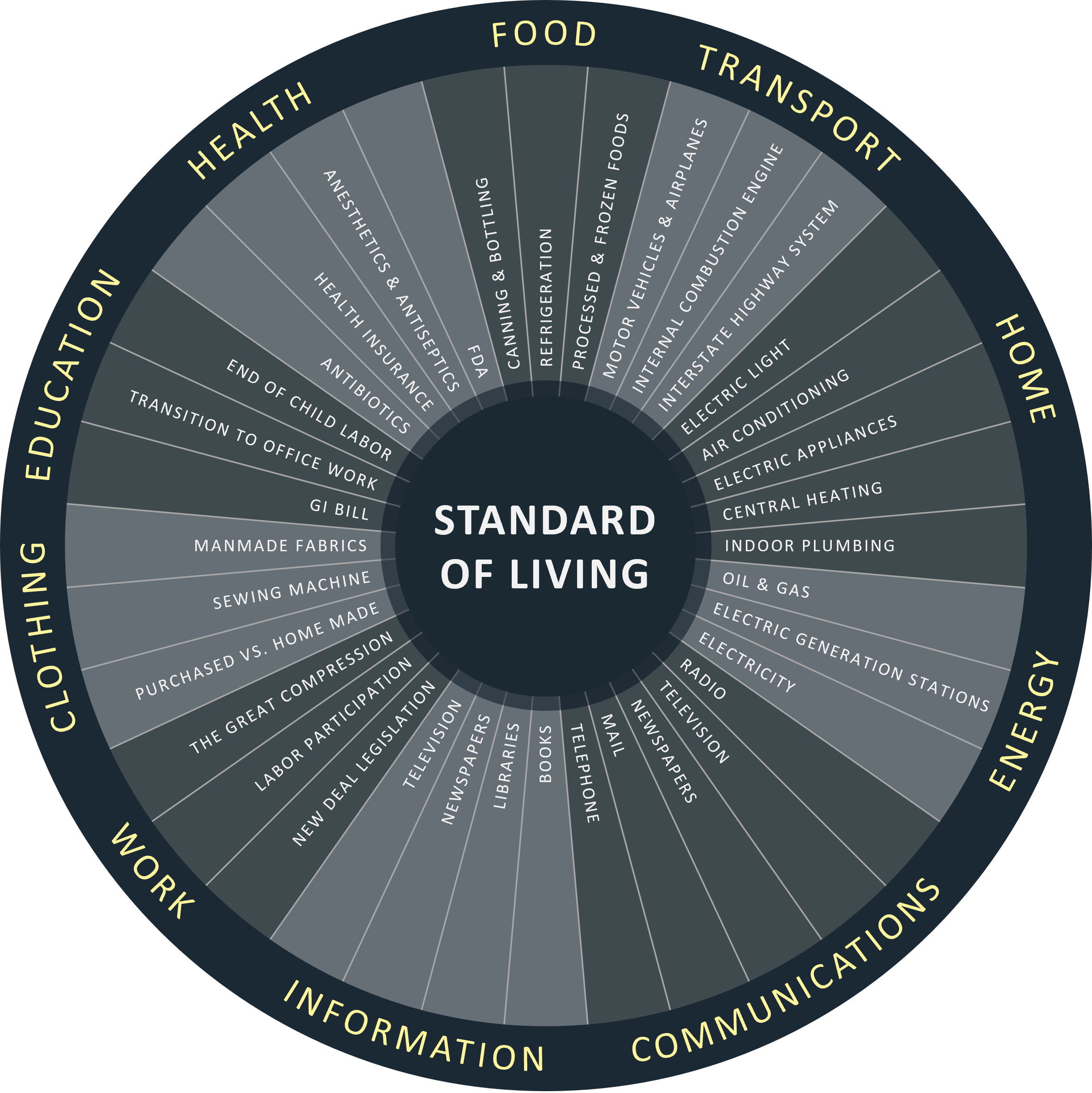
In a post from 2016, I launched an innovation wheel that captured the activity of the second industrial revolution. This activity set the standard of living that much of society enjoys today. As I mentioned in that earlier post, in a brilliant journey through the economic history of the western world, author Robert J. Gordon looks at The Rise and Fall of American Growth. The book focused on a revolutionary century that impacted the American standard of living more than any period before or after.
Continue readingThe Future Of Information Ecosystems
Fellow Futurist and TCS colleague Kevin Benedict has been exploring the topic of information and the ecosystems that support it. In this wide ranging series, he looked at things like social engineering, device dependence, and behavioral science. In a world where information is weaponized, this is an important discussion. Below is a summary of the series in Kevin’s words, followed by a link to each article.
Continue reading
The Future of Information And Influence
Colleague Kevin Benedict recently started researching the future of information and influence. It should be readily apparent that misinformation and its associated erosion of trust is a big societal challenge. Some of us are more susceptible to misinformation than others. In a new Blog Post where he describes his research, Kevin points to a recent study:
Continue readingWill Astounding Innovation Elevate Global Well-Being?
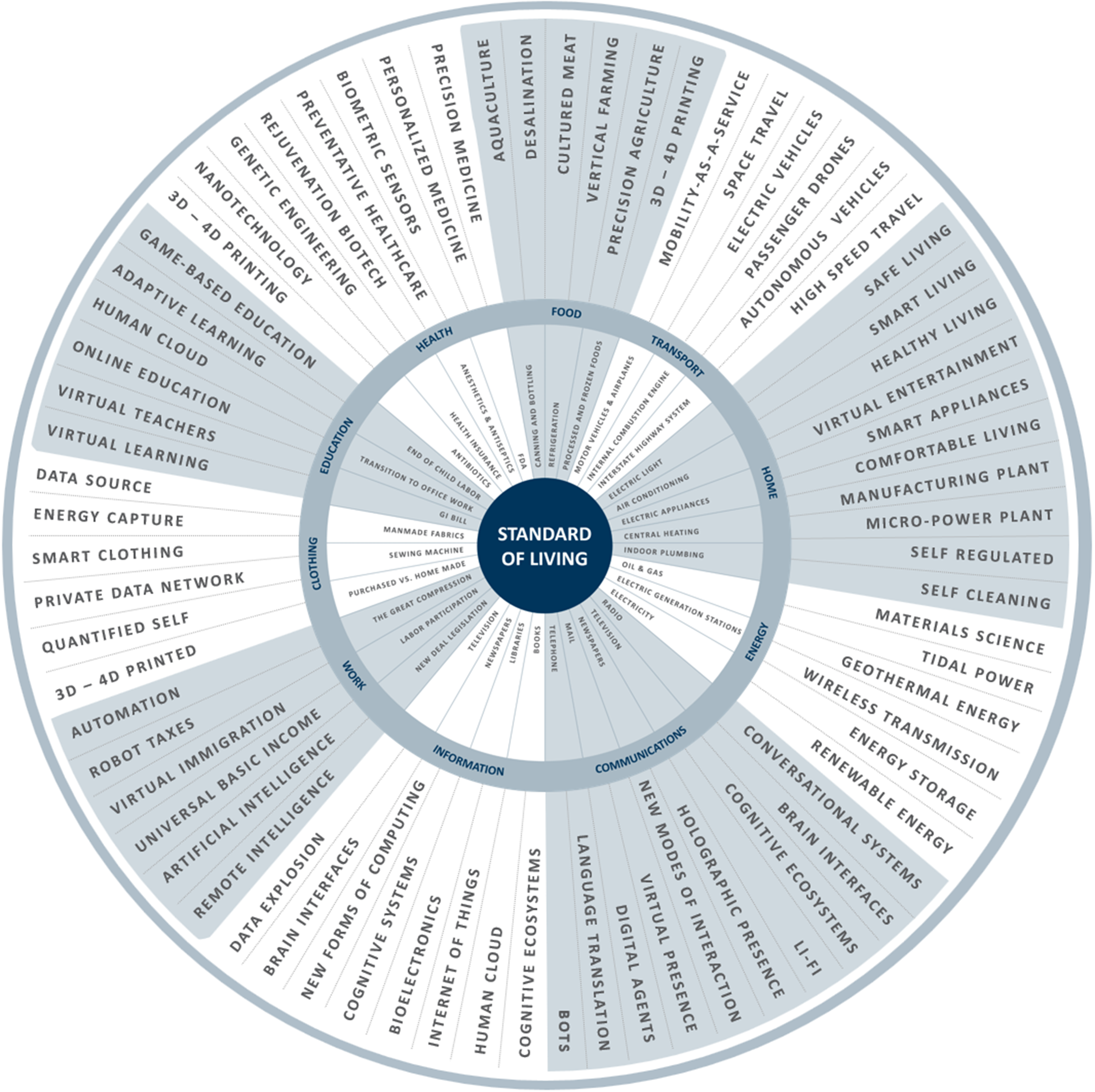
The center-piece of my work is the early signs of a Shift to Purpose and Well-being. I first developed this Innovation Wheel (click to view in a separate window)
when analyzing the impact of second industrial revolution innovation on well-being in the Western world. The Possibilities are boundless – but society must Map the Path of Future Innovation. I walk around this innovation wheel when describing it to an audience, investing time in describing the possibilities across the various areas of well-being. This short video clip replicates that walk around the innovation wheel. The possibilities are indeed boundless.
The Future Ain’t What It Used To Be
For those that have taken the thought leadership course focused on our emerging future, thank you. For those that may have interest, the course will run for foreseeable future. In this post from last year, I summarized the key messages from the course. It has been updated to reflect the progression of our emerging future.
Yogi Berra is credited for once saying that the future ain’t what it used to be. What a perfect way to describe what is coming: a complete change in the way we think about the future. Our journey to the future begins with a look back. A convergence of multiple forces during a special century following the U.S. Civil War established the standard of living in developed economies. Some believe that we will never see a convergence of forces as dramatic and impactful as that which occurred during this period. I pulled this wheel together to capture that convergence across the various areas of our well-being, leveraging the work of economist Robert J. Gordon. I captured his thinking in a recent post titled Revolution and the Innovation Wheel.