
In this four-part series, I embark on a journey through the annals of human progress, exploring the intricate convergence between knowledge, invention, and societal transitions. I trace the democratization of knowledge from the dawn of language to our current era, examining how pivotal inventions have not only expanded our capabilities but reshaped the very fabric of civilization. As we stand on the brink of what could be a second scientific revolution, I delve into the dawn of a new age of invention, potentially rivaling or even surpassing the remarkable progress of past eras.
Continue readingAuthor: Frank Diana
Disrupt With Impact
I had the pleasure of reviewing an early copy of a book authored by Roger Spitz. The book titled Disrupt with Impact is scheduled to launch on September 24, 2024. Roger Spitz is a futurist, author, and President of Techistential, a foresight strategy consultancy. He also chairs the Disruptive Futures Institute, a global education hub which empowers organizations and entrepreneurs. His work has been featured in numerous media outlets, such as Fast Company, WIRED, and MIT Technology Review. He is based in San Francisco, USA.
As a futurist, I find the book to be a compelling and timely exploration of the challenges and opportunities facing leaders in our rapidly evolving world. Spitz masterfully weaves together insights on technological convergence, artificial intelligence, and the blurring of industry boundaries to paint a vivid picture of the disruptive landscape we must navigate. His concept of UN-VICE (Unknown, Volatile, Intersecting, Complex, and Exponential) resonates strongly, effectively capturing the essence of our current era and the imperative for new approaches to leadership and decision-making.
Continue readingGeopolitics In Flux: Why The Current Moment Matters
“New Cold Wars: China’s Rise, Russia’s Invasion, and America’s Struggle to Defend the West” by David E. Sanger offers a comprehensive analysis of the current geopolitical landscape, focusing on emerging tensions between the United States, China, and Russia. Sanger, a veteran national security correspondent for The New York Times, draws on his extensive experience to provide readers with a nuanced understanding of the complex challenges facing the world.
The book explores how the traditional concept of a Cold War has evolved in the 21st century, with China’s economic and technological ascendancy and Russia’s aggressive military actions reshaping global power dynamics. Sanger argues that these new cold wars differ significantly from the US-Soviet conflict of the 20th century, presenting unique challenges for global stability.
Continue readingThe Future of Robotics in Manufacturing: BMW and Figure’s Humanoid Collaboration
In a foreshadowing move for the robotics and automotive industries, BMW has partnered with California-based robotics firm Figure to deploy their advanced humanoid robot, Figure 01, at the automaker’s Spartanburg, South Carolina, facility. This collaboration marks a significant step toward integrating humanoid robots into complex manufacturing processes. Figure recently showcased a video of the 01 humanoid robot participating in vehicle assembly, demonstrating its autonomy and precision. The robot’s capabilities are driven by sophisticated neural networks that map visual data directly to actions. These neural networks enable the humanoid to perform various tasks, like handling sheet metal, working in the body shop, and managing warehouse operations.
Continue readingKeynote at TechArena
Back in February of this year, I had the honor to present at a large event in Stockholm Sweden. The event called TechArena included speakers like Al Gore and Steve Wozniak. The event abstract of my presentation follows, as, as well as an abridged version of the keynote.
Continue readingGenerational Amnesia

In today’s rapidly evolving technological landscape, the concept of generational amnesia is gaining renewed attention. Generational amnesia refers to the phenomenon where each generation retains only a fraction of the knowledge and experiences of prior generations. This can lead to a loss of important historical insights, potentially causing us to repeat the mistakes of the past. As our society continues to advance, especially with the rise of generative AI, this issue becomes increasingly pertinent.
Continue readingA Journey Through The Looking Glass
UPDATE: Given current world events, I feel compelled to share this broad story again.
In the last ten years, as my focus expanded, a story about the future emerged. If I were to write a book to capture that story, I would call it A Journey through the Looking Glass (like the name of the leadership course I developed in 2017). My presentations are the vehicle for this type of storytelling, while my Blog captures the story in pieces. Now, as we find ourselves in the early stages of a transformative decade, I feel compelled to pull the pieces together through the written word as well. My next several posts will be dedicated to telling this story. Here are the other posts in the series to date:
Continue readingThe Catalyst Effect: How Transformative Inventions Shape Humanity’s Future
Throughout history, catalysts—key events and turning points—have ignited profound shifts in human behavior and societal evolution. From conflicts like World War II to scientific breakthroughs such as the discovery of electricity, each milestone has propelled us into new realms of possibility and understanding. Today, as we stand on the precipice of a technological revolution driven by artificial intelligence (AI), humanoid robots, quantum computing, synthetic biology, and space technology, it is crucial to reflect on how these transformative developments will reshape our future. I have viewed this emerging period as a looking glass moment.
Continue readingReframing The AI Narrative
The unease is still palpable. Artificial intelligence, a fledgling giant, casts a long shadow. Headlines continue to blare warnings of robot domination and technological apocalypse. We teeter on the precipice of a future painted in dystopian hues. But a counter-narrative is making its way into the discourse. Let’s reclaim the narrative. Let’s transform the ubiquitous AI assistants from harbingers of isolation to tools that empower us to focus on the things that truly breathe life into our existence. The conversation needs to shift. Not a passive acceptance of a preordained future, but an active shaping of our shared narrative. We must chart a course, not simply brace for impact. We stand at the precipice, but instead of staring down into the abyss, let’s turn our gaze skyward, towards the boundless possibilities that lie before us. The future is not a pre-written script, but a blank canvas. The question isn’t a resigned “will AI replace us?” but a rousing call to action: “What wonders can we co-create?”
Continue readingThe Promise And Challenges Of Quantum Computing
Quantum computing stands at the forefront of technological innovation, offering the tantalizing promise of revolutionizing how we process information. By leveraging the principles of quantum mechanics, quantum computers could solve complex problems far beyond the reach of classical computers. However, despite its immense potential, realizing the full capabilities of quantum computing is fraught with significant challenges.
Continue readingTransforming Energy With Artificial Intelligence
A recent report offers a comprehensive strategy for expediting the deployment of clean energy while mitigating risks and costs amidst the climate crisis. In a collaborative effort, 100 experts in clean energy and artificial intelligence convened at Argonne National Laboratory to devise a plan for ensuring America’s energy future. The AI for Energy report captures their collective vision.
Continue readingFrom Sci-Fi To Streets: Autonomous Vehicles Hit 50,000 Weekly Rides
Autonomous vehicles have been a hot topic for years, plastered across headlines promising a futuristic revolution in transportation. Yet, widespread adoption remains elusive. This fuels public skepticism. We haven’t seen a significant shift on the roads, and the technology’s limitations in complex driving scenarios raise concerns about safety. Until autonomous vehicles can consistently navigate real-world challenges and demonstrate a clear safety advantage, the public’s wait-and-see approach is understandable.
Continue readingThe Future Of Longevity: Projected Gains In Global Life Expectancy By 2050
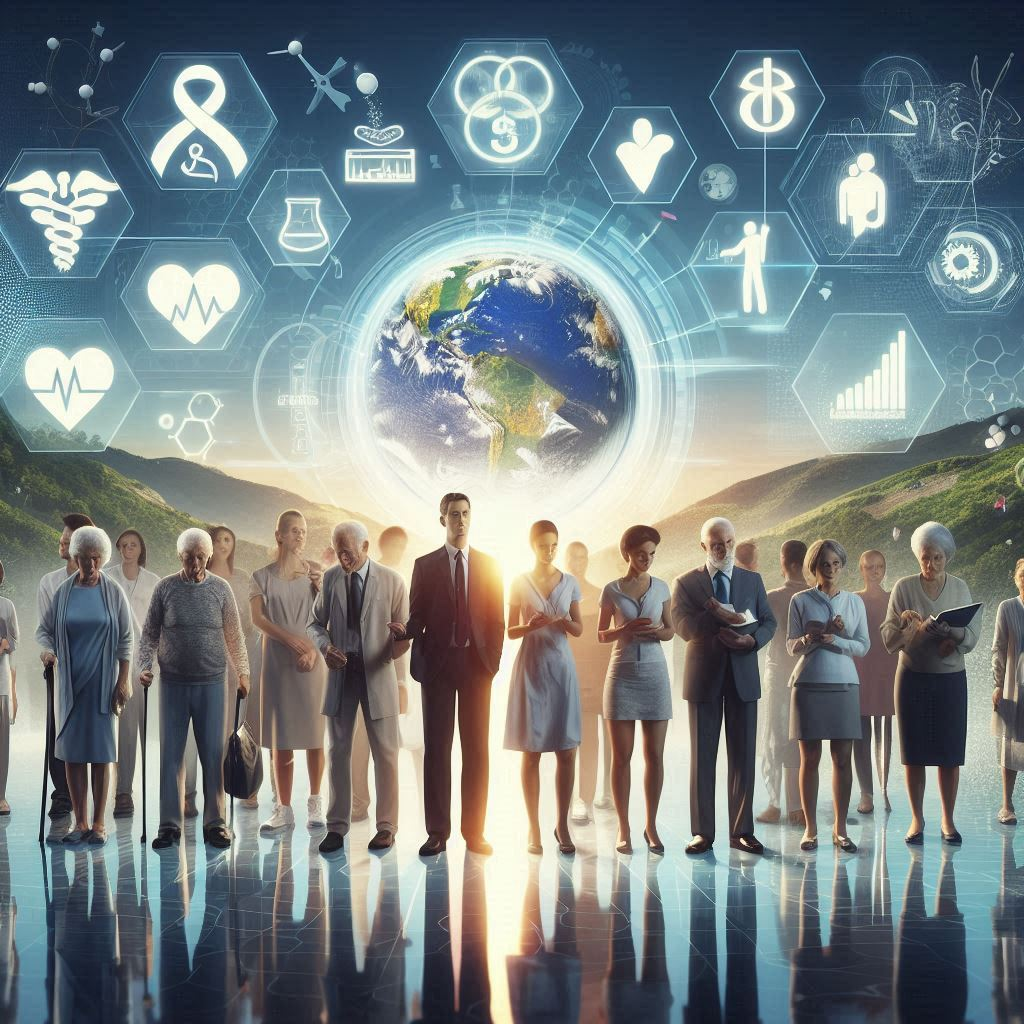
As the world advances in public health and medical interventions, significant increases in global life expectancy are anticipated by 2050. A recent analysis of the Global Burden of Disease (GBD) 2021 study reveals promising projections for both life expectancy and healthy life expectancy across various regions. A recent article delves into the key findings of the GBD 2021 study, examining the factors driving these changes and exploring alternative scenarios that could further impact global health outcomes.
Continue readingThe Innovation Vortex: How Emerging Tech Will Reshape Business Models Across Industries
The rise of generative AI is sparking discussions about its potential impact on various industries, with SaaS being a prime example. The traditional per-seat subscription model, a cornerstone of many SaaS businesses, might be vulnerable as AI automates tasks and potentially reduces the need for human users. Here’s a breakdown of the conversation:
Challenge: Generative AI’s ability to automate tasks could lead to fewer human employees needing SaaS applications, impacting per-seat subscription revenue.
Nuance: The impact might not be a complete disruption. While some user seats might decrease, AI could also create new functionalities and workflows requiring additional subscriptions.
For your blog post, consider this summary:
Bridging The Global Trust Deficit: A Call For Centrist Collaboration

In today’s interconnected world, the necessity for global cooperation has never been more critical. Yet, paradoxically, we are witnessing a decline in collaborative efforts, replaced by rising competition and confrontation. A recent article via the World Economic Forum explores the growing trust deficit in international mechanisms, highlighting the challenges and opportunities of fostering centrist geopolitics. By examining historical precedents and modern examples, it offers insights into how practical, purpose-driven partnerships can restore global trust and address the compounding crises of our time.
Continue readingThe Rapid Evolution Of Humanoid Robots
The rapid advancement of humanoid robots is revolutionizing technology at an unprecedented pace. In just a few years, we’ve seen leaps in capabilities, from performing complex tasks with human-like intelligence to drastically reducing the time needed to learn new functions. This progress not only highlights the incredible innovation in robotics but also points towards a future where these machines can seamlessly integrate into various aspects of our lives.
Examples are all around us, and this article describes one such example. In less than a year since debuting its 6th-generation general-purpose humanoid robot, Canada’s Sanctuary AI has now introduced the next iteration of Phoenix. Sanctuary AI has been dedicated to developing a versatile humanoid robot capable of performing various tasks, such as labeling boxes, bagging groceries, moving packages, scanning products, and soldering. Initially, these robots are teleoperated to teach them how to execute these tasks effectively.
Continue readingGenerative AI: Thoughts From A Recent Book
I just finished reading a book titled Generative Artificial Intelligence: What Everyone Needs to Know. Author Jerry Kaplan offers a thought-provoking exploration of Generative AI (GAI), a revolutionary technology poised to reshape our world. Delving into its potential to transform everything from healthcare to creative arts, the book also tackles the ethical considerations and challenges that come with this powerful new tool.
Artificial intelligence (AI) has become an undeniable force in our lives. From virtual assistants like Siri to self-driving car technology, AI is rapidly transforming the landscape. However, as Kaplan states, a new wave of AI is poised to make even greater strides: Generative AI (GAI).
Continue readingBrave New Words: Unleashing The Potential Of AI-Driven Education
I just finished reading my most recent book titled Brave New Words, written by renowned education innovator and entrepreneur Salman Khan. In “Brave New Words”, Salman Khan explores the transformative potential of artificial intelligence in education. With his signature clarity and vision, Khan outlines a future where AI-powered learning systems enhance human teaching, increase accessibility, and foster a more equitable education system. This book offers a roadmap for educators, policymakers, and learners to navigate the AI revolution in education and unlock the full potential of humanity. I highly recommend it and have added the book to my Library.
Continue readingRevolutionary Reflections: Harnessing Historical Wisdom

As I described in my recent post, Fareed Zakaria’s recent book, “Age of Revolution,” provides an examination of the forces that shaped our modern world. From the revolutions of the past, Zakaria articulates the seismic shifts that have redefined global dynamics, influenced political landscapes, and reshaped societal structures. In a world that looks eerily like prior periods of revolution, there is much we can learn by analyzing history. However, analysis is meaningless if we do not learn from the past, and historically, we have failed to do so. It was Henry Kissinger that once said: “it is not often that nations learn from the past, even rarer that they draw the correct conclusions from it.” Analyzing periods that look like our current day is the first step, but it’s the application of these lessons to our current context that enables constructive pathways.
Continue readingAge Of Revolutions
Another book hits my library. “Age of Revolutions: Progress and Backlash From 1600 to the Present” by Fareed Zakaria is a thought-provoking exploration of the upheavals, breakthroughs, backlashes, and transformations that shaped Western liberalism and industrial modernity. It’s the signals of history that illuminate possible futures – and Mr. Zakaria’s book is loaded with signals, Here are the key points:
Continue reading Reimagining the Future