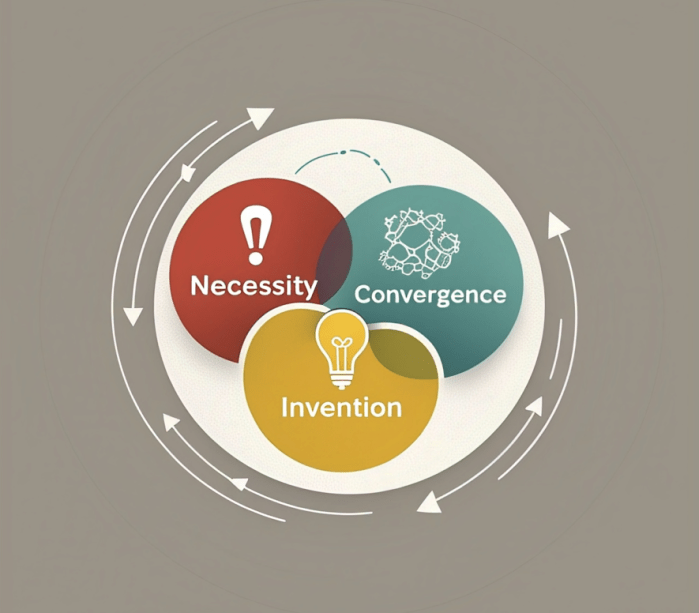
Meeting Today’s Grand Challenges – The Next Wave of Convergence

Throughout this four-part series, we’ve seen how necessity sparks invention – and together, they transform our society in profound ways. Today, our world faces an array of urgent challenges, from climate change and demographic shifts to economic and geopolitical instability, cybersecurity threats, and healthcare crises. These pressures are igniting a fresh wave of convergence, where inventive and innovative responses to pressing needs are poised to reshape our future. As we enter this transformative era, the cycle of necessity and invention reminds us that bold, purpose-driven invention and innovation is our best path forward.

Continue reading

Rehearsing The Future: Scenario Thinking And Longevity

For years, I’ve championed the power of scenario thinking as a way to “rehearse” the future. In my work, I’ve seen how structured, forward-looking narratives help us move beyond guesswork or simple extrapolation, allowing us to imagine multiple possibilities and develop more resilient strategies. This approach is particularly vital when it comes to the challenges of longevity and the strain on social safety nets like Social Security – areas where demographic shifts, policy decisions, and economic factors converge in ways that few people anticipate. By rehearsing tomorrow’s potential realities today, we equip ourselves with the foresight to adapt, innovate, and thrive no matter which scenario becomes our new normal.

Continue reading

The Future Is Not Determined: Lessons from Declining Fertility Rates

Throughout history, demographic trends have shifted in ways that defy prediction. One such phenomenon is the decline in fertility rates, which serves as a powerful reminder that the current state is not the future state. Today, discussions around declining fertility often frame it as a looming crisis, raising fears of aging populations and economic stagnation. Yet, history provides a compelling counter-narrative. The reversal of fertility decline in the mid-20th century, driven by the baby boom, highlights the impossibility of predicting how societal, economic, and geopolitical forces will interact to shape our future.

Continue reading

What History Tells Us About Human Action

Historically, it takes catastrophe to drive humans to act in periods where action is clearly needed. Wars and financial crashes are dominant catalysts throughout history. This poll considers the catalysts that drive humans to act in an era demanding action. Please take a minute to respond below. Pick those catalysts that you feel strongly about – and/or add to the list.

The Catalysts of Change

Two recent books The Fourth Turning is Here and The Coming Wave have each underscored the critical need for human action. But as I described in a post on Learning from History, it takes catalysts to drive actions that ultimately shape our future. A combination of breath-taking innovation, societal forces, depression and war, represent some of the catalysts that established a post-world war II era. As we stare into an uncertain, volatile and complex future, what are the catalysts likely to force human actions? The poll below has been conducted twice, pre-and-post pandemic. However, so much has changed since then. Please help me build on this list and identify the most significant catalysts. Choose all catalysts that you feel will contribute – or add anything that I am missing. For a deeper description of catalysts, please see the lessons from history post.

Continue reading

The World’s Aging Population

Most countries around the world have experienced population explosions, or are about to. Combine this with declining birth rates and falling mortality rates, and it’s clear that the global senior population will continue to reach new heights.

Pablo Alvarez – Charted: The World’s Aging Population from 1950 to 2100

That quote from a recent article underscores a series of demographic shifts that play a major role in shaping the future. While science and technology rightfully receive a lot of attention, these societal shifts are just as impactful. That message is resonating, as my recent post on population growth is now my most read post since I started blogging thirteen years ago.

Continue reading

America’s Demographics

Demographics are a big piece of forward-looking analysis – and we are living in times of significant demographic shifts. An aging society, a fall in working age population, a drop in fertility rates, and a diversifying population are just a handful of examples. This recent article provides a great interactive visual via Visual Capitalist that captures one hundred years of demographic change in America.

Continue reading

The Changing Human Life Cycle

Given the recent focus on demographics, I went back to review a book in my library titled “The Great Demographic Reversal.” In a post that reviewed the book, I mentioned that the authors state several times that their findings are controversial and counter to the views of mainstream economists. By way of review, the authors concluded that the future is one of:

Continue reading

The Great Resignation

We like labels. In this case, our current labor market dynamic has been called “The Great Resignation”. This article explores the current resignation phenomenon, providing great insight into why it is happening. There are several survey results presented via The Conference Board’s latest workforce survey. The high-level theme from the survey is that although it’s a culmination of a multitude of factors, employees are seizing this moment of leverage. But, as the article states, it’s also about workers’ pursuit of flexibility and autonomy.

Continue reading

The Critical Need For Foresight

Foresight is growing in importance – and it is great to see leaders focused here. In this world of complexity, uncertainty, and rapid pace, generating foresight is not easy. It is a moving target, with change dynamics altering even the safest predictions. We need look no further than the impact of COVID-19 on the pictures of possible futures we were painting just 18 months ago. As difficult as it is, we are fortunate to have people like Alexandra Whittington around to help. She recently tweeted a pandemic influenced view of the future of population, work, and lifestyles.

In some cases, COVID-19 exacerbated trends that already existed. For example, birthrates were already dropping around the world, a phenomenon that grew more acute in the past 18 months. Africa was viewed as the outlier, contributing to future population growth even in the face of declining fertility rates. If the 2020 Oxfam study referenced in the visual below is accurate, a reversing of family planning gains could drive more growth.

Continue reading

The Implications Of Slowing Population Growth

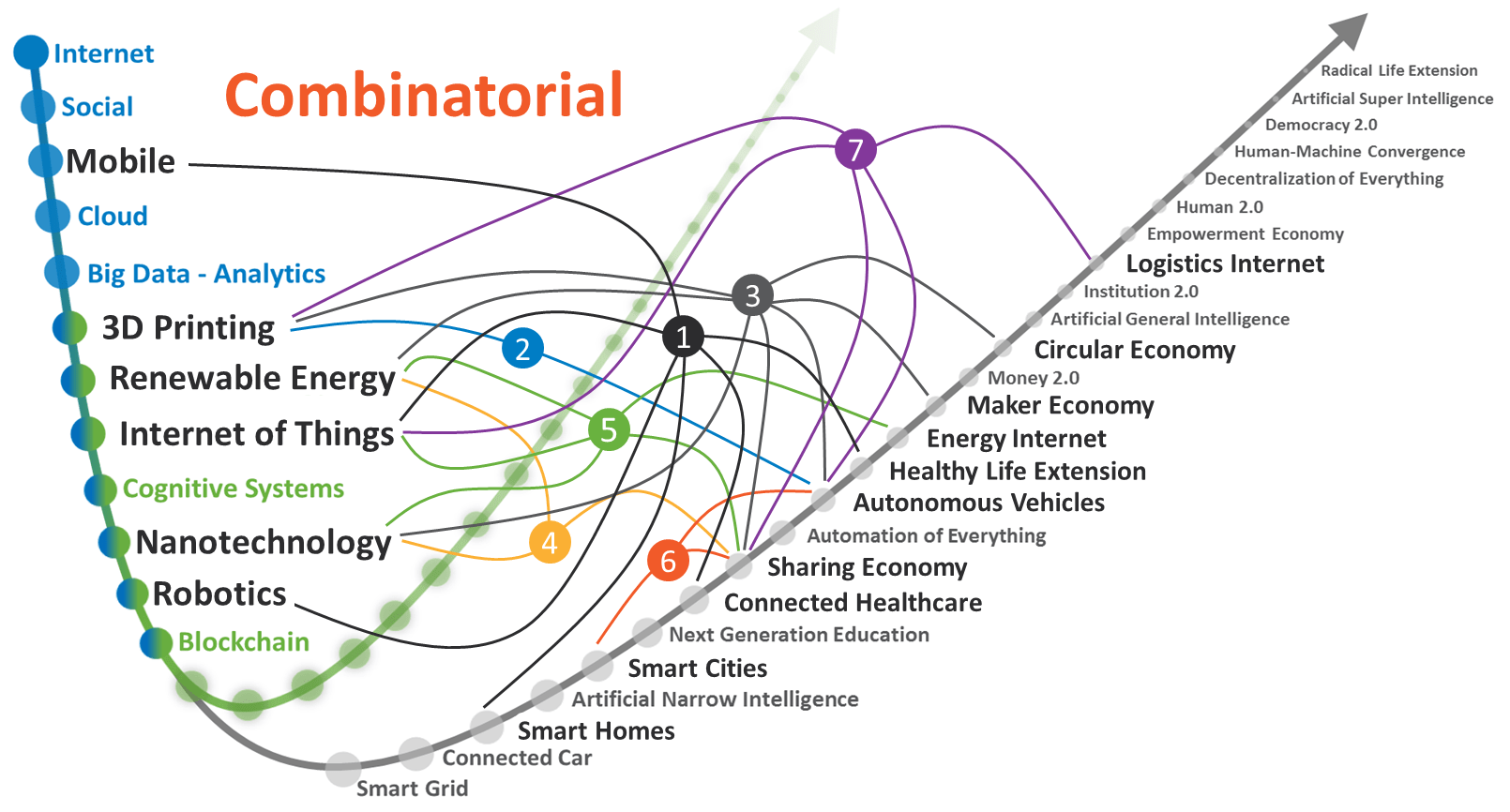
The power lies at the intersections. When I first started using the term “Combinatorial”, people thought I was making words up. Although I would like to take credit for the word, I first came across it when reading The Second Machine Age, a fascinating book by Andrew McAfee and Eric Brynjolfsson. In a post from 2015, I explored several possible combinations that represented disruptive power. A visual from that post attempted to show how science and technology spawned a number of several scenarios, using two curved lines, one for science and technology, and the other for scenarios. As the building blocks combined across the curves, the world would transform.

Continue reading

The Great Demographic Reversal

Beginning in 1990, several forces converged to shape the global economy. Globalization, demographics, technology, deflation, debt, and interest rates have all played a role. Now, according to a recent book, at least two of those forces are reversing. In The Great Demographic Reversal, authors Charles Goodhart and Manoj Pradhan describe these forces and their influence on the last thirty years of economic activity. With this convergence, the world experienced an extended deflationary period, which per the authors, was driven in part by a labor supply shock. The book said the following:

Continue reading

The Future Impact Of Societal Factors

Societal factors are one area of Convergence that is shaping our future. The accelerating progression of science and technology gets a lot of attention, but our various societal issues are a major part of the story. For example, there have been various projections for global population growth during this century. Early projections had the globe exceeding 11 billion people by the close of the century (the world is currently at about 7.8 billion people). The number of people on earth – and where those people live – will have profound implications.

Continue reading

A Pivotal Decade Lies Ahead

The world is about to enter a pivotal decade. This decade is likely to be remembered as the launching pad to a very different future. The next ten years are marked by uncertainty, complexity, and an inability to predict how an overwhelming number of Dots Connect to shape the decade. In a 2018 post, I looked at some work by Karen Harris and others that focused on some of the Macro Trends that drive the decade. In the supporting insights report, the authors see volatility emerging from the Collision of Demographics, Automation, and Inequality. These three factors drive a very Turbulent 2020s and Beyond.

Continue reading