Speaking At Tech Arena 2024

I have an opportunity to speak at the Tech Arena 2024 event. The process was to submit an abstract of the presentation in an attempt to make it to a final round. The abstract was one of twelve selected, which now goes to a vote. Here is a description of the event:

During two days The Tech Arena will bring together thousands of business leaders, entrepreneurs, investors, and decision-makers for networking, knowledge sharing, and engaging discussions about innovation, entrepreneurship, sustainability, technology, and global megatrends.

You can find more details here. Sharing with my Blog community and would appreciate your vote, which you can do here.

Next Generation Productivity

I believe the notion of  a next generation of productivity is about to ramp…sharing again


Stalled Productivity

In a recent post, I focused on a series of emerging shifts and the transformation pillars that enable a re-imagined future. In this post, I will dive into one of those pillars: next generation productivity. According to Wikipedia, productivity is an average measure of the efficiency of production. It can be expressed as the ratio of output to inputs used in the production process. In a recent Citi Report, they describe the significant slowing of labor productivity growth, which drives a focus on next generation gains. But In spite of technological progress and innovation, measured productivity growth is low by historical comparison. They cite these  growth statistics across advanced economies.

Continue reading

2024 Consensus Predictions

In a recent article the team from Visual Capitalist put together a listing of the most common predictions, from over 700 analysts, as to what they believe we’ll see in the next 12 months. In this now fifth year of Prediction Consensus they summarized 25 of the most common predictions and forecasts by experts into a single visual of what’s expected to happen in 2024. The visual below and article referenced above offer an overview of the most cited trends and opportunities that experts are watching for the rest of the year. Have a look.

The Top Global Risks In 2024

The World Economic Forum just released their global risk report for 2024. You can find a nice summary of the report here. As visualization remains the best method of consuming information, the folks at visual capitalist wrote about the report and provided one of their signature visuals via this article. Given what many of us are experiencing, it should surprise no one that extreme weather events tops the list.

Continue reading

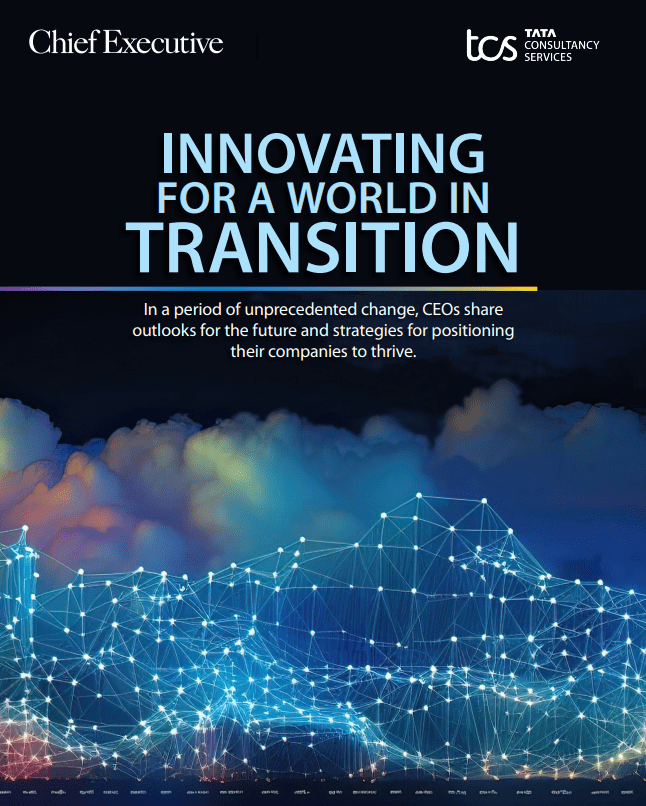
Innovating For A World In Transition

As I have done each year for the last six years, I had the pleasure of participating in the CEO of the Year Gala sponsored by Chief Executive Group. The event is preceded by roundtable discussions with CEOs, and I have been honored to facilitate one of those sessions each year. The topic for this years roundtable was Innovating for a World in Transition. The short abstract for the session read as follows.

Continue reading

Why Empires Fall

To better explore the geopolitical portion of the convergence phenomena, I read another book that looked into possible geopolitical futures based on the history of one of the biggest empires – Rome. The authors (Peter Heather, John Rapley) provide a thorough analysis of the factors that drove the fall of the Roman empire. They then apply this analysis to current state of the global west.

Continue reading

AI-Powered Bionic Limbs

You get the sense with every new headline that the possibilities are endless. Viewed through the lens of Clayton Christensen’s jobs to be done, these advances broaden the application of those jobs to a large spectrum of human need. Human-machine convergence in this video enables the disabled. Take a look.

Enabling the disabled

Generative AI And The Emerging Question-And-Answer Paradigm

Happy New Year everyone! I thought my first post of the year would focus on the popular topic of our times – generative AI. My experience during this holiday season was the inspiration for the post. To do the story justice, I need to go back to my youth. One of my strong passions through the years has been music. As a young boy in the 1970s, I loved classic rock, however, sports became my dominant passion and all my focus remained there. As a result, I was limited to singing along to my favorite songs. When I entered the world of work, it replaced sports as my dominant focus – and once again I was resigned to singing along – but this time, in my car during commutes.

Continue reading

The Interplay Between Corporations, Nations, And Artificial Intelligence

How do we govern a world increasingly impacted by advances in artificial intelligence? What role will nations and corporations play? This question concerning governance is now top of mind, with questions emerging in various forums that I participate in. As we contemplate future governance models, it is instructive to focus first on the past. In a recent book titled The Handover, author David Runciman explores the historical role of corporations and nations. He describes both as artificial agents and compares them to artificial intelligence. He then explores the interplay between the three. Here is a summary of the major book themes.

Continue reading

Navigating The Horizons Of 2024: Thoughts Across Diverse Fields

As we stand on the precipice of 2024, a year brimming with potential and uncertainty, experts across various domains will offer their insights into the shape of things to come. From scientific breakthroughs to geopolitical shifts, from societal transformations to environmental challenges, these insights paint a multifaceted portrait of the year ahead. I’ll add my thoughts to the conversation. The uncertainty that exists across these domains adds to the difficulty in understanding possible futures. It is convergence that occurs across them that illuminates the possibilities.

Continue reading

Permacrisis – A Plan To Fix A Fractured World

I finished reading my most recent book titled Permacrisis, authored by Gordon Brown, Mohamad A. El-Erian, and Michael Spence. The book was recommended by Mimi Brooks, who did a review of it here. This was a very impactful book written by three of the most internationally respected and experienced thinkers of our time. As described by the Amazon abstract, the book focused on a cascade of crises: sputtering growth, surging inflation, poor policy responses, an escalating climate emergency, worsening inequality, increasing nationalism and a decline in global co-operation. While they do a great job of identifying the challenges, they also prescribe solutions. Given their experience base, we should pay very close attention to both sides of this story. I have added the book to my library and provide a brief summary below.

The world is undergoing a profound transformation marked by multifaceted economic, social, and technological shifts, altering the familiar landscape of the past three decades. This book delves into key messages regarding the challenges and opportunities presented by these changes, emphasizing the importance of understanding evolving dynamics.

Continue reading

CIODAY 2023

Here is a video of the 15 minute keynote I delivered at the CIODAY 2023 event. A wonderful experience all around – culminated by this very professional video launched on YouTube by ICT Media. I posted a synopsis of the keynote via an article written by Hotze Zijlstra in advance of the event.

Keynote Synopsis

ICT Media hosted CIODAY 2023 in Amsterdam last week – a very professionally run event at an amazing venue. I had the pleasure of providing the opening keynote. In the lead up to the event, they wrote an article which I believe captures the spirit of my presentation better than anything I have seen prior – with one caveat. I am not a big believer in prediction – especially in highly uncertain times like our current era. Instead, I believe in a constant rehearsing of the future, asking the what-if questions to avoid the what-now questions. That caveat aside, a great article that I am sharing here to my Blog audience and providing a Link to original article.

Continue reading

Learning From The Early 19th Century

One of the more eye-opening narratives in the story arc of my presentation is the comparison of our current era to the 1920s. Given the catastrophic period that followed, lessons can be learned. A great period of invention ran in parallel, helping to establish our modern standard of living. But there was another period of invention that is also very instructive. That period dates to the early 19th century and is closely associated with the Luddite movement and the birth of the factory system. In a book released this September, Brian Merchant explores this period in history and its similarities to our current era. If the 1920s sowed the seeds of the conflicts that followed, the early 19th century sowed the seeds of labor movements, the modern welfare state, and of all things, science fiction.

Continue reading

Seven Crashes

I finished reading my latest book. Harold James’ book, Seven Crashes, is a history of financial crises that have shaped globalization. The book examines seven turning points in financial history, from the depression of the 1840s through the Great Depression of the 1930s to the Covid-19 crisis. James shows how some crises prompted by a lack of supply, like the oil shortages of the 1970s, lead to greater globalization as markets expand and producers innovate to increase supply. In contrast, other crises, such as the Great Depression, led to a smaller, less prosperous world.

Continue reading

The Forces Driving Our Economic Future

At the heart of our uncertain times lies an astounding level of convergence, with historical precedent dating back to the second industrial revolution and the decades that followed. It was Robert J. Gordon in his brilliant journey through the economic history of the western world that illuminated this convergence. In The Rise and Fall of American Growth, Gordon focused on a revolutionary century that impacted the modern standard of living more than any period before or after. It was also Gordon that concluded the world will never see a period like that again. It was his conclusion that prompted my development of a future innovation visual that sought to dispute it. While technology has driven human advancement for centuries, it has not done so in isolation. In periods like the one described by Gordon; other domains play a role in determining where technology takes us. This quote says it best:  

Continue reading

Innovation And Human Development

Seven years have passed since I first developed this innovation wheel. In that time, the possibility space is more visible to a larger audience. The conclusion originally drawn by Robert J. Gordon – that we have taken the standard of living as far as it will go – is still suspect to me. In light of the rapid advancements we are seeing, I am re-posting this seven years later.


In a brilliant journey through the economic history of the western world, author Robert J. Gordon looks at The Rise and Fall of American Growth. This recent book focuses on a revolutionary century that impacted the American standard of living more than any period before or after. Our standard of living is typically viewed as the ratio of total production of goods and services (real GDP) per member of the population. But this measure fails to truly capture enhancements to our well-being. Human well-being is influenced by advances in the areas of food, clothing, shelter, energy, transport, education, health, work, information, entertainment, and communications. The special century (1870 – 1970) that followed the Civil War was made possible by a unique clustering of what the author calls the great inventions. Clearly – as the visual I developed depicts – the great inventions of the second industrial revolution significantly improved our well-being:

Continue reading

Quantum Supremacy

Quantum computing was a hot topic in recent sessions, so i thought I’d brush up on all things quantum. To do that, I read a book titled Quantum Supremacy. Author Michio Kaku explores the rise of quantum computers and its potential to address many of our societal challenges. He envisions an end to the age of silicon and digital and the dawn of the quantum age. We learn the fundamentals of quantum mechanics and the staggering growth in compute capacity that it drives.

Continue reading

Societal Signals Are Flashing

This latest article via the World Economic forum highlights a fundamental truth about the current era: signals are flashing across multiple domains. Although much attention is paid to advancements in science and technology, signals across society, geopolitics, economy and environment are converging. As described in various posts on the topic, convergence itself is a signal. In similar periods in the past, when multiple domains were in a state of flux, it was their convergence that shaped the future. In the referenced article, it is a societal signal that is flashing. If we view these signals as building blocks, it is the model that emerges that allows us to explore their combinations.

Continue reading

What History Tells Us About Human Action

Historically, it takes catastrophe to drive humans to act in periods where action is clearly needed. Wars and financial crashes are dominant catalysts throughout history. This poll considers the catalysts that drive humans to act in an era demanding action. Please take a minute to respond below. Pick those catalysts that you feel strongly about – and/or add to the list.