
The Renaissance offers a useful way to think about AI, particularly through the relationship between inquiry, authority, and inherited knowledge. Renaissance humanists brought renewed scrutiny to influential texts, examining their language and comparing their claims. Their work sometimes challenged much more than an interpretation. It questioned the foundations on which established authority rested.
(more…)Tag: Possibility Chains
-
Rehearsing The Future: A FoBTV Conversation On Possibility Chains
I recently joined colleague Kevin Benedict on FoBTV for a conversation about the ideas that sit at the center of my work: systemic change, convergence, pressure, possibility chains, pathways, and decision spaces. For long-time readers of this blog, these concepts will be familiar. But the conversation offered a useful opportunity to bring them together in one place and explain why they matter now.
(more…) -
The Coming Storm: Why History Is Warning Us Again
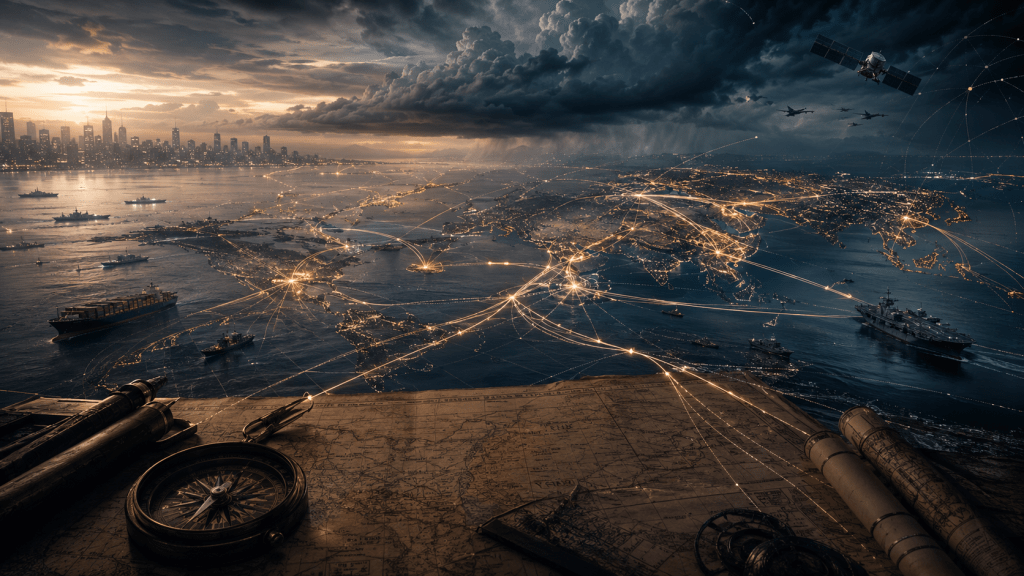
I recently finished Odd Arne Westad’s The Coming Storm: Power, Conflict, and Warnings from History. Westad, the Elihu Professor of History and Global Affairs at Yale University, is one of the leading historians of modern international and global history, with deep expertise in China, Asia, and the long arc of global power shifts. His new book lands at a moment when history feels less like a subject we study and more like a force pressing against the present.
The central warning of the book is both simple and unsettling: the world may be moving into conditions that resemble the late nineteenth and early twentieth centuries, when great powers competed for position, nationalism intensified, new technologies altered the meaning of conflict, and leaders misread both their rivals and their own capacity to control events. Westad does not argue that history repeats itself in some mechanical way. That would be too easy and, frankly, too dangerous. His deeper point is that history reveals patterns. It shows us the conditions under which systems become brittle, leaders become reckless, publics become anxious, and events begin to move faster than institutions can absorb.
(more…) -
How Possibility Chains Were Born
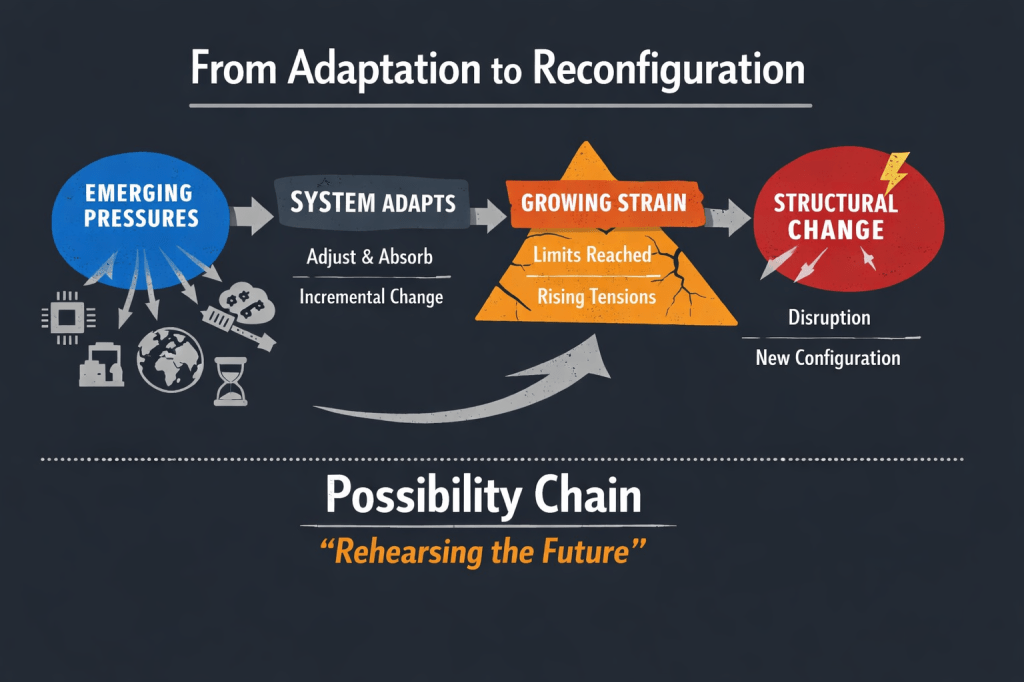
Today TIME published an Op-Ed I wrote titled You Can’t Predict the Future. But Can You Rehearse It?. The piece explores a simple but important idea: the future is not something we can reliably predict, but it is something we can rehearse.
The Op-Ed focuses on why prediction is becoming less useful in a world where pressures across science, technology, geopolitics, economics, society, philosophy, and the environment are arriving at the same time. But the article only briefly touches on something that has shaped my thinking over the past year: how the idea of possibility chains actually emerged. It started with a familiar problem.
(more…) -
Mapping Possibilities: The Stories That Shape What Comes Next
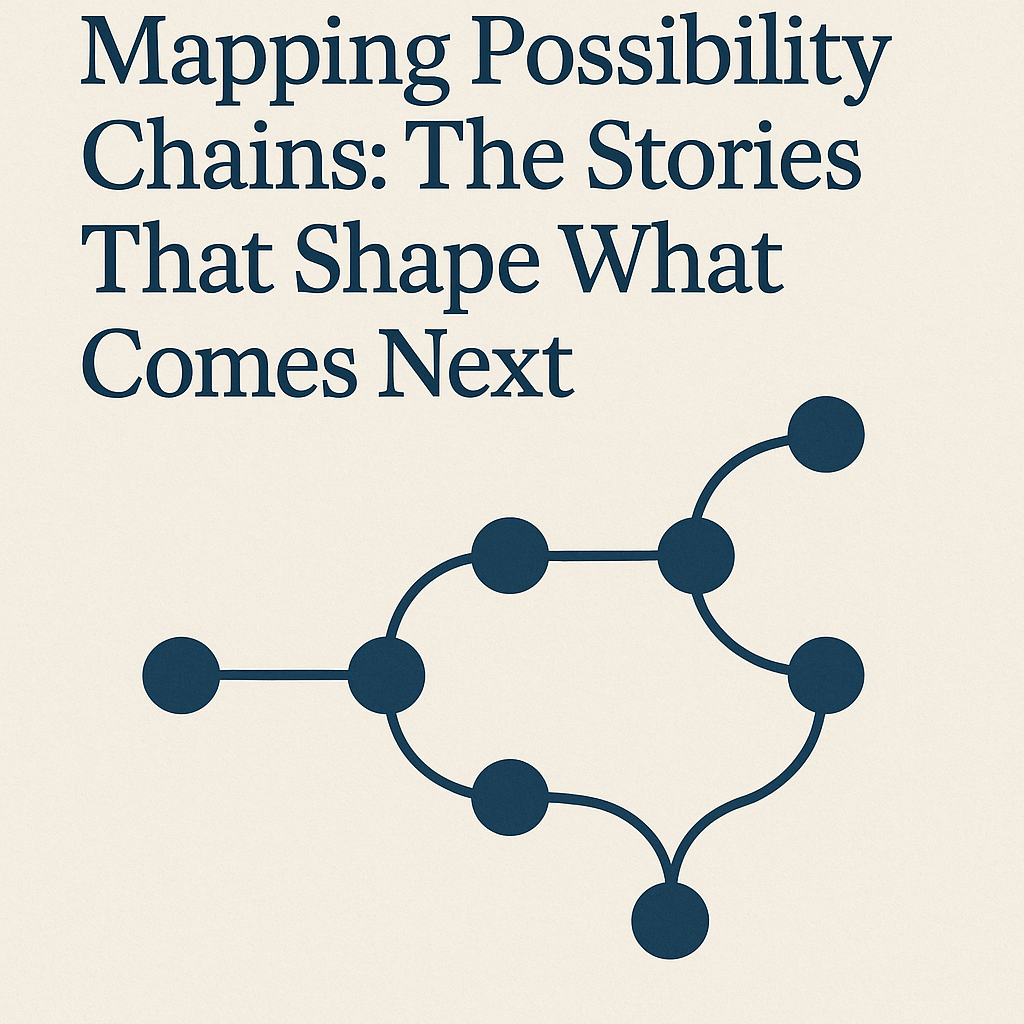
This blog series is more than a collection of observations. It’s a way of seeing. A way of holding space for the deep human shifts unfolding around us—and telling the stories that make those shifts real. From cognitive decline to fertility collapse, from extended lifespans to rising caregiving demands, each post in this series centers a human truth: that the future does not arrive all at once. It emerges through patterns, decisions, tensions, and tradeoffs. It emerges through people. And it emerges unevenly.
(more…)

