
Every society invents new ways to organize power. Each system begins as an answer to the limits of the one before it – and eventually becomes the next problem to solve. As our world grows more interconnected, the frameworks that once defined legitimacy and belonging are starting to crack. Something new is forming in the spaces between.
Continue readingGeopolitics
The Fragile Future: Why Stability Is More Uncertain Than Ever
History does not repeat, but it often rhymes. As I read Robert D. Kaplan’s Waste Land: A World in Permanent Crisis, I was struck by his argument that the 20th and early 21st centuries have been especially bloody because the stabilizing force of monarchy has vanished. He suggests that despite our moral progress in areas like human rights and the environment, the world remains tightly wound, vulnerable to clashing interests and aggressive authoritarian states. He draws an analogy to Weimar Germany – a moment of fragile democracy, economic strain, and rising nationalism that ultimately collapsed into war.
Continue readingThe Eurasian Century – Navigating Global Convergence
I recently finished reading The Eurasian Century: Hot Wars, Cold Wars, and the Making of the Modern World by Hal Brands, a sweeping historical analysis that illuminates Eurasia’s enduring centrality in global geopolitics. The author convincingly demonstrates how Eurasia’s vast resources, immense population, and strategic location have continuously positioned it as the crucible of global power struggles – from the ideological confrontations of the twentieth century to today’s emerging geopolitical tensions. His narrative offers profound lessons for leaders navigating an increasingly interconnected and uncertain global landscape.
Continue readingBook Review: “Punishing Putin” By Stephanie Baker
Punishing Putin, by Stephanie Baker, published in September 2024, offers a timely and in-depth examination of the international efforts to hold Russia accountable for its invasion of Ukraine. This isn’t simply a historical recounting of sanctions and diplomatic maneuvers; Baker delves into the complexities, contradictions, and often unintended consequences of the strategies employed by Western nations and their allies.
Continue readingBridging The Global Trust Deficit: A Call For Centrist Collaboration

In today’s interconnected world, the necessity for global cooperation has never been more critical. Yet, paradoxically, we are witnessing a decline in collaborative efforts, replaced by rising competition and confrontation. A recent article via the World Economic Forum explores the growing trust deficit in international mechanisms, highlighting the challenges and opportunities of fostering centrist geopolitics. By examining historical precedents and modern examples, it offers insights into how practical, purpose-driven partnerships can restore global trust and address the compounding crises of our time.
Continue readingDeglobalization
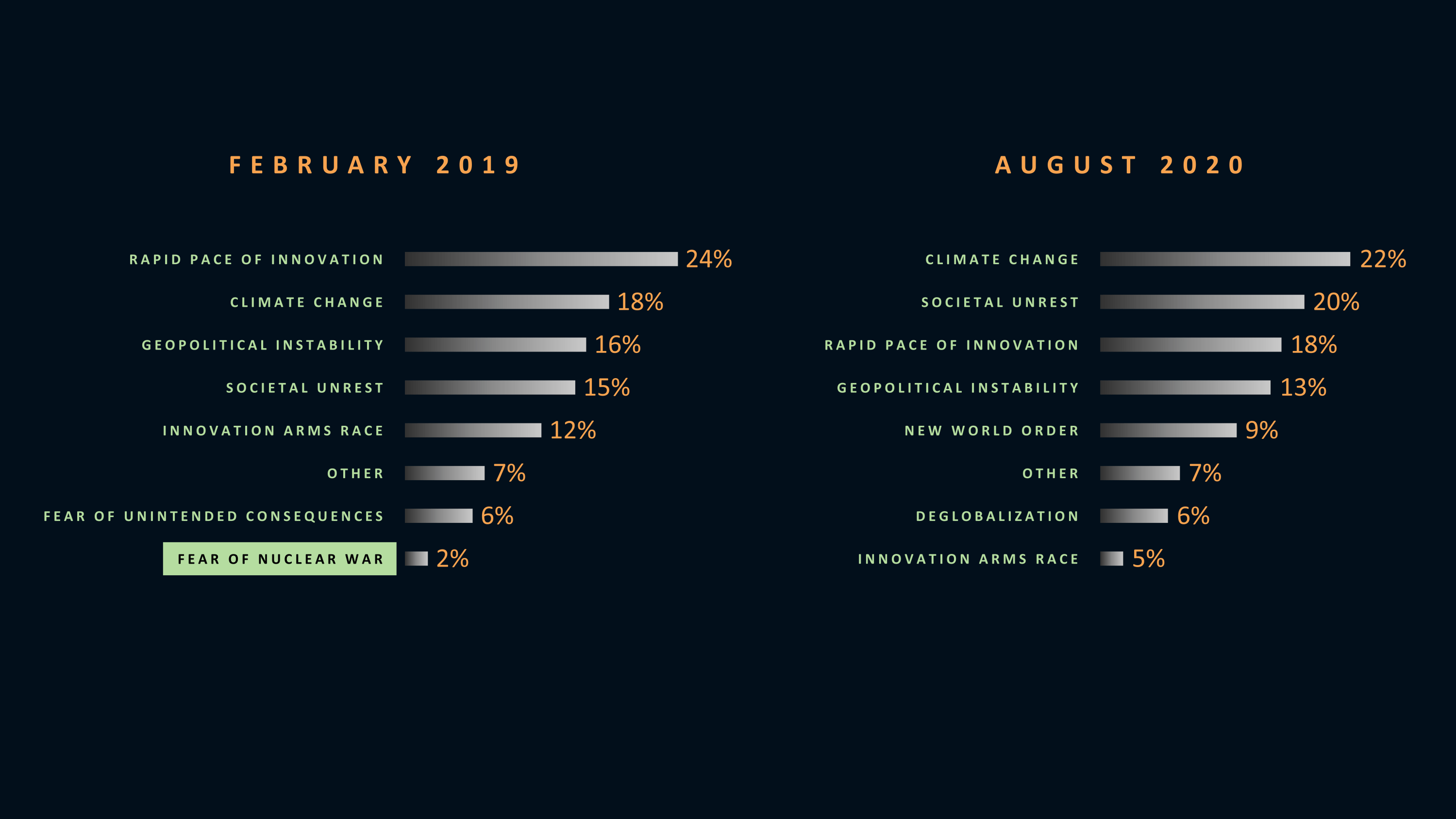
Deglobalization is a geopolitical building block with massive implications as it converges with its societal counterparts. In my August 2020 poll on the catalysts that drive change, deglobalization entered the list. It was not surprising, given the supply chain concerns that emerged in the early days of the pandemic. But is deglobalization likely? This recent article explores that question.
Continue readingShaping The Future: Technology And Geopolitics
At the heart of foresight work lies the analysis of domains that shape the future. It is in the convergence of these domains that the future emerges. Geopolitics is one complex area of convergence that has massive implications to an uncertain future. In a recent article, Ariel Kastner explores seven views on how technology will shape geopolitics. The World Economic Forum asked members of the Global Future on Geopolitics to offer their views on technology and its impact on geopolitics in the coming year. This specific quote from the article says it well:
Continue readingGlobal Technology Governance
Strawberries. Simple enough for farmers to grow, but can they do better? That is a question that a smart Agriculture Competition in China attempted to answer. Four technology teams competed with farmers over four months to grow strawberries. This Article by Victoria Masterson describes what happened next: data scientists produced 196% more strawberries by weight on average compared with traditional farmers. It is not surprising, given that vertical farming using intelligent sensors and AI have shown the possibilities. As we witness this rapid pace of innovation, we see the potential for human development (in this case food abundance), but also the likely unintended consequences. These Two Paths have historical precedent, as every great period of invention has followed both paths. After all, fire provided light, warmth, and food, but also burned down villages.
Continue readingGeopolitics: A Complex Area Of Convergence
The critical need to understand the rapidly approaching future relies upon our understanding of various domains that are Converging. It is difficult enough to stay abreast of rapid advancements in science and technology, but Introduce societal factors, geopolitical, economic, and environmental considerations, and the task gets harder. Yet a high-level appreciation for these domains is necessary if we hope to understand the future and steer it in constructive directions.
Continue reading Reimagining the Future