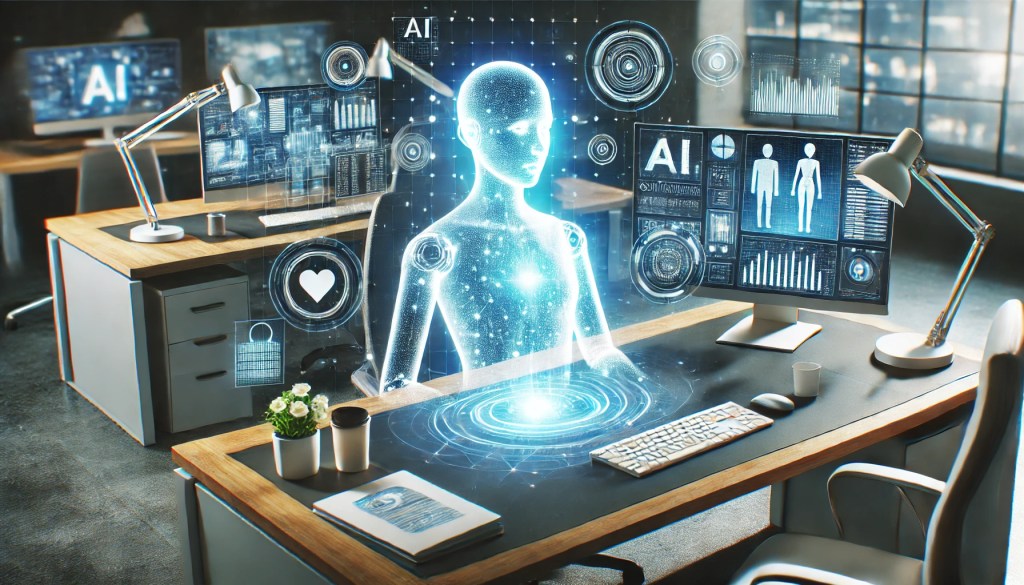
I came across a very good article that describes the emerging phenomenon that some have termed Services-as-Software. For decades, businesses have structured their operations around human-driven services – coders developing applications, analysts interpreting data, consultants optimizing workflows. Software has long played a supporting role, but the core work remained in human hands. That paradigm is shifting. Here is a summary of the article.
Artificial intelligence (AI) is transforming the very nature of services. What once required teams of specialists is increasingly being handled by AI-powered systems capable of executing tasks autonomously. This transformation isn’t just about automation – it’s about redefining how businesses consume and deliver services. The emerging model, as mentioned, is often called Services as Software, and it marks a profound departure from the past: software is no longer a tool for human workers; in many cases, it is the worker.
The Shift from SaaS to Services as Software
Over the past two decades, Software-as-a-Service (SaaS) revolutionized enterprise IT, allowing businesses to replace expensive, on-premise software with cloud-based solutions. This model democratized access to technology, shifting companies toward subscription-based platforms that improved efficiency and scalability. But SaaS still relied on human expertise to drive outcomes.
AI is changing that equation. Instead of merely providing tools for professionals to use, AI-driven systems are now replacing entire service functions. This shift is happening across industries:
- Customer Service: AI-powered assistants are handling millions of interactions daily, reducing the need for large human call centers.
- Software Development: AI copilots are writing and debugging code, transforming how applications are built.
- Legal and Financial Services: AI is performing contract analysis, fraud detection, and investment research, compressing hours of human effort into seconds.
Unlike traditional SaaS, which optimized human-led workflows, Services as Software automates them entirely, turning labor-intensive processes into AI-driven systems.
Why This Shift Is Accelerating
Several forces are converging to push businesses toward AI-driven service models:
- AI’s Rapid Evolution: Breakthroughs in large language models (LLMs) and generative AI have unlocked new levels of reasoning, automation, and decision-making.
- Lower Barriers to Entry: Open-source AI models and API-driven infrastructure are making enterprise-grade automation accessible to companies of all sizes.
- Economic Pressures: AI-driven tools allow businesses to cut costs and boost efficiency, particularly in high-cost service functions.
- Workforce Shifts: Retirements, talent shortages, and geopolitical shifts are forcing companies to rethink their labor needs, with AI filling the gaps.
The result? A surge in AI-first companies that aren’t just enhancing traditional workflows – they are fundamentally reimagining them.
The New Enterprise Stack: AI as the Default Worker
Historically, businesses bought software and hired human professionals to operate it. AI is flipping that model. Increasingly, businesses will design their processes around AI from the start – not as an add-on, but as the default worker. This shift will impact nearly every function:
- Marketing: AI will generate personalized campaigns and dynamic content in real-time.
- IT & Cybersecurity: AI-driven agents will handle quality assurance, monitoring, and threat detection.
- HR & Operations: AI will manage workflows, scheduling, and even elements of hiring.
In this AI-first world, human roles will shift. Instead of performing routine tasks, people will oversee, guide, and refine AI-driven systems.
Humans Still Matter – But in New Ways
Despite the rapid automation of services, human expertise remains essential. AI will reshape work, but it won’t eliminate the need for:
- Oversight & Ethics: AI requires human governance to ensure fairness, compliance, and security.
- Creativity & Strategy: AI can process data, but humans will provide context, vision, and leadership.
- Specialized Expertise: Doctors, lawyers, and scientists will use AI as an advanced tool, but their judgment and decision-making will remain irreplaceable.
The Road Ahead
We are entering a phase transition in business and technology – one where AI doesn’t just assist work, but in many cases, is the work. The shift from human-led services to AI-driven automation is already happening, and its momentum is only accelerating. The companies that embrace this phenomenon – not by resisting change, but by leveraging AI alongside human expertise – will define the next era of enterprise innovation.
The question is no longer if AI will replace traditional service models, but how quickly industries will adapt – and what new opportunities will emerge in the process.


Leave a Reply