At a Milken Institute Health Summit in 2017, I participated in a panel discussion that focused on effective methods for healthier aging on a vast scale. One of the key discussion points was how Loneliness and Isolation were a leading cause of death among the elderly. Here in 2020, that concern has been amplified by the pandemic. During that panel discussion, I mentioned the use of companion robots to deal with this growing crisis. As society continues to age, the problem of isolation and loneliness grows more acute.
(more…)Inside the Next Transition
-
Artificial Intelligence And The Cerebral-Physical Gap
As artificial intelligence continues to both dominate the news and stimulate our imagination, many questions remain. One such question was explored in a recent Article. As the authors describe, artificial intelligence still needs to bridge the gap between mastering cerebral games like chess and Go and translating that impact to the physical world. The latter remains a bigger challenge.
(more…) -
Edge Computing And The Need To Sense And Respond
Back in 2013, I wrote about the critical need to Sense and Respond in a climate of uncertainty, interdependency, complexity, and velocity. In that post, I said this:
As our world experiences continued Acceleration and the amount of data flowing through company ecosystems expands, the need to sense stimuli and enable a real time response intensifies. Fortunately, rapid advancements in the price and performance of technology make realizing this sense and respond paradigm achievable and economical for a wide range of use cases – but this is arguably one of the most difficult components of transformation road maps.
(more…) -
Geopolitics: A Complex Area Of Convergence
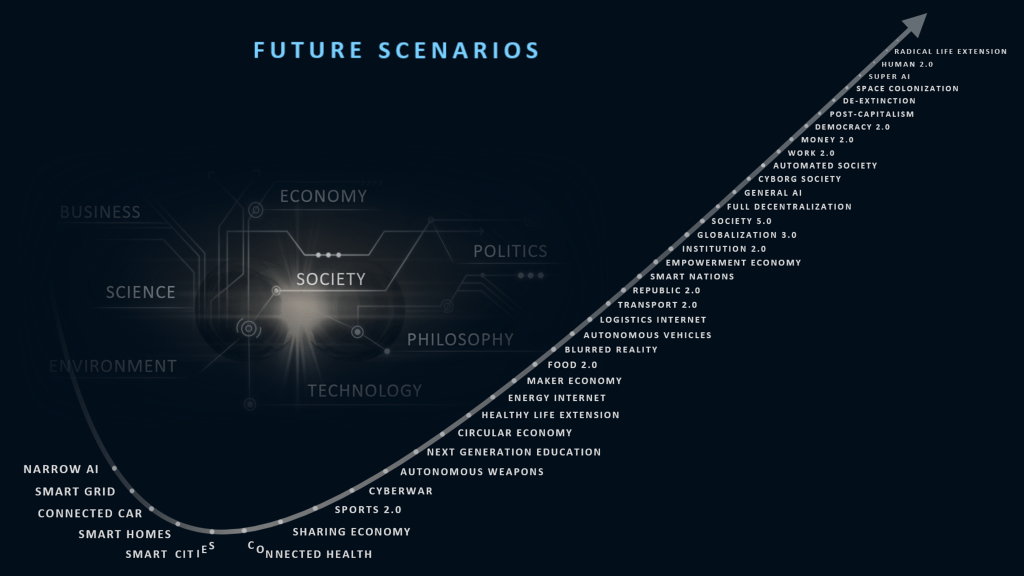
The critical need to understand the rapidly approaching future relies upon our understanding of various domains that are Converging. It is difficult enough to stay abreast of rapid advancements in science and technology, but Introduce societal factors, geopolitical, economic, and environmental considerations, and the task gets harder. Yet a high-level appreciation for these domains is necessary if we hope to understand the future and steer it in constructive directions.
(more…) -
Covid-19 Leaves Its Mark on Real Estate
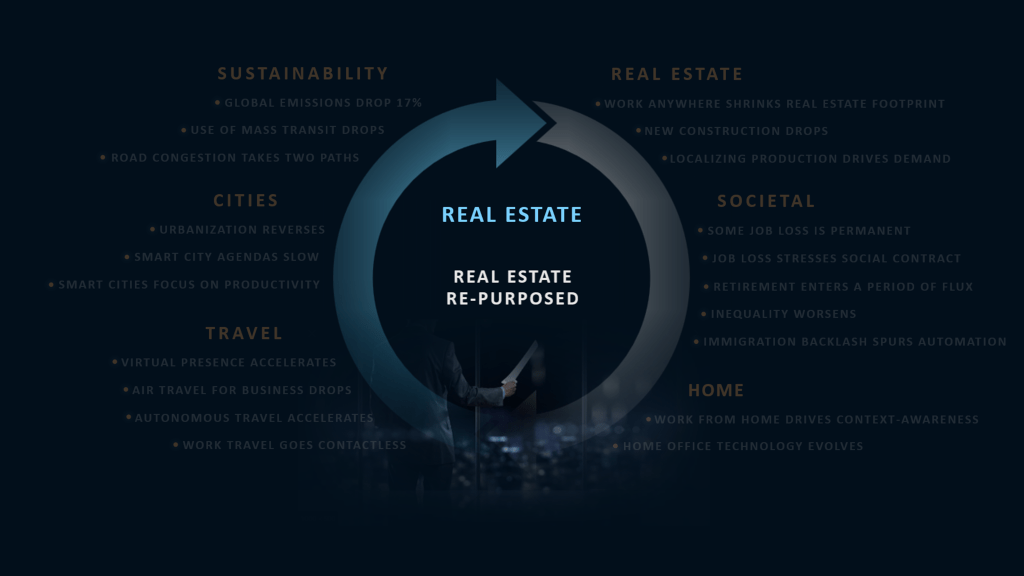
Shopping malls are an example of the lasting impact that the global pandemic is likely to have on real estate. If the surge in online shopping represents a new normal, then what is to become of all those malls? In a recent Article, author Parija Kavilanz explores that question. According to data from research firm (REIS) Moody’s Analytics, the rate of mall vacancies is at a historic high of 9.8% in early September, exceeding the previous peak of 9.3% in 2011.
(more…) -
Philosophy Complicates The Convergence Story
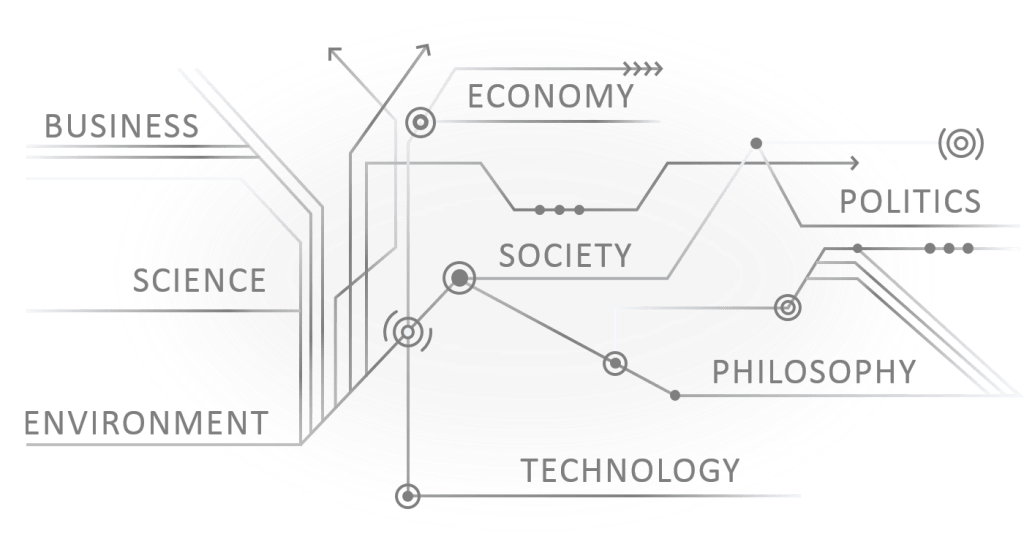
In a post from last year, I focused on the Convergence story. This story has one foot in the past, and another in the future. The realization of great advancements in human development during the late 19th and early 20th centuries is a convergence story. A period of great invention converged with other domains to enable our modern society. As we stand at the threshold of another period of great invention, the convergence story is more complicated. This time, complexity is added by the introduction of two new domains: philosophy and environment.
(more…) -
Is The Future Of Work A Return To The Past?
For those of us alive today, our core beliefs, the way we live, and our notion of work are rooted in the way it has been for the last 250 years. To us, it has always been this way. When a transformative era emerges, we struggle to imagine a different way of doing things – even when the emerging future is begging us to think differently. One great example lies in the future of work. As we struggle to envision a world where work is no longer required, we fail to realize that History is very Instructive.
(more…) -
Is The Shareholder Doctrine Dead?
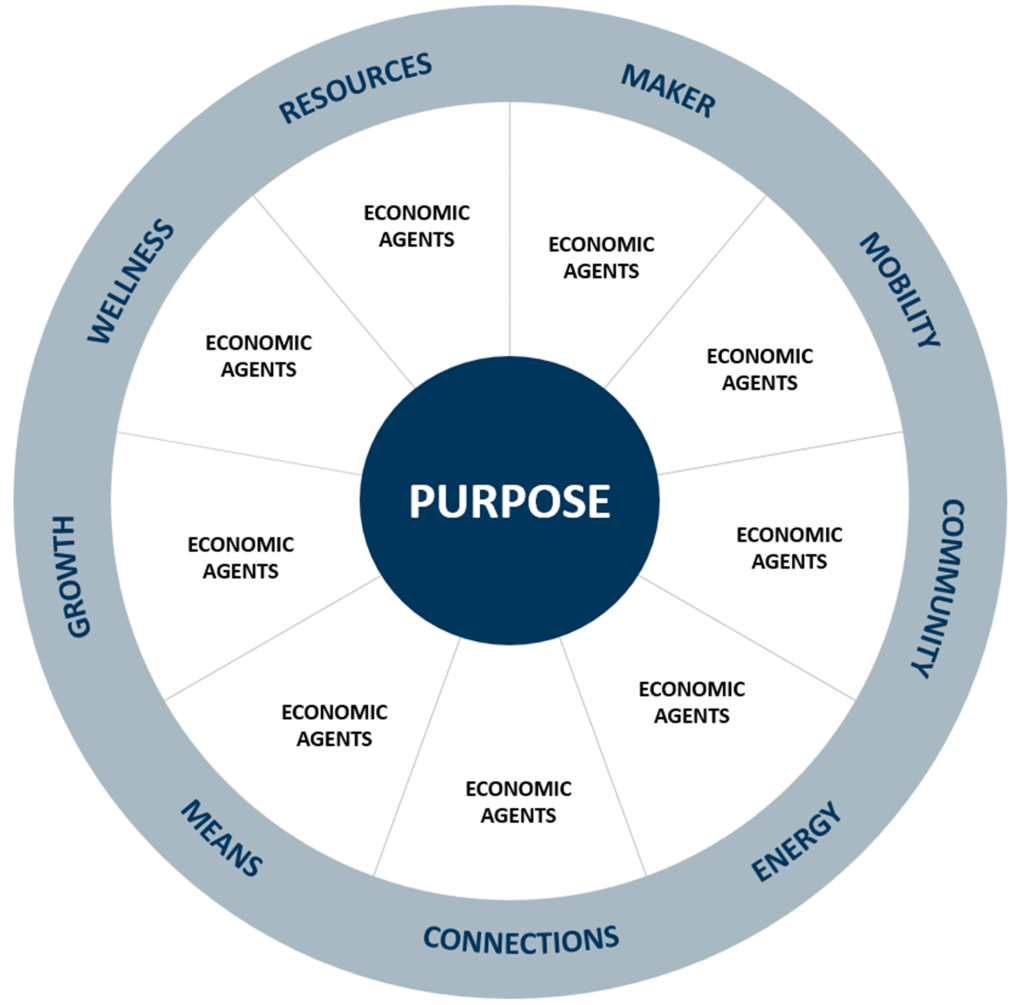
Fifty years ago, Milton Friedman announced that the social responsibility of a business was to increase profits. So was born the shareholder value era. Friedman was pushing back on dominant movements of the day: the new deal and European models of social democracy. Global inequality issues trace back to this rise of shareholder value. A recent Article explores the topic and the resulting power of the stock market. The authors suggest that while the market and the wealthy soared, consideration of the interests of workers, the environment, and consumers declined.
(more…) -
The Next Generation Of Artificial Intelligence
Two recent articles caught my eye this week. One article focused on the Fourth Generation of artificial intelligence, calling it artificial intuition. The other article explores the shift from artificial narrow intelligence to Artificial General Intelligence. In the case of artificial intuition, author Mark Gazit describes how helpful AI has become, and its ongoing limitations. Machine learning is still fully dependent on historic data. New and unknown scenarios leave data scientists helpless. Mr. Gazit suggests that in order to have true artificial intelligence, we need machines that can think on their own.
(more…) -
Advancing Human Development: The Catalysts Of Change
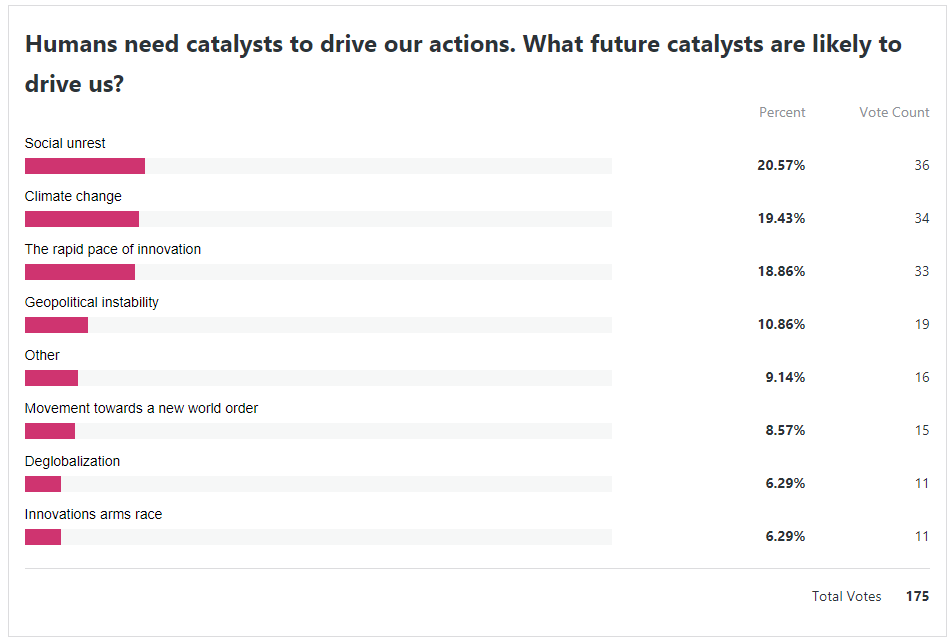
More votes have come in since I last reported on my poll. The question based on history is this: what catalysts drive human action in the future? It took two world wars and a great depression to drive humans to act in ways that prevented reoccurrence and advanced human development. In a world that looks eerily similar to that era, we once again wonder about catalysts. Here are the current results.
(more…) -
Military AI Vanquishes Human Fighter Pilot
Slowly then quickly, that’s the story of exponential progression. When you reach an inflection point on the exponential curve, you reach an Acceleration of Acceleration. We have reached a point where Change has never been this Fast – yet it will never be this slow again. Artificial intelligence (AI) is a great example of this phenomenon.
(more…) -
Virtual and Augmented Reality Likely To Accelerate
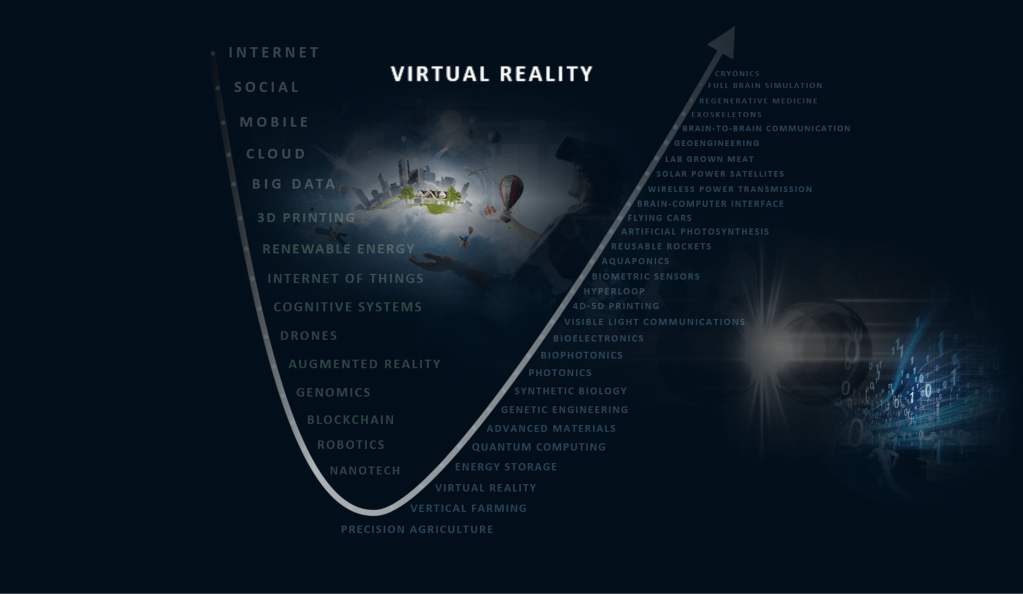
In early 2019, I described the Three Focus Themes for the year. They were Acceleration, Convergence, and Possibilities. Little did I know that one of those themes would factor so prominently in 2020. In a recent Presentation, Mehlman, Castagnetti, Rosen & Thomas – a full-service, bipartisan government relations firm – describes 2020 as the year where forces already in play experience a great acceleration. One of those forces is mixed reality.
(more…) -
Travel In A Post-Pandemic World
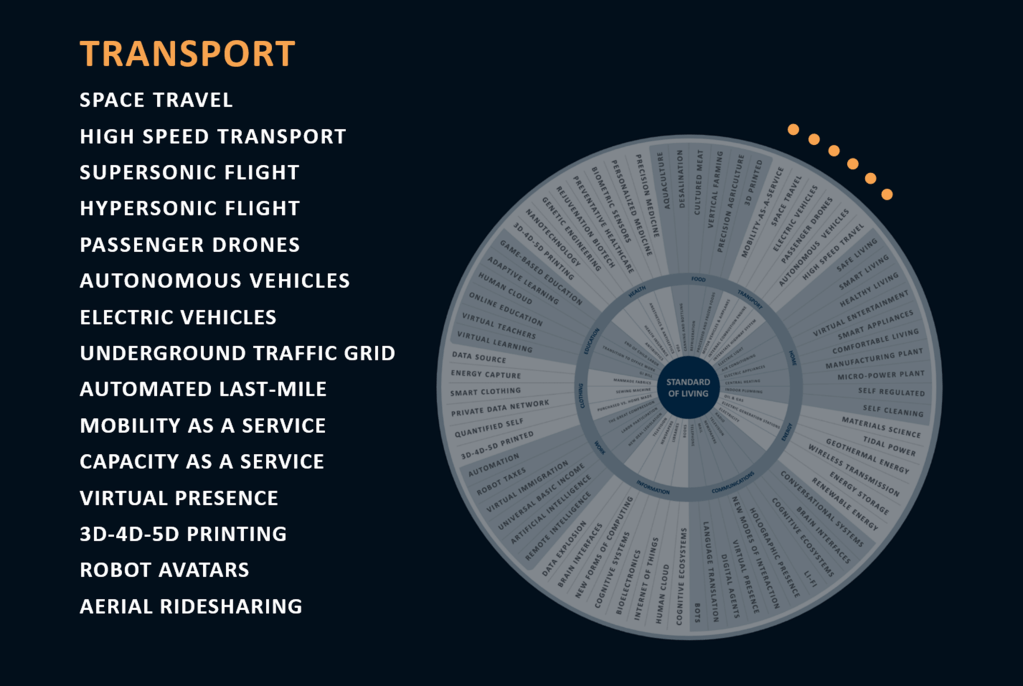
There was a lot going on in the world of travel prior to the pandemic. The emerging Mobility Ecosystem built on a foundation of innovation promises to disrupt this space as the decade progresses. The visual describes some of what lies ahead (click to view in a separate window).
(more…) -
Zooming Out, Then In
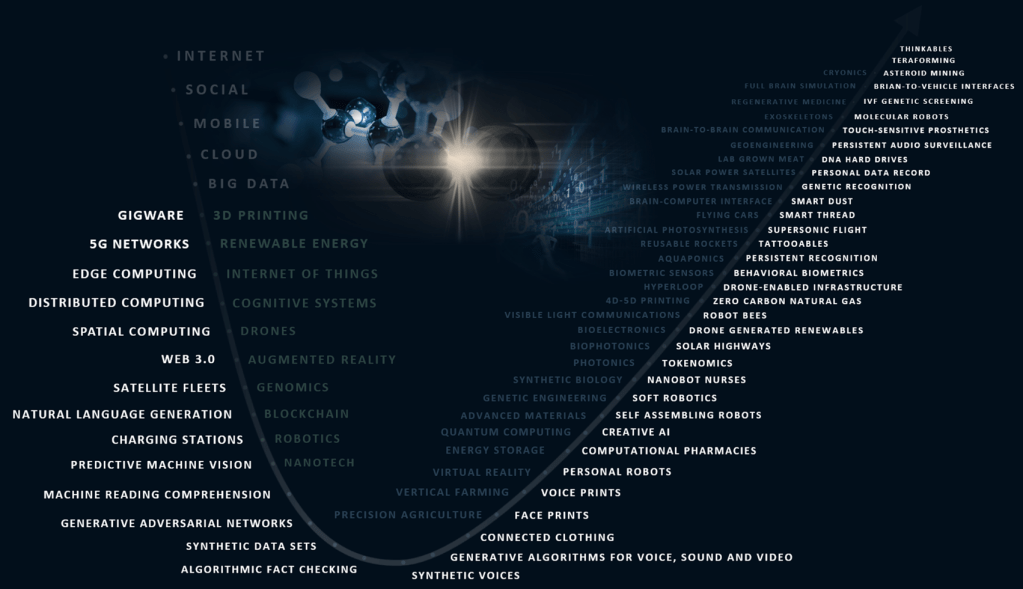
A recent Article builds upon my Strategy post from yesterday. Written by Colin Iles, the article focuses on the need for leaders to set their short term priorities based on expectations about what the world might look like in ten years. Often, leaders feel that ten years is too long a time horizon – but the future is approaching faster than people think. This speed dynamic forces us to embrace a New Way of Thinking, one that enables us to see the future, rehearse it, and adapt to its inevitable shifts.
(more…) -
Strategy Looks Very Different In A Fast, Complex, And Uncertain World
In a recent Article, author Greg Satell describes strategy in a post-Digital world. Michael Porter positioned Competitive Advantage and dominating value chains as the foundation of strategy. Like many of our institutions and ideas, multiple forces are pushing that view into the dustbin of history. Two key forces are the shift to horizontal ecosystems versus vertical value chains, and technology cycles outpacing planning cycles. I have written extensively about Ecosystems and their impact on the value equation. Maximizing bargaining power among suppliers, customers, and new market entrants gives way to value-sharing scenarios where all participants in an ecosystem win.
(more…) -
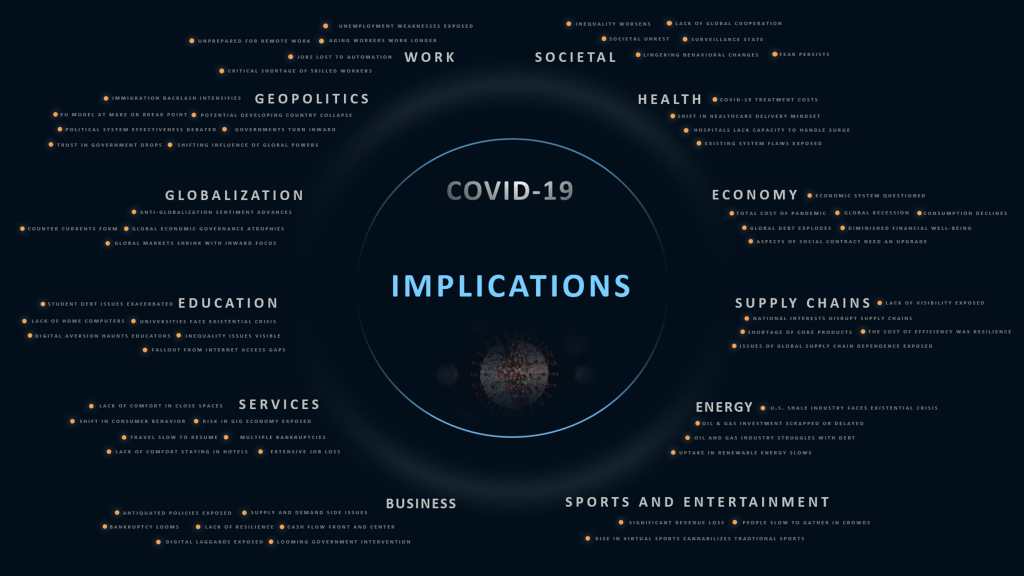
The Pandemic Is Impacting Multiple Domains
As we have seen over the last several months. COVID-19 is impacting multiple domains. I had explored the Possible Implications across these domains in a post earlier this year. The visual below reflects some of that work (click to enlarge). Now months later, we see indications of potential paths or responses.
(more…) -

A Glimpse Into Your Views On Catalysts For Change
As I mentioned in a recent Post, the global pandemic has altered how we think about our world. However, one thing is constant if not amplified by it: society needs to act if we hope to shape a future that advances human development. The rapid pace of innovation – riding on antiquated institutions – required our attention pre-pandemic. In a post-pandemic world, both of those factors are amplified. The inadequacies of our institutions are more visible now than ever; and innovation that may have unfolded over years is realized in months.
(more…) -
The World
When we look into the future and try to understand its path, we must consider the geopolitical sphere as a key area of influence. To that end, I just added another book to my Book Library. The World: A Brief Introduction was written by Richard Haass, an American Diplomat. Per the book abstract, The World is designed to provide readers of any age and experience with the essential background and building blocks they need to make sense of this complicated and interconnected world.
-
Human Development Index
Human development has advanced considerably since the start of the industrial revolution.
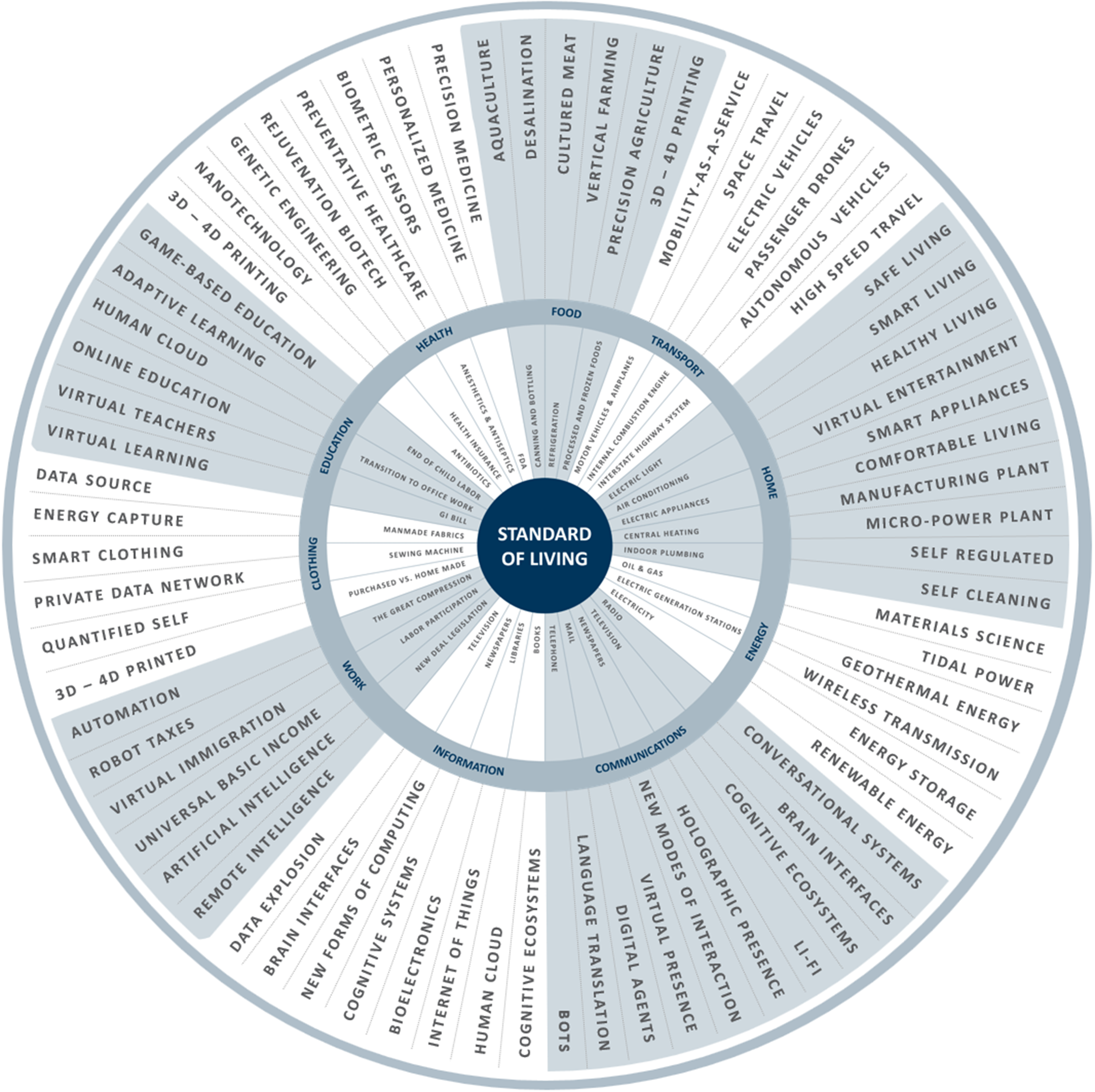 Economist Robert J. Gordon describes this Human Development Journey and concludes that, as far as standard of living is concerned, we have journeyed as far as we can. While thinking about that assessment, I set out to consider this new age of great invention and its impact on human development. The result was the development of this innovation wheel (click to enlarge).
 -
Revisiting The Catalysts Of Change
Seems like an eternity has past since I first launched this Poll on the catalysts that drive human action. As I mentioned back then, one of our Lessons from History was the presence of catalysts that drove actions that ultimately shaped our future. The major catalysts of the second revolution were astounding levels of innovation, World War One, The Great Depression, World War Two, and the eventual democratization of innovation. The question I asked in the poll was: What catalysts force stakeholder actions that ultimately shape our emerging future?

