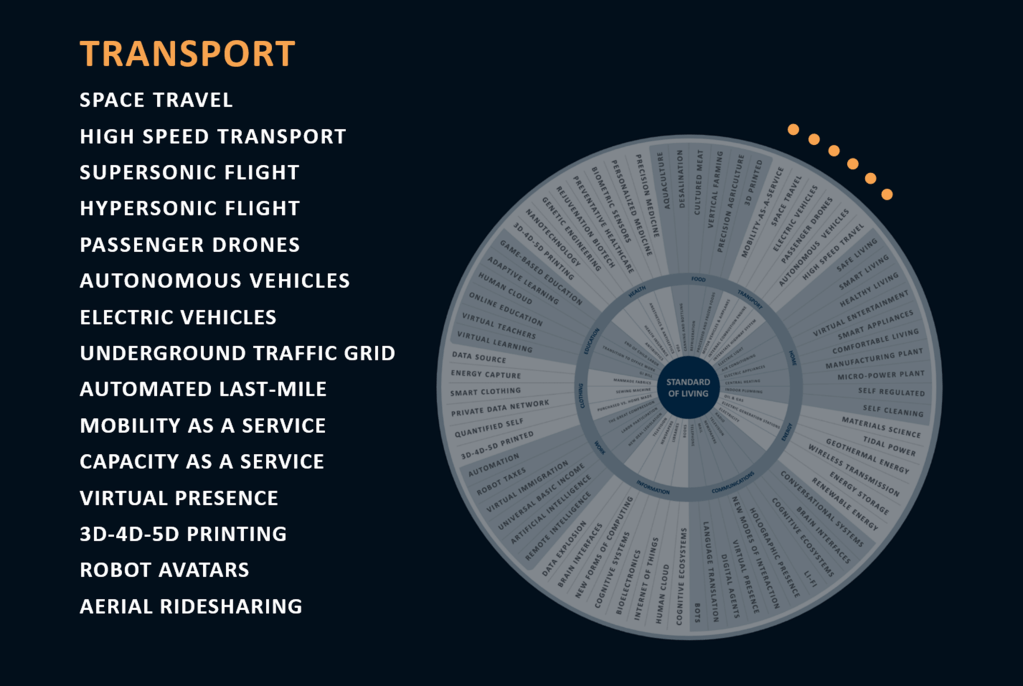
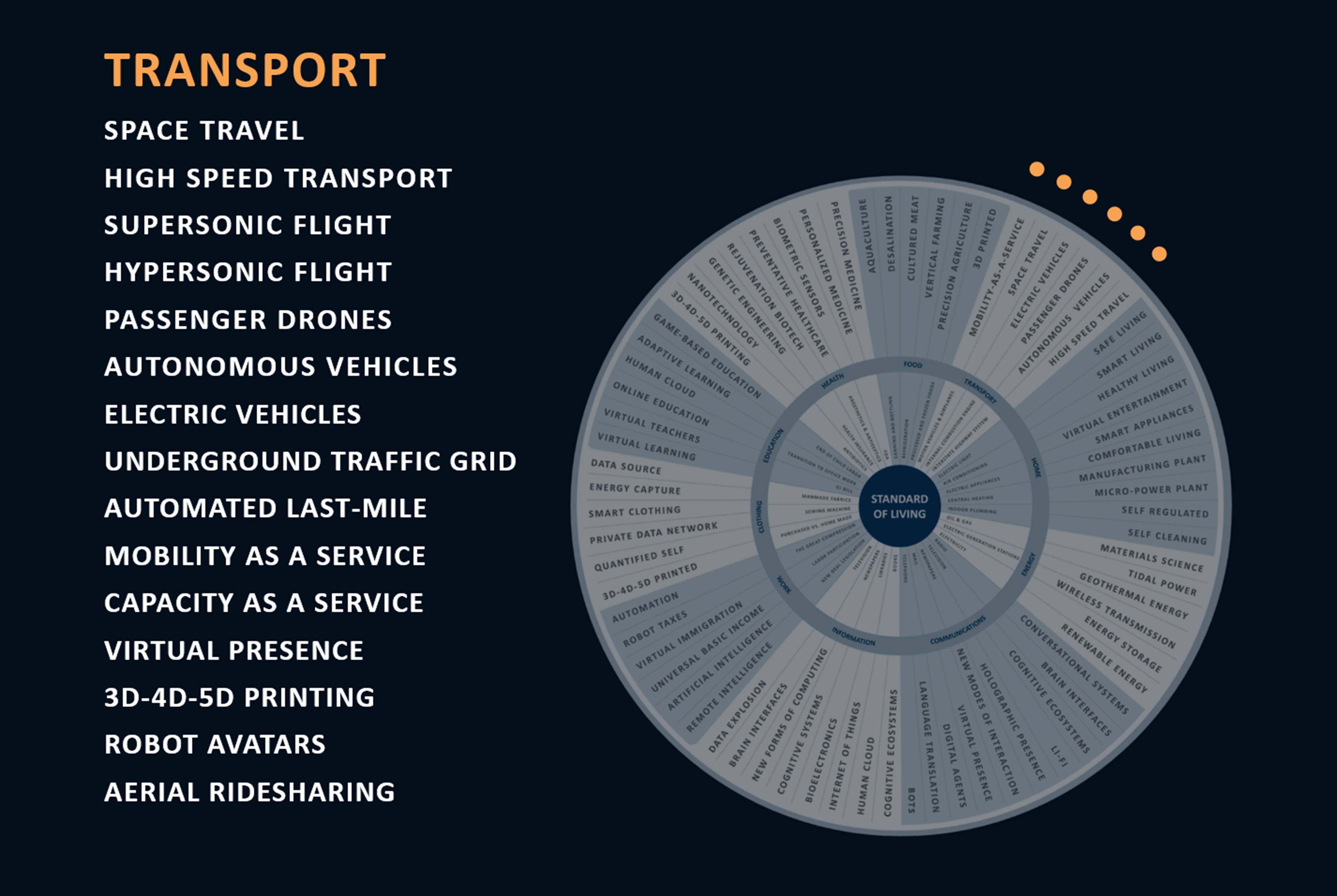
There was a lot going on in the world of travel prior to the pandemic. The emerging Mobility Ecosystem built on a foundation of innovation promises to disrupt this space as the decade progresses. The visual describes some of what lies ahead (click to view in a separate window).
Now, with the pandemic serving as a possible Catalyst, changes in the travel industry may accelerate. This recent Article written by Jessica Stillman describes what Industry insiders are predicting: a future filled with less soul-crushing business travel and easier airport experiences. According to American Airlines CEO Robert Crandall, we will not be returning to the volume of business travel we’ve seen in the past. He recently predicted to the Wall Street Journal that business travel will drop by one third to one half post-pandemic.
If you are a forward-looking airline executive, you have already been planning for a world that looks quite different than this one. But the pandemic likely changed the time horizon. As extreme events occur with more frequency, our pictures of the world ten years from now shift. Our Zooming Out to capture views of possible futures are therefore creating a portfolio, representing possible paths that shift when confronted with accelerants, obstacles, and unforeseen events.
These shifts may initially point to negative outcomes – but that is not always the case. In the referenced article, Ms. Stillman describes how Airbnb was forced to lay off 25 percent of its staff in May due to the virus. Now, after filing for an IPO, CEO Brian Chesky expects good things. He acknowledges that business travel will drop, but if we are constantly online in our work lives, he predicts we will want to get offline and into the real-world post-pandemic. He states: “We used to do a lot of travel for work, and then we entertained ourselves on screens. That’s going to inverse. I think we’ll work more on screens and entertain ourselves in the real world.”
In another prediction, Chesky offers an interesting intersection of post-pandemic realities: widespread remote work disconnects us from physical location. As such, he sees people exploring the world as digital nomads. The article states that several countries are already trying to attract remote workers for extended stays with new longer-term visas, but even just hopping between various U.S. cities may become more common.
For those that continue to travel, another accelerated, positive outcome is likely: navigating airports may become less horrible thanks to investments in technology made during the pandemic. In a great example of rapid innovation driven by a catalyst, technology-driven change to the travel experience is accelerating. The article mentions a couple: Facial-recognition systems for everything from checking bags to passport control are likely to become far more widely adopted to reduce person-to-person contact. Security, passport and customs lines themselves may get redesigned. Video links may enable processing of international passengers before they depart, predicts the same WSJ article.
That emerging mobility ecosystem might just arrive sooner than projected.


Leave a Reply