
History does not repeat, but it often rhymes. As I read Robert D. Kaplan’s Waste Land: A World in Permanent Crisis, I was struck by his argument that the 20th and early 21st centuries have been especially bloody because the stabilizing force of monarchy has vanished. He suggests that despite our moral progress in areas like human rights and the environment, the world remains tightly wound, vulnerable to clashing interests and aggressive authoritarian states. He draws an analogy to Weimar Germany – a moment of fragile democracy, economic strain, and rising nationalism that ultimately collapsed into war.
Kaplan’s argument touches on something deeper: the way structural transitions create instability. The fall of monarchies did not just change political leadership; it set off systemic shifts in governance, economic organization, and warfare. The forces unleashed – nationalism, mass mobilization, ideological extremism – became defining features of the 20th century, leading to the world wars, the Cold War, and ongoing geopolitical tensions.
But is it monarchy’s absence that made the world bloodier, or is it the convergence of technological, political, and economic forces that always accompanies periods of great transformation?
The Fragility of Transitional Eras
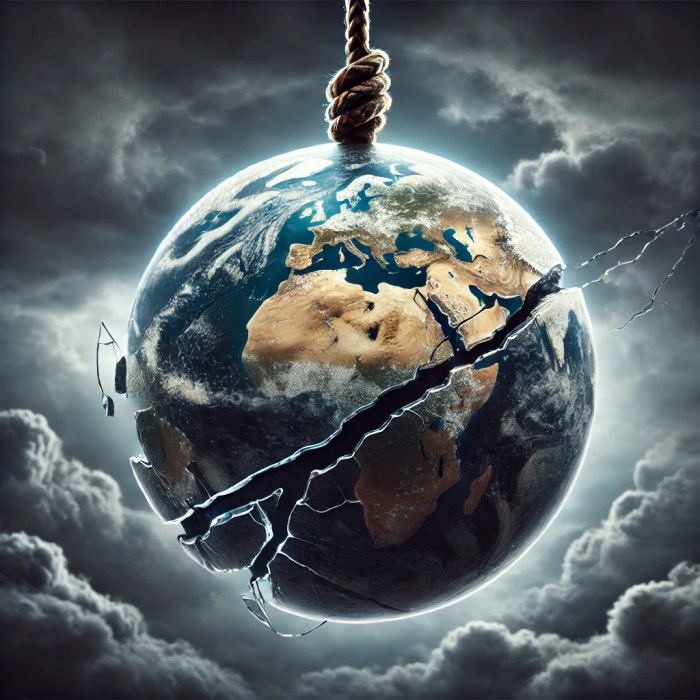
Periods of transition are often marked by instability, and the world today mirrors past moments of turbulence. The 1920s and 1930s saw economic shocks, rising authoritarianism, cultural clashes, and revolutionary technological change – all under the shadow of a fragile global order. Today, we see similar patterns: economic inequality, shifting geopolitical power, the resurgence of autocratic rule, the backlash against globalization, and rapid technological disruption.
These forces converge to create a world in which stability is not guaranteed. Just as Weimar Germany collapsed under the weight of internal divisions and external pressures, today’s institutions must navigate an environment where the structures that once ensured order are no longer sufficient.
Great Invention and the Disruptive Transition
This fragility is not just political; it is tied to the accelerating pace of great invention. The 19th century’s Industrial Revolutions upended society, displacing workers, creating new power structures, and fueling conflicts over economic dominance. The 20th century saw the rise of mass production, computing, nuclear power, and the internet – all of which reshaped global politics.
Now, we are entering another period of great invention – artificial intelligence, quantum computing, synthetic biology, and autonomous systems are transforming not just industries but entire societal structures. As with past technological revolutions, these shifts bring immense opportunity but also profound instability.
- AI is disrupting labor markets and reshaping decision-making in ways that mirror past transitions from agriculture to industry.
- The energy transition is shifting geopolitical power, much like oil and coal did in previous centuries.
- Information networks are accelerating propaganda and societal fragmentation, reminiscent of the role print media played in ideological revolutions of the past.
In short, we are not just witnessing change; we are experiencing a full-scale reordering of systems.
The Need for Adaptability, Resilience, and Thriving
Kaplan warns of the risks of assuming moral progress equates to stability. While values like human rights and environmental consciousness have advanced, that does not mean the world is structurally more secure. Stability is not a byproduct of good intentions – it is the result of systems that are adaptive and resilient in the face of shocks.
This is where the ART framework – Adaptability, Resilience, and Thriving – becomes critical. Organizations and societies that survive major transitions are those that:
- Sense and respond quickly to emerging forces.
- Build resilience against economic, political, and technological disruptions.
- Thrive in complexity rather than simply surviving change.
The past tells us that periods of transition come with heightened uncertainty. The question for leaders today is whether they will repeat the mistakes of fragile systems or build the structures necessary to navigate the coming age of invention.
Avoiding a New Weimar Moment
Kaplan’s Weimar analogy is a warning, not a prophecy. We are at a moment of systemic fragility, but history suggests that while transitions are disruptive, they are not predetermined. The choices made in the coming decade – by governments, businesses, and societies – will shape whether we descend into chaos or build a more adaptive global system.
The lesson from history is clear: those who fail to recognize convergence, resist adaptation, or assume stability is guaranteed will find themselves unprepared for what comes next. The world is at a tipping point. The question is whether we have learned from the past.
Discover more from Reimagining the Future
Subscribe to get the latest posts sent to your email.
 Reimagining the Future
[…] I launched a post titled The Fragile Future, exploring the uncertainty that lies ahead and the forces shaping our world. Today, I came across […]
LikeLike