
General purpose technologies, from the steam engine to electricity, have historically followed a predictable evolutionary path. Each GPT begins at the status quo, disrupting established ways of operating. Next, it moves to point solutions, where its application enhances specific areas without fundamentally transforming broader systems. Over time, these point solutions give way to broader applications, where the technology begins to reshape processes on a larger scale. Finally, the journey culminates in system-level change, where the technology redefines the way society, industries, and systems function as a whole.
(more…)Tag: Technology
-

2025’s AI Revolution
As we look toward 2025, artificial intelligence is poised to bring transformative changes across various industries. A recent article by Julian Horsey highlights how advancements in AI technologies like ChatGPT are set to redefine software development, education, creative fields, and more. I summarize the article below and offer my perspective on how these changes might impact us, exploring their implications and discussing the challenges we need to address to fully realize AI’s potential.
(more…) -
Learning From The Past: Unlearning For The Future
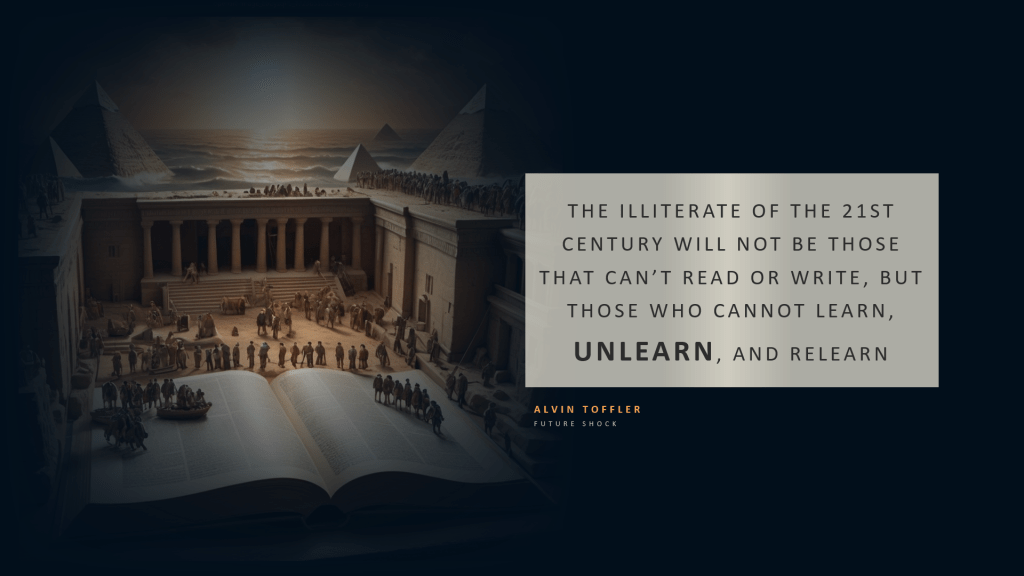
In an era of rapid change, the traditional understanding of literacy has become increasingly insufficient. Historically, literacy was defined simply as the ability to read and write – fundamental skills that enabled individuals to participate in society. However, as Alvin Toffler wisely pointed out, the definition of literacy in the 21st century has expanded far beyond these basic abilities. Today, true literacy encompasses the capacity to continuously learn new skills, let go of outdated knowledge, and acquire fresh perspectives. This shift reflects the profound changes in our world, where scientific and technological advancements, societal shifts, geopolitical tensions, and economic uncertainty are constantly reshaping the demands placed on individuals.
(more…) -
A Vast Possibility Space
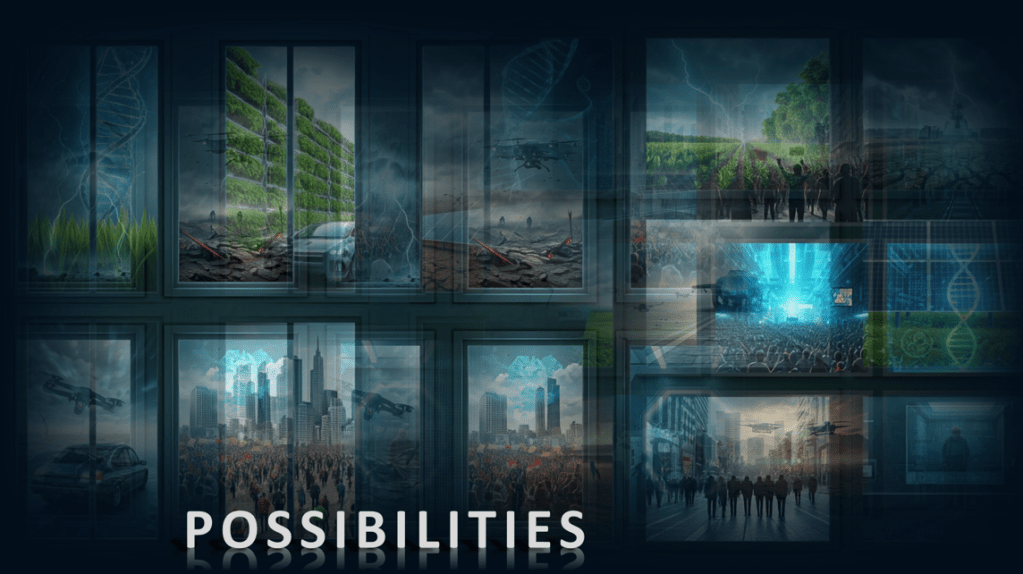
The concept of a “possibility space” in this new era of great invention represents the expanding landscape of opportunities, challenges, and uncertainties that emerge with each new breakthrough. As technological advancements accelerate, we find ourselves surrounded by an increasingly complex and dynamic array of potential futures. Innovations in artificial intelligence, biotechnology, energy, and communication have transformed what is possible, widening the range of scenarios we can imagine and pursue. This broadening of the possibility space means that, for every exciting new capability, there exists an accompanying set of risks and ethical dilemmas, creating a dual path forward that must be navigated with care.
(more…) -

Large Behavior Models: A New Frontier In AI
Large Behavior Models (LBMs) are emerging as a powerful new tool in AI, offering profound insights into complex human, social, and even organizational behaviors. By processing and learning from enormous datasets—ranging from individual actions to societal trends—LBMs can generate nuanced and adaptive responses, enabling machines to interact with humans in ways that feel natural, responsive, and contextually aware. This capability opens a world of transformative possibilities, blurring the lines between human and machine interaction and reshaping how we experience the digital world.
(more…) -

Return On Learning: Pioneering The Future
In the preceding four-part series, I explored the convergence of knowledge, invention, and societal transitions, tracing the democratization of knowledge from the dawn of language to the present day. The series examined how pivotal inventions have expanded human capabilities and transformed civilization, while also considering how today’s accelerating pace of scientific and technological advances is creating an expanding space of opportunities and challenges. As we stand on the threshold of a new age of invention, potentially more profound than past eras, the series emphasized how organizations can adapt, build resilience, and thrive. Building on these key themes, this post shifts focus to Return on Learning (ROL), a crucial concept that equips organizations to navigate this evolving landscape. By prioritizing learning, leaders can proactively shape the future and ensure long-term success in an era of rapid transformation.
(more…) -
Geopolitics In Flux: Why The Current Moment Matters
“New Cold Wars: China’s Rise, Russia’s Invasion, and America’s Struggle to Defend the West” by David E. Sanger offers a comprehensive analysis of the current geopolitical landscape, focusing on emerging tensions between the United States, China, and Russia. Sanger, a veteran national security correspondent for The New York Times, draws on his extensive experience to provide readers with a nuanced understanding of the complex challenges facing the world.
The book explores how the traditional concept of a Cold War has evolved in the 21st century, with China’s economic and technological ascendancy and Russia’s aggressive military actions reshaping global power dynamics. Sanger argues that these new cold wars differ significantly from the US-Soviet conflict of the 20th century, presenting unique challenges for global stability.
(more…) -

Beyond the Silo: How Exploding Possibilities Are Fueling the Rise of Horizontal Ecosystems
The second industrial revolution ushered in an era of vertical integration, where companies built empires within clearly defined industries. Today, however, a new revolution is upon us – one driven by an explosion in the possibility space. Scientific and technological advancements are happening at an unprecedented pace, blurring the lines between disciplines and creating opportunities that transcend traditional industry boundaries. This is giving rise to a fascinating phenomenon: horizontal ecosystems.
(more…) -
2024 Consensus Predictions
In a recent article the team from Visual Capitalist put together a listing of the most common predictions, from over 700 analysts, as to what they believe we’ll see in the next 12 months. In this now fifth year of Prediction Consensus they summarized 25 of the most common predictions and forecasts by experts into a single visual of what’s expected to happen in 2024. The visual below and article referenced above offer an overview of the most cited trends and opportunities that experts are watching for the rest of the year. Have a look.
-
Navigating The Horizons Of 2024: Thoughts Across Diverse Fields
As we stand on the precipice of 2024, a year brimming with potential and uncertainty, experts across various domains will offer their insights into the shape of things to come. From scientific breakthroughs to geopolitical shifts, from societal transformations to environmental challenges, these insights paint a multifaceted portrait of the year ahead. I’ll add my thoughts to the conversation. The uncertainty that exists across these domains adds to the difficulty in understanding possible futures. It is convergence that occurs across them that illuminates the possibilities.
(more…) -
The Next Decade In Technology
I was recently made aware of a report via OMG Futures on the next decade in technology. Recommended reading for anyone looking to scan the horizon. Thanks to Phil Rowley for making me aware of it. Phil described it this way:
(more…) -
Exploring Possible Economic Futures
In the interest of exploring possible economic futures, I have read books on Modern Monetary Theory, Zero Marginal Cost, The Job Guarantee, and several others. Add to the list the most recent book I finished, How Capitalism Ends. Viewed through the lens of property rights, wealth, and the transition from Feudalism to Capitalism, author Steve Paxton uses an effective method of storytelling: start with history and then explore possible futures. The book is setup by two thesis: the development and the primacy thesis. What he describes helps us understand the “why” behind the future that is emerging.
(more…) -
Why Ecosystems? Why Now?
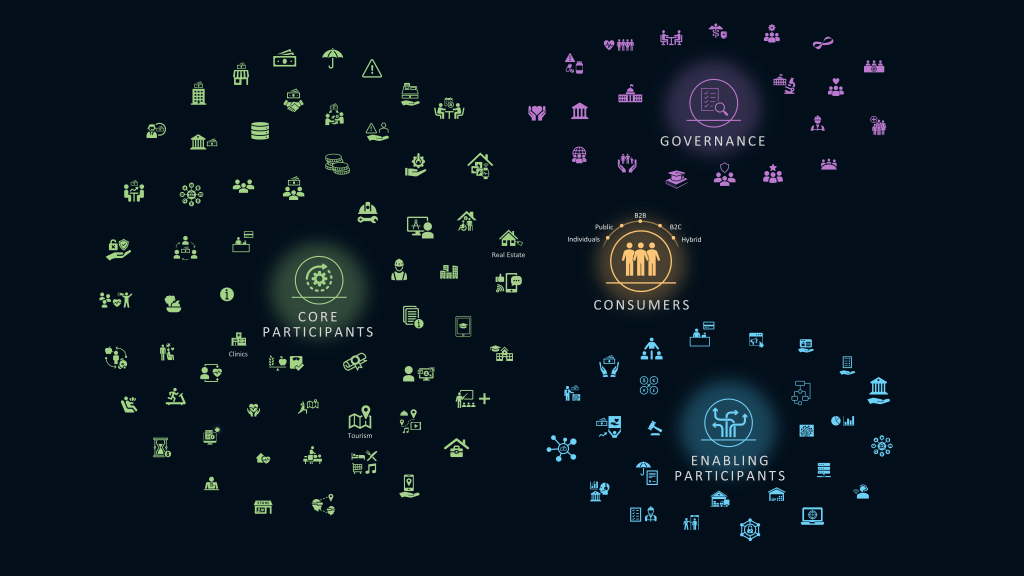
For at least seven years, the concept of ecosystems has been discussed and defined in various ways, while sometimes applied in a context that dilutes its eventual impact. At the highest level, an ecosystem is a network of connected stakeholders interacting in ways that create and capture value for all participants. Why has this ecosystem phenomenon emerged now and why do people expect it to drive structural change? Once again, history may provide an answer.
(more…) -
Challenging The Structures Of The Current Era
With technological change comes social change and a shift in the organizing systems that oversee how our communities are governed
LYDIA KOSTOPOULOS – Emerging Domains of Conflict in the 21st Century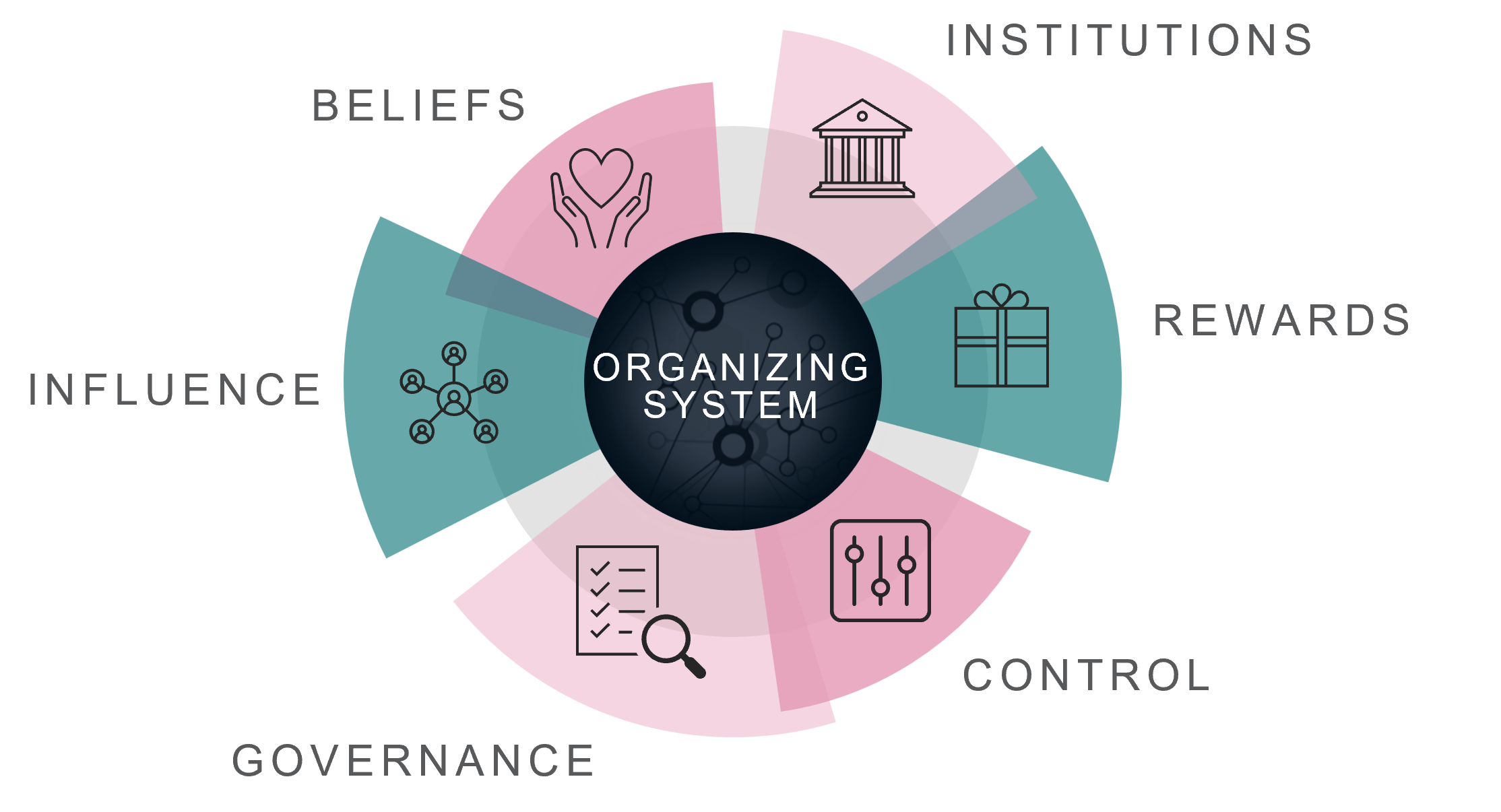
It has long been my belief that the structures supporting this current era have experienced diminished effectiveness and are reaching end of life. When I would share these thoughts back in 2012, I remember getting strange looks – but fast forward ten years and it’s not so strange anymore. That quote above comes from a recent article that identifies five emerging domains of conflict. Taken together with an exploding number of additional factors, it is easy to see why our organizing system is on the verge of dramatic change.
(more…) -
The Journey: The Building Blocks Of The Future
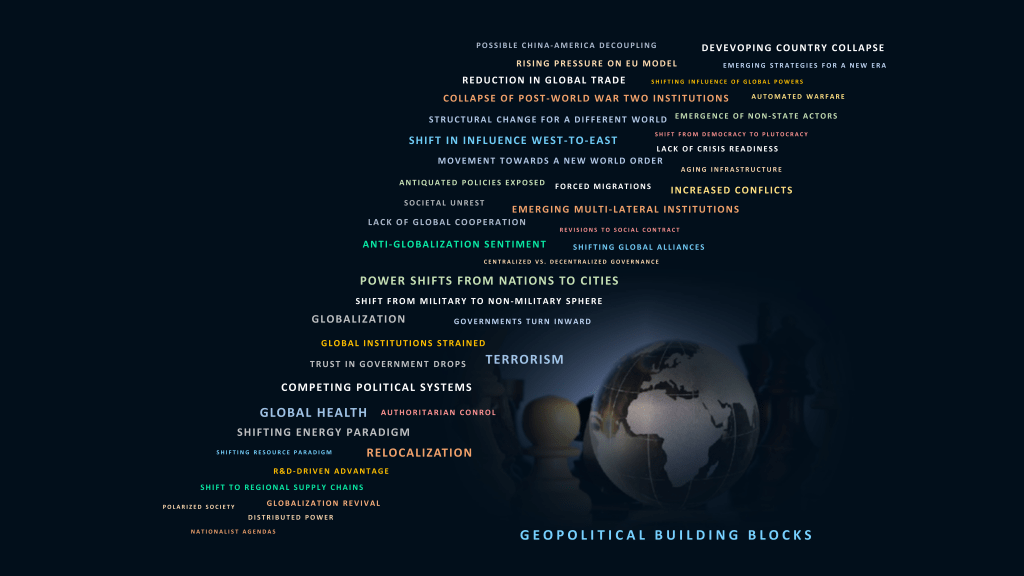
My previous posts launched a series that will tell the full story of a reimagined future. Described as a journey through the looking glass, the story began with a series description and a look back in time. The series continues, with each post featuring a piece of our journey. We explored the extreme uncertainty of the future in the last post. In this post, I will now dive deeper into the building blocks of the future.
(more…) -
Signals To Watch for In 2022
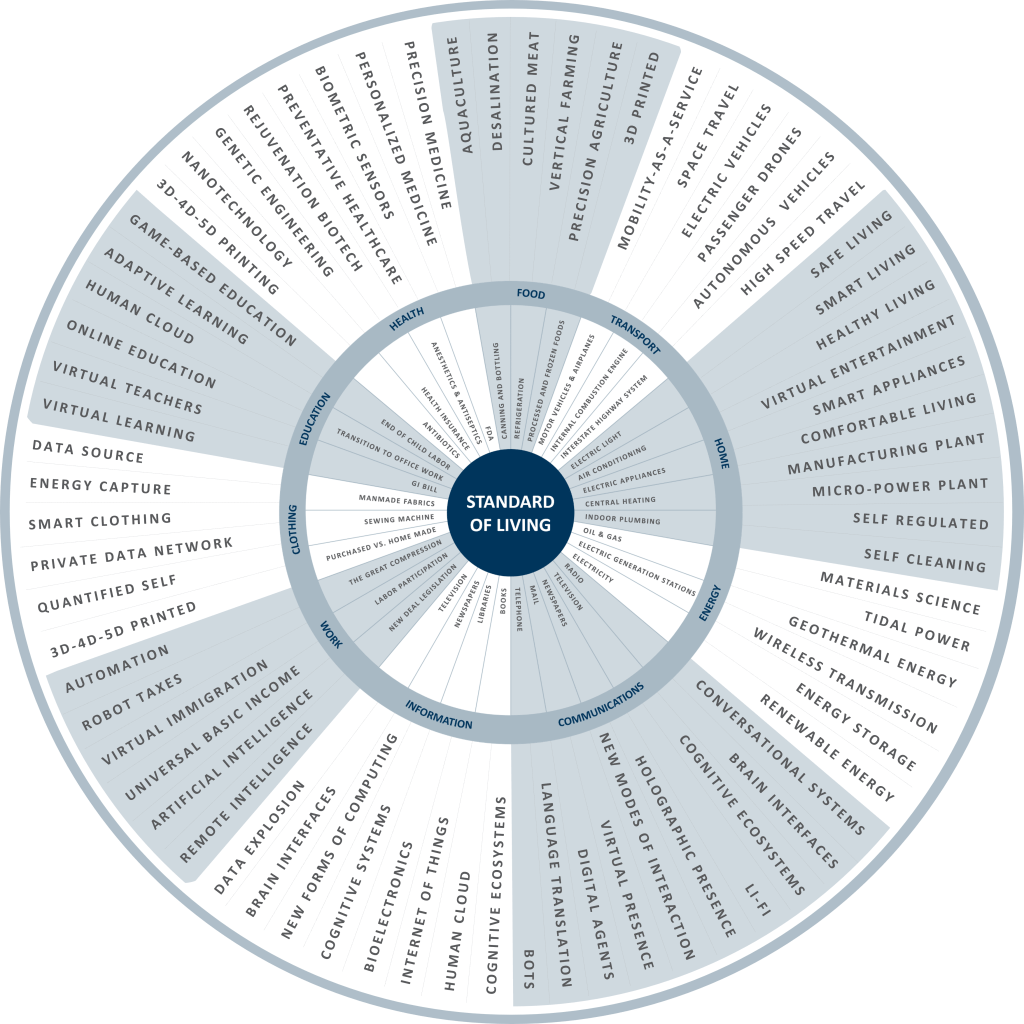
Understanding possible futures is all about signals – and there is no shortage of them. A dominant conversation these days is focused on how to sense these signals, derive foresight, and respond. While foresight helps us see possible futures, the next challenge is moving from a high degree of uncertainty to some level of actionable certainty. That step in the process is a combination of science and art. Signals manifest themselves through the current and emerging building blocks that shape our future – and they are coming at us from every corner of society. Since I don’t believe in prediction, I will focus my year-end post on signals to look for in 2022 across four key areas.
(more…) -
A Growing Number Of Building Blocks Make Prediction Impossible
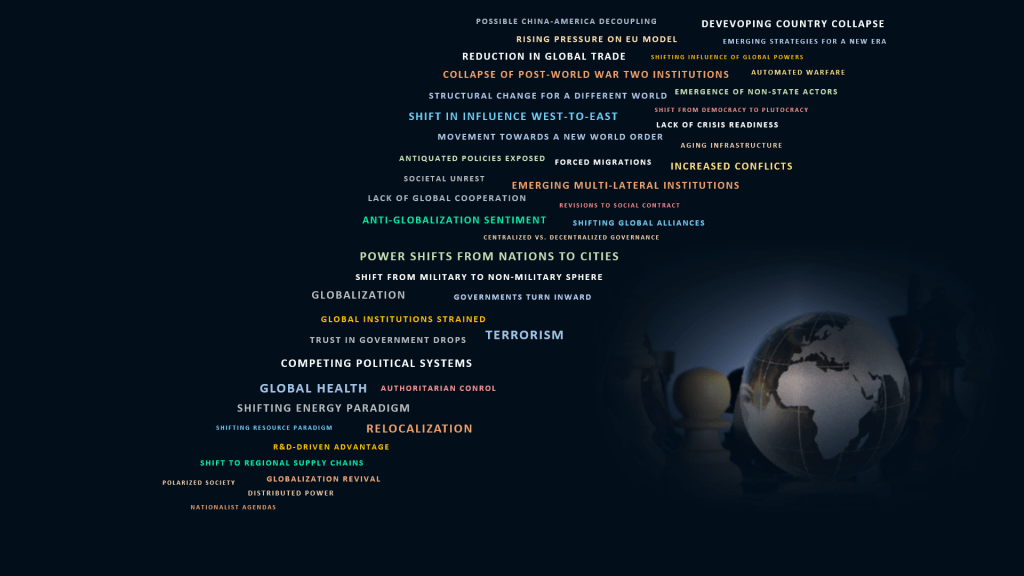
I have been of the opinion that the number of building blocks across multiple domains makes prediction impossible. As a result, understanding the future is about rehearsing it versus predicting it. That ambiguity makes many uncomfortable. Humans like certainty, but we live in a world that is very uncertain. Many will argue that this has always been the case. But it should be increasingly clear that periods like this emerging phase transition have only occurred a handful of times in human history. We want to rely on methods that have proven effective in the past. We find comfort in applying those methods to drive a degree of certainty. One need only look at these building blocks to see rehearsal is the only way to identify possible futures.
(more…) -
Shaping The Future: Technology And Geopolitics
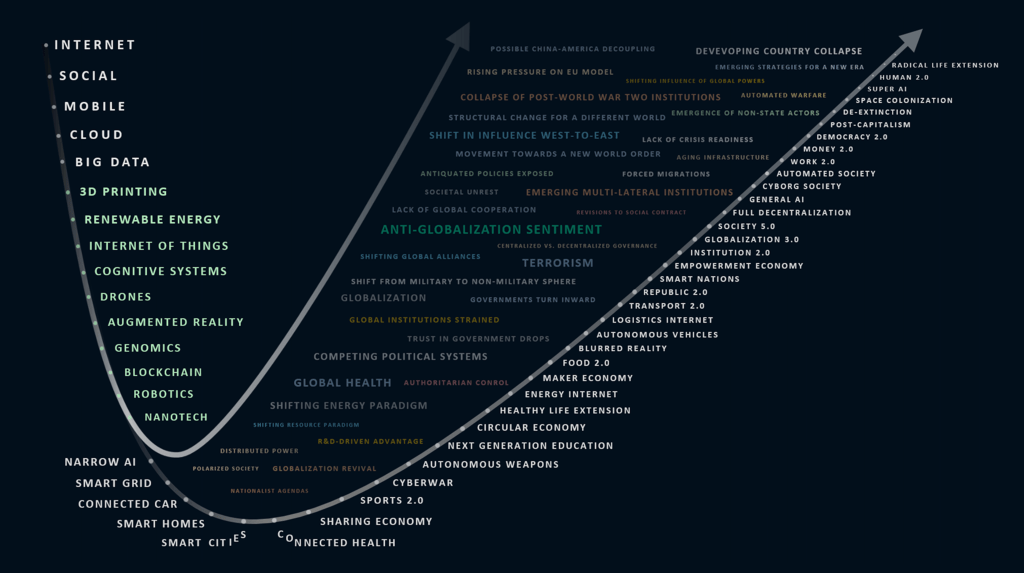
At the heart of foresight work lies the analysis of domains that shape the future. It is in the convergence of these domains that the future emerges. Geopolitics is one complex area of convergence that has massive implications to an uncertain future. In a recent article, Ariel Kastner explores seven views on how technology will shape geopolitics. The World Economic Forum asked members of the Global Future on Geopolitics to offer their views on technology and its impact on geopolitics in the coming year. This specific quote from the article says it well:
(more…) -
Is The Digital Era Over?
I had a discussion last week that focused on a post-digital world. It was an open question about the state of digital and the related transformation journey. Although the digital maturity of organizations is not where I envisioned it – and Covid-19 underscored the point – digital should be a foundational piece of a bigger story. The continued digital discussion ignores the bigger contributions of science and the boardroom conversations around purpose and innovation. A recent article goes one step further in declaring that the digital era is over, and we are in a New Era of Innovation. In it, Greg Satell makes the exact argument I made above.
(more…)

