
History has shown that when necessity, invention and innovation converge, the result is transformative change. From the steam engine to artificial intelligence, periods of economic, societal, and technological strain have consistently pushed invention innovation to new heights. These inflection points – where high-pressure needs meet breakthrough ideas – can drive unprecedented leaps in productivity, reshaping industries, economies, and even entire civilizations.
Continue readingNuclear Fusion
Nuclear Fusion
This monumental undertaking, known as the JT-60SA reactor, marks a significant stride in the pursuit of harnessing the power of nuclear fusion, a technology still in its infancy but hailed by many as the answer to humanity’s future energy needs.
Joseph Shavit – World’s largest nuclear fusion reactor is now online promising to reshape global energy production
It is still early days, but progress is being made. This article and quote above describes the inauguration of the world’s largest experimental nuclear fusion reactor. The article describes a process that seeks to replicate the natural phenomenon occurring inside the sun, where fusion reactions power our solar system.
Continue readingThe History Of Energy Transitions
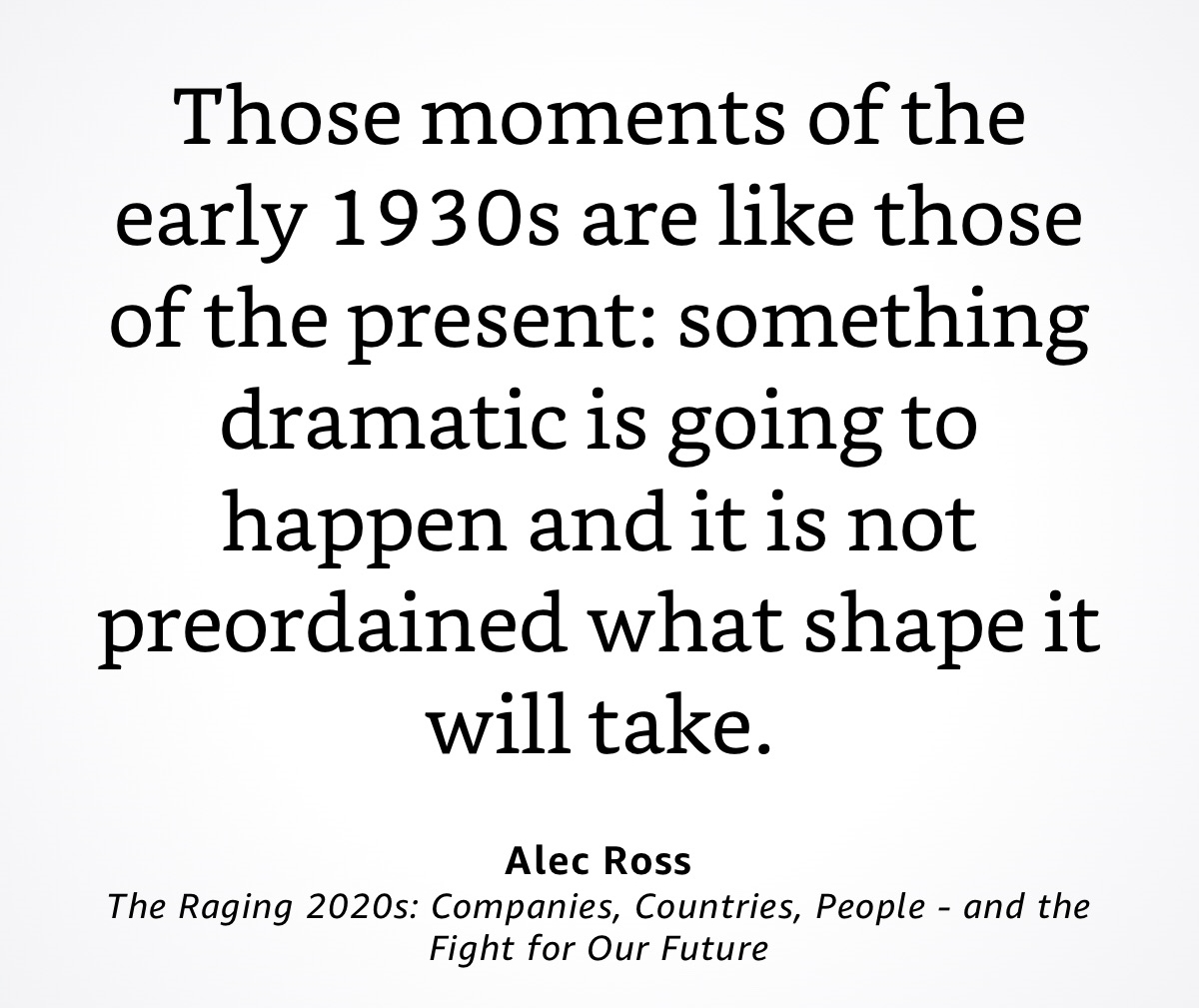
Energy transitions throughout history have ushered in times of dramatic change. While energy may be the biggest piece of this emerging story, it is part of a bigger narrative in what increasingly looks like a phase transition. That notion of dramatic change is echoed by several prominent sources. For example, Alec Ross in his recent book The Raging 2020s speaks of a world that resembles the 1930s, a growing sentiment that maps to my research on the period beginning in 1920.
As the visual below illustrates, that 1930 date aligns with the energy transition. That period began the long transition towards our current fossil fuel era – representing a major transitory period for the world. This recent article reflects on the history of energy transitions and the drastic change in our sources of energy over the last 200 years.
Continue reading Reimagining the Future