
A series: When Systems Move Faster Than We Do
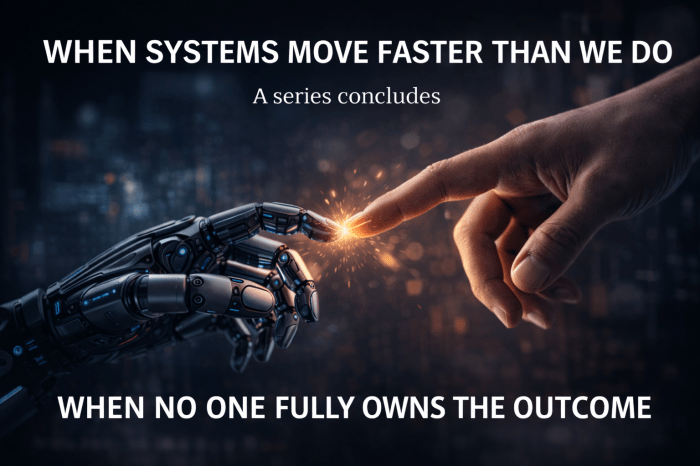
Across this series, we have followed a single pressure as it moved inward. In the first post, we examined what happens when intelligence outpaces human review and shared validation begins to thin. In the second, we saw how that acceleration moves into infrastructure, as environments stop waiting for instruction and begin acting automatically. In the third, we traced the consequences for institutions, where governance shifts from fixed rules toward continuous calibration and legitimacy begins to lag control. In the fourth, we carried that same substitution logic into the human domain, where people remain socially central while becoming operationally optional. What remains is responsibility.
Continue reading Reimagining the Future