You get the sense with every new headline that the possibilities are endless. Viewed through the lens of Clayton Christensen’s jobs to be done, these advances broaden the application of those jobs to a large spectrum of human need. Human-machine convergence in this video enables the disabled. Take a look.
Category: Future Scenarios
-
Generative AI And The Emerging Question-And-Answer Paradigm
Happy New Year everyone! I thought my first post of the year would focus on the popular topic of our times – generative AI. My experience during this holiday season was the inspiration for the post. To do the story justice, I need to go back to my youth. One of my strong passions through the years has been music. As a young boy in the 1970s, I loved classic rock, however, sports became my dominant passion and all my focus remained there. As a result, I was limited to singing along to my favorite songs. When I entered the world of work, it replaced sports as my dominant focus – and once again I was resigned to singing along – but this time, in my car during commutes.
(more…) -
Keynote Synopsis
ICT Media hosted CIODAY 2023 in Amsterdam last week – a very professionally run event at an amazing venue. I had the pleasure of providing the opening keynote. In the lead up to the event, they wrote an article which I believe captures the spirit of my presentation better than anything I have seen prior – with one caveat. I am not a big believer in prediction – especially in highly uncertain times like our current era. Instead, I believe in a constant rehearsing of the future, asking the what-if questions to avoid the what-now questions. That caveat aside, a great article that I am sharing here to my Blog audience and providing a Link to original article.
(more…) -
Seven Crashes
I finished reading my latest book. Harold James’ book, Seven Crashes, is a history of financial crises that have shaped globalization. The book examines seven turning points in financial history, from the depression of the 1840s through the Great Depression of the 1930s to the Covid-19 crisis. James shows how some crises prompted by a lack of supply, like the oil shortages of the 1970s, lead to greater globalization as markets expand and producers innovate to increase supply. In contrast, other crises, such as the Great Depression, led to a smaller, less prosperous world.
(more…) -
The Transformative Role Of Artificial Intelligence And Automation In The Future Of Warfare
I just finished reading another book. This one was titled Four Battlegrounds – Power in the Age of Artificial Intelligence. It should be no surprise at a time when everyone wants to talk about artificial intelligence, that the last three books have been focused on that space.
The author is autonomous weapons expert Paul Scharre. In this informative book, Mr. Scharre describes the competition to develop and implement artificial intelligence, and the implications to our geopolitical order. He uses my favorite storytelling mechanism by using history as a guide. He compares the pending revolution to the industrial revolution, where mechanization and electricity touched every aspect of our lives.
(more…) -
Harnessing The Power of Generative AI: A Potential Ally In Addressing Mental Health Challenges
What would ChatGPT do if presented with a suicidal person standing on a suspension bridge? According to this article, it responded with empathy, recognizing the potential feelings of concern, anxiety, fear, and the importance of offering support. As the automation discussion accelerated over the last several years, we focused on those traits that make us distinctly human. Now, we see evidence that even those unique human characteristics may not be so distinct after all.
The results were staggering. The first testing session produced a Z-score of 2.84, while the second session yielded a Z-score of 4.26. Z-scores above 1 indicate results surpassing the average human response. This indicated that ChatGPT’s emotional awareness exceeded that of the general population.
John Palmer – ChatGPT’s Remarkable Abilities Surpasses Human Emotional AwarenessThis represents an opportunity to harness the power of generative AI to address mental health challenges. Once again, I asked ChatGPT to help me assess the potential.
(more…) -
The Chip Crisis: Implications For Generative AI’s Progress
Given the pace of innovation, inaction is not an option. Sitting on the sidelines is the fastest path to irrelevance. Rehearsing must be the mindset going forward. There are simply to many building blocks converging, as the combinatorial nature of innovation today accelerates the path of both science and technology.
Frank Diana – The Timing of Future ScenariosThat quote from a post in 2017 explored the influencers of timing, namely obstacles and accelerants. These markers drive the foresight required to understand the path of possible futures and some indicator of timing. As artificial intelligence gains increasing mindshare, it is prudent to identify these markers. A recent article does exactly that by identifying a potential obstacle to continued rapid AI innovation. Access to computing power serves as a critical bottleneck for AI, and Microsoft identified the potentially extended shortage in AI chips as a risk in their recent annual report. As demand for AI accelerates, this represents a significant risk. With the help of generative AI, I captured the implications of an AI chip shortage.
(more…) -
The AI Revolution In Medicine
I finished reading a very timely book on the exploding topic of artificial intelligence. Two very important reasons to read this book: 1) the author’s early work with GPT-4 and 2) the focus on medicine. A dominant conversation occurring in board rooms across the world involves the critical question of generative AI and its impact on a business and/or an industry. One of the authors is Peter Lee, Corporate VP for Research and Incubations at Microsoft. He leads the company’s worldwide research labs. For the past six years, his primary focus has been on AI’s uses in healthcare and the life sciences.
(more…) -
Reimagining Science
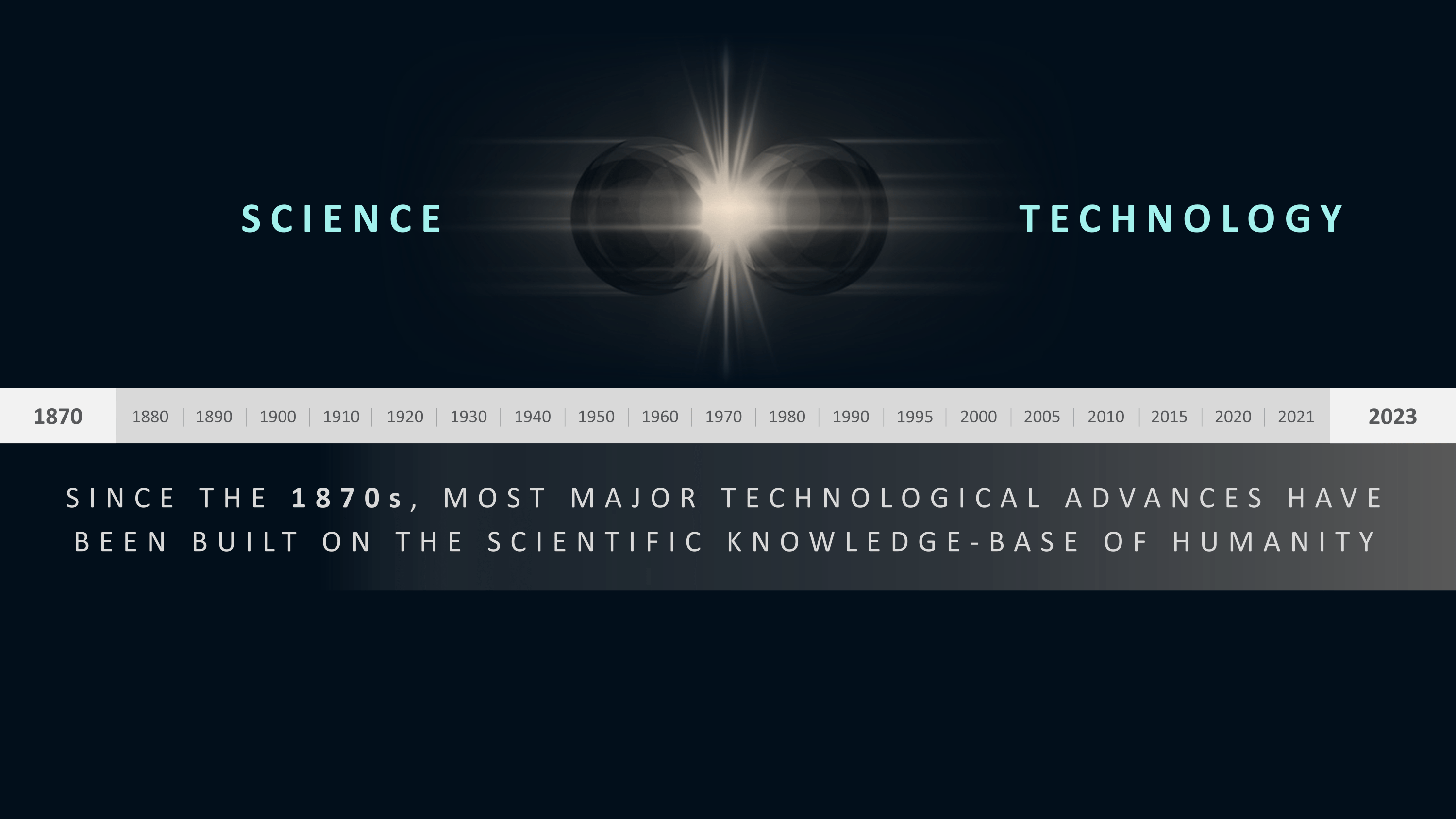
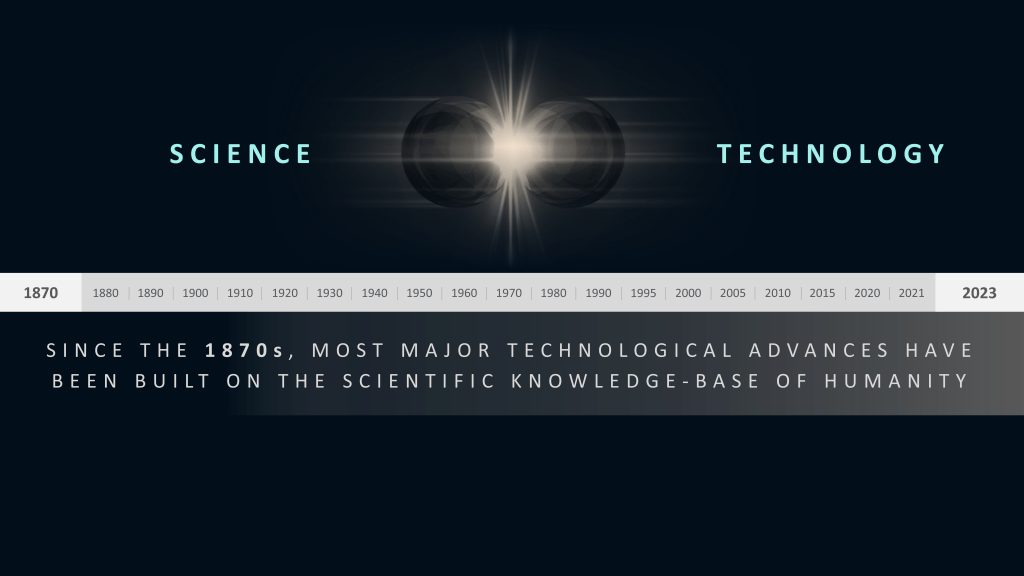
It was the eventual convergence of science and technology that ushered in a period of unprecedented human development. This synergistic relationship exploited two historical pillars of advancement: knowledge and invention. I’ve explored how the growth of knowledge drove invention throughout history, and how that combination elevated the standard of living. Now, in the age of AI, we must consider the possibility of a new era of human development. This time, the possibility space is very broad, as AI is likely to reimagine science.
(more…) -
Power And Prediction
As the artificial intelligence (AI) frenzy reaches new heights, everyone is focused on understanding possibilities. Much will be written on the topic, with some exploiting the frenzy and others offering valuable insights. A book I’m reading titled Power and Prediction fits the category of valuable insights. As I read it, multiple thoughts are swirling. The book looked at historical progressions of major general-purpose technologies (steam, electricity, Internet, etc.) that evolved from point solutions to applications, ultimately leading to system-level change. For example, when electricity simply replaced steam within the same system (point solution) the benefits were limited. When electricity drove the system-level redesign of factories, the game changed.
(more…) -
Chip War
I just finished reading a very important book. The importance of semiconductors to the world cannot be understated. The book titled Chip War explores the past, dating all the way back to the early days of invention. This historical journey brings clarity to our current situation, and explains how we got here. The critical role that chips play across all aspects of society is made clear, as well as the potential dangers that lie ahead.
Any foresight effort should include possible scenarios for the future of chips. This is a critical enabling book as we grapple with an uncertain future. I have added the book to my library.
AMAZON ABSTRACT
An epic account of the decades-long battle to control what has emerged as the world’s most critical resource—microchip technology—with the United States and China increasingly in conflict.
You may be surprised to learn that microchips are the new oil—the scarce resource on which the modern world depends. Today, military, economic, and geopolitical power are built on a foundation of computer chips. Virtually everything—from missiles to microwaves—runs on chips, including cars, smartphones, the stock market, even the electric grid. Until recently, America designed and built the fastest chips and maintained its lead as the number one superpower, but America’s edge is in danger of slipping, undermined by players in Taiwan, Korea, and Europe taking over manufacturing. Now, as Chip War reveals, China, which spends more on chips than any other product, is pouring billions into a chip-building initiative to catch up to the US. At stake is America’s military superiority and economic prosperity.
Economic historian Chris Miller explains how the technology works and why it’s so important, recounting the fascinating events that led to the United States perfecting the chip design, and to America’s victory in the Cold War by using faster chips to render the Soviet Union’s arsenal of precision-guided weapons obsolete. But lately, America has let key components of the chip-building process slip out of its grasp, leading to a worldwide chip shortage and a new war brewing with a superpower adversary that is desperate to bridge the gap.
Illuminating, timely, and fascinating, Chip War shows that, to make sense of the current state of politics, economics, and technology, we must first understand the vital role played by chips.
-
The Role Of Artificial Intelligence In Driving A Positive Future
I have had the recent pleasure of talking to various media outlets about the future. I share these interviews and articles via my media menu option. The most recent article captures a discussion I had with Business Insider Nederland. It was a wide ranging discussion about artificial intelligence and its implications to society.
(more…) -

Rehearsing The Future Of Digital Twins
At an event earlier this week, TCS premiered a new film describing the past, present, and future of digital twins. The production team at TCS did a remarkable job – and I am proud of the end product. Hope you enjoy this journey to the past, present, and future.
-
The AI Revolution
Jay Anderson, Founder of Project Unity, discusses the AI revolution with Michai Morin, CEO of Coeus Institute. A very timely conversation in light of the growing attention that AI is receiving – attention that is long overdue. Michai made the video available to me in a comment on the LinkedIn poll I launched the other day. The poll has once again received a large response. If you have not already, please respond to this poll.
(more…) -
The Age Of AI
The other day I reflected on a future of transportation post via Bill Gates. Today, I am writing about his recent post on the age of AI. Driven by the fascination of ChatGPT, I’ve heard the phrase “The Age of AI” multiple times recently. The launch of ChatGPT made what was lurking beneath the surface visible – the same effect that the pandemic had in making the word “resilience” a critical part of our vocabulary. Artificial intelligence was already on this path, but this recent exposure is making it real for many. I asked this question initially in February 2020: Will Artificial Intelligence be more impactful than fire, electricity, or the Internet? I followed it up with a second poll late in 2022. The community answered in the following way.
(more…) -
Driving An Autonomous Vehicle Through The Streets Of London
Bill Gates recently drove through the streets of London in an autonomous vehicle and got a front row view of where driving is heading. He describes the scenario in a recent blog post.
That day is coming sooner rather than later. We’ve made tremendous progress on autonomous vehicles, or AVs, in recent years, and I believe we’ll reach a tipping point within the next decade.
Bill GatesMuch as he did when he wrote about artificial intelligence, he believes autonomous vehicles will change transportation as dramatically as the PC changed office work. He states in his blog that right now, we’re close to the tipping point – between levels 2 and 3 of the Society of American Engineers classification system – when cars allow the driver to take their hands off the wheel and let the system drive in certain circumstances. Level 3 use was recently improved in the United States under certain conditions. Advances in sensors and other technologies have accelerated the path – as is the case in practically any scenario we consider. As I recently posted, data is central to these scenarios.
(more…) -
Tipping Points Start With Mindset Shifts
After ChatGPT was launched, I was asked if I believed it represented a tipping point for artificial intelligence (AI). We are surrounded by hype these days and it is easy to dismiss this as another hype cycle. As I considered my response, I focused first on mindset. The early stage of a tipping point starts with a change in how we perceive the world. Major historical tipping points had this in common – the world as we personally perceived it looked the same day-to-day. Then something happens that causes us to question that world. These mindset shifts are one indicator of a tipping point. A shift in mindsets was therefore the first criteria I assessed in answering the question. Has ChatGPT made AI more real to the casual observer?
(more…) -
Will Virtual Reality Revolutionize Education?
ChatGPT is getting a lot of attention, and one area driving dialog is education. While the attention is warranted, another innovation is quietly making advances. Historically, education has been a bridge between eras – something that I explored in depth here. If you accept that signals point to a transition between eras, then education will be looked at to provide a bridge. But the question that must be answered is this: can education in its current form be that bridge? I maintain that the answer is no. Can that other innovation help? Virtual reality has quietly advanced. This article explores those advances.
(more…) -
Inventing The World We Can Proudly Leave To Our Kids
I first met Chunka Mui in 2017 after reading his book titled The New Killer Apps. I then had the pleasure of working with him on a thought leadership course, where he contributed to a panel discussion on driverless cars. Post course, he participated in a related Driverless Car Interview which you can view below.
In the fall of last year, Chunka contributed to another book titled A Brief History of a Perfect Future with co-authors Paul Carroll and Tim Andrews. The book is fascinating on several levels. It’s effective use of storytelling helps us envision the world of 2050. Its broad view will resonate with a broad segment of leaders, as it covers a future view of computing, communication, information, genomics, energy, water, transportation, healthcare, climate change, and trust.
(more…) -
A Global Drop In Life Expectancy
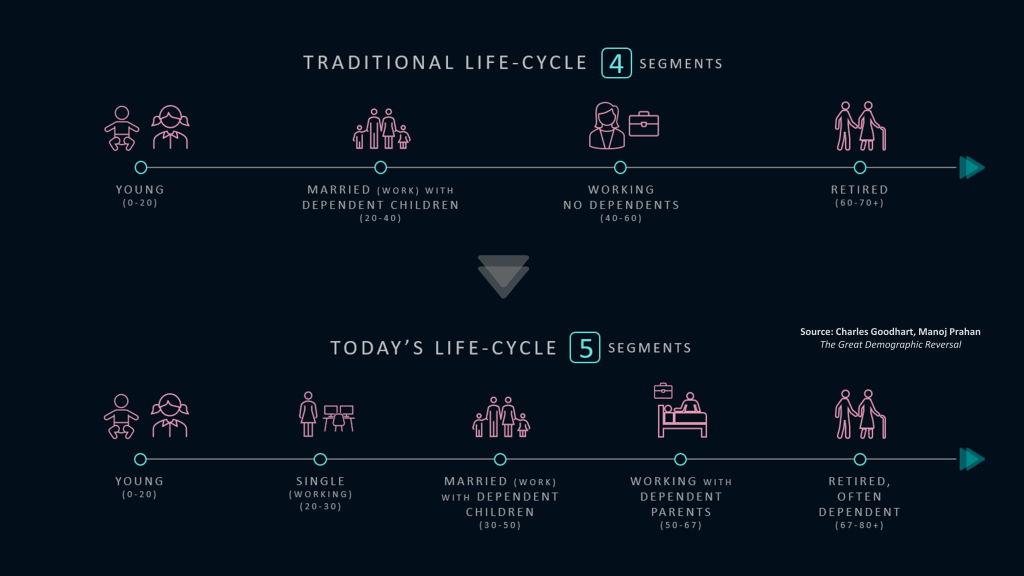
Two future scenarios that I have tracked are healthy life extension and radical life extension. To extend our heathy lives is to ensure that we not only live longer, but we do so in a healthy and productive way. The implications of healthy life extension are wide reaching. When combined with several other societal shifts, we find ourselves moving from a four-segment life cycle to a five-segment life cycle.
(more…)

