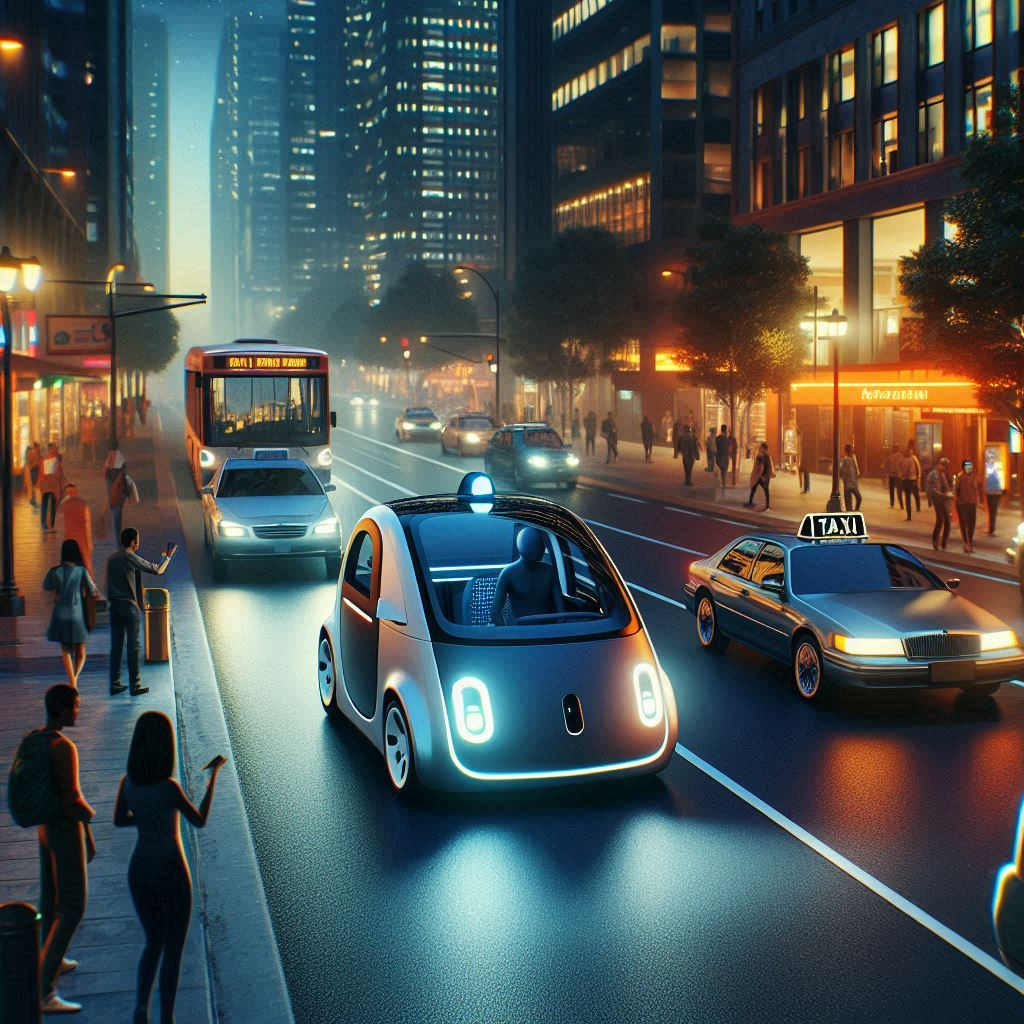
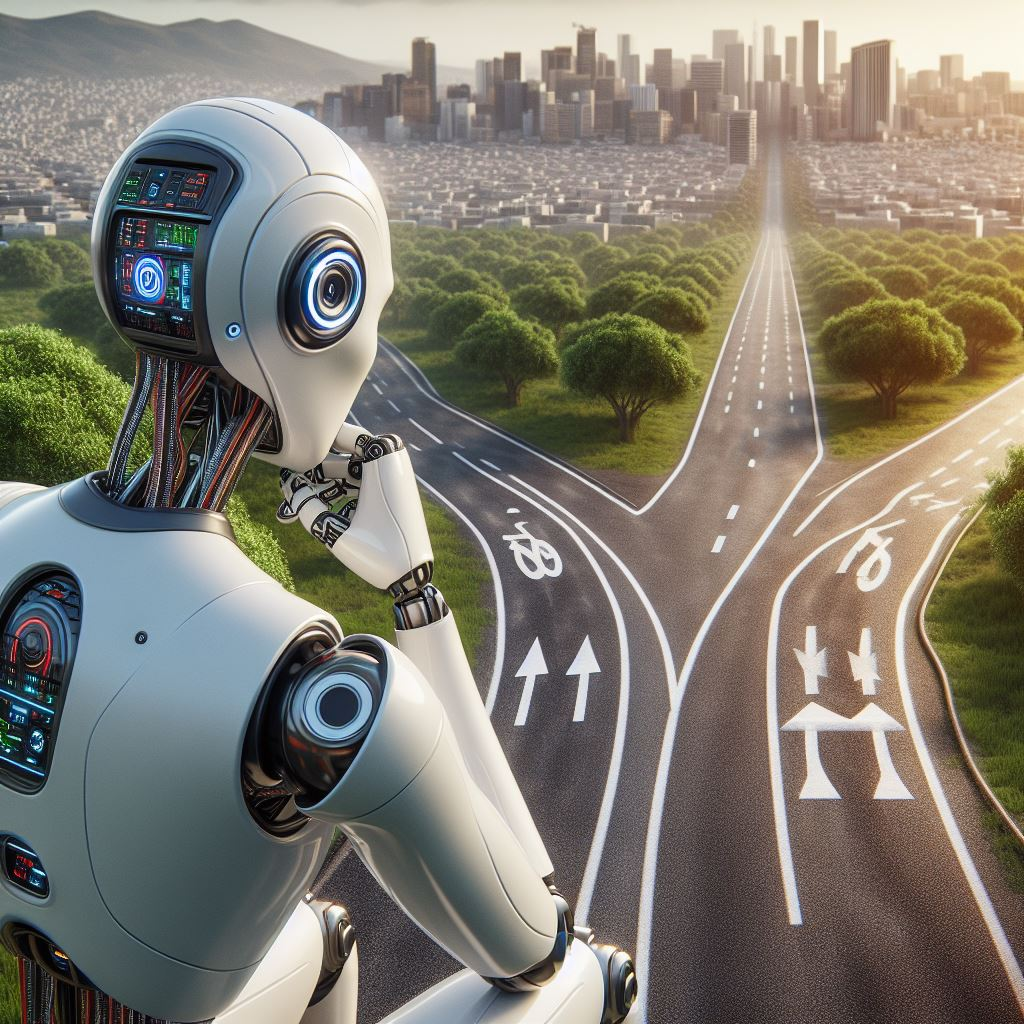
Autonomous vehicles have been a hot topic for years, plastered across headlines promising a futuristic revolution in transportation. Yet, widespread adoption remains elusive. This fuels public skepticism. We haven’t seen a significant shift on the roads, and the technology’s limitations in complex driving scenarios raise concerns about safety. Until autonomous vehicles can consistently navigate real-world challenges and demonstrate a clear safety advantage, the public’s wait-and-see approach is understandable.
As the world advances in public health and medical interventions, significant increases in global life expectancy are anticipated by 2050. A recent analysis of the Global Burden of Disease (GBD) 2021 study reveals promising projections for both life expectancy and healthy life expectancy across various regions. A recent article delves into the key findings of the GBD 2021 study, examining the factors driving these changes and exploring alternative scenarios that could further impact global health outcomes.
The rise of generative AI is sparking discussions about its potential impact on various industries, with SaaS being a prime example. The traditional per-seat subscription model, a cornerstone of many SaaS businesses, might be vulnerable as AI automates tasks and potentially reduces the need for human users. Here’s a breakdown of the conversation:
Challenge: Generative AI’s ability to automate tasks could lead to fewer human employees needing SaaS applications, impacting per-seat subscription revenue. Nuance: The impact might not be a complete disruption. While some user seats might decrease, AI could also create new functionalities and workflows requiring additional subscriptions. For your blog post, consider this summary:
I just finished reading a book titled Generative Artificial Intelligence: What Everyone Needs to Know. Author Jerry Kaplan offers a thought-provoking exploration of Generative AI (GAI), a revolutionary technology poised to reshape our world. Delving into its potential to transform everything from healthcare to creative arts, the book also tackles the ethical considerations and challenges that come with this powerful new tool.
Artificial intelligence (AI) has become an undeniable force in our lives. From virtual assistants like Siri to self-driving car technology, AI is rapidly transforming the landscape. However, as Kaplan states, a new wave of AI is poised to make even greater strides: Generative AI (GAI).
For some time now, I have written about the possibilities enabled by convergent forces. In contemplating the trajectory of these forces, I captured my thoughts several years ago in a post on possibilities. My analysis at the time surfaced three overarching themes: Convergence, Acceleration, and the focal point of this discourse, Possibilities. The interplay of these themes drove me to consider a burst of possibilities, catalyzed by the converging forces and accelerating pace of change.
I really enjoyed a recent article written by Steve Andriole. I enjoyed it because it appreciates the uncertainty of our times and questions the AI predictions flowing from all corners. As readers of my Blog know, I don’t believe in prediction. Mr. Andriole reflects on a number of failed predictions that underscore the point. Instead, I believe in rehearsing the future.
I finished reading my most recent book titled The War below. In the book, Ernest Scheyder sheds light on the often-overlooked world of rare earth metals, exposing the intense global struggle to extract the vital resources that power our modern lives. From the smartphones in our pockets to the electric cars on our roads, lithium, copper, and other critical minerals have become the backbone of our technology-driven society. But at what cost?
We are clearly in the early days of a transition and we are watching it unfold before us. Hype aside, it is fascinating to watch artificial intelligence rapidly evolve. A recent article provides a small example. As we view this evolution through the lens of accelerants and obstacles, much has been said about regulations and the limitations of data and compute power (potential obstacles). The article identifies two possible accelerants: intensifying competition and new sources of data. Here is a brief summary.
UPDATE: THE LINK TO THE ARTICLE IS NO LONGER AVAILABLE
A recent article seeks to dispute the recent negative press that vertical farming has received. Written by Arama Kukutai, the CEO of a company called Plenty, the article explores the headlines that might have you believe vertical farming is on life support, and provides a closer look that reveals a different story. While climate change, population growth, and soil erosion threaten our global food security, vertical farming offers a beacon of hope. This innovative approach to indoor agriculture boasts significantly higher yields than traditional methods, all while using less land and precious water.
I had the pleasure of sitting down for a discussion with Journalist Kevin Williams. His article went live on CNBC on April 6. I really enjoyed this one for multiple reasons. First, the positive focus that Kevin was looking for – a focus inspired by the recent TCS Futurist Study. Second, Kevin sought additional perspectives, one from another Futurist and the other from a psychologist. The question of human behavior is an important one – so I was thrilled when Kevin pursued that angle. As the advent of generative artificial intelligence (AI) has sparked both fascination and fear in equal measure, these conversations are important. Here are some key messages from the article.
In a recent article, Don Reisinger describes a consortium formed to address the impact of jobs lost to AI. In an era where technological advancements have the potential to reshape industries at an unprecedented pace, concerns about the displacement of jobs due to artificial intelligence (AI) adoption have reached a critical juncture. Acknowledging this challenge, several leading tech companies, deeply entrenched in the realm of AI, have joined forces to mitigate the impact of job loss and facilitate workforce transitions.
A recent article focused on the duality of innovation. Author Andy Meek describes how AI is evolving in this dual context, in this case, resurrection versus killing. He describes the futuristic turn taken by China’s Ching Ming Festival, a time-honored tradition of honoring the dead. While families still visit gravesites and burn offerings, a growing trend sees them paying for hyper-realistic AI avatars of their loved ones.
A recent article by Forbes Councils Member MacKenzie Price explores the role of AI and humans in emerging transformation of education. As readers of my Blog know, I view education as the bridge to a new era. Here is a brief summary of the article:
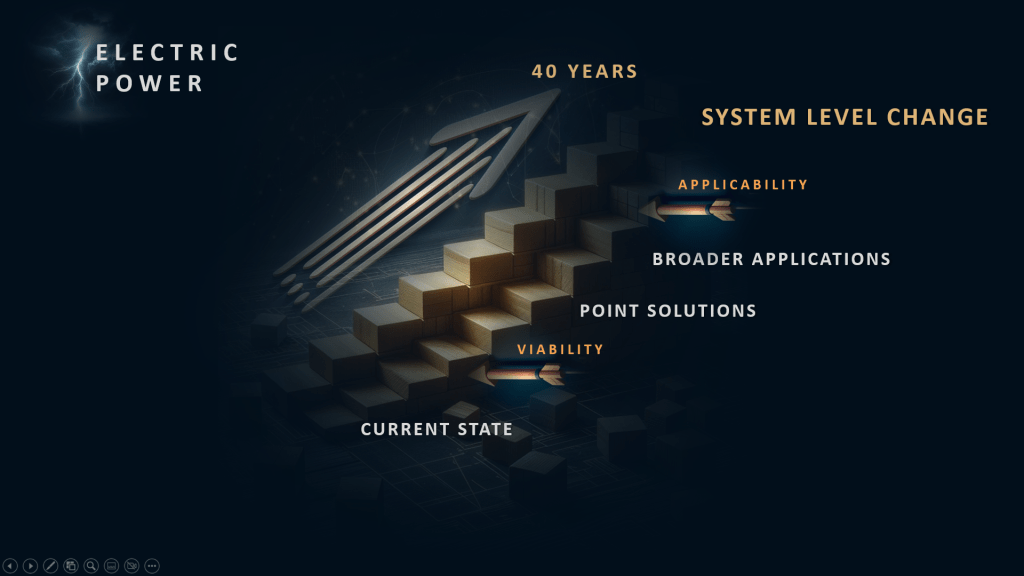
Imagine a world transformed not in decades, but years, by a single invention. That’s the potential future with Artificial Intelligence (AI). History offers a fascinating comparison: electricity. This seemingly simple technology took 40 years to fully revolutionize factories, forever altering manufacturing. Along the way, it changed how we lived in our homes, altered the workforce, and transformed various aspects of society. But will AI follow the same slow burn, or are we on the cusp of an exponential leap?
Throughout history, humanity has thrived on breakthroughs that ignited explosions of knowledge. These “tipping points” fundamentally altered our way of life, from the dawn of language sparked by fire to the scientific revolution fueled by the printing press. I wrote about the role of knowledge in advancing human development as part of my looking glass series. Artificial intelligence (AI) presents the potential for another such tipping point, one that could significantly enhance human well-being across health, wellness, education, communication, transportation, and more.
In today’s rapidly evolving landscape, the role of futurists in enterprises is paramount. These visionaries not only anticipate possible futures but also guide companies in preparing for what lies ahead. Unsurprisingly, technology trends often dominate these discussions, with the potential of Artificial Intelligence (AI) sparking both celebration and concern. That’s why Futurists here at TCS decided to launch a study titled Working Towards the Future.
The survey reveals an overwhelming sense of optimism among futurists regarding AI’s impact, particularly in the realm of work. A staggering 90% of surveyed futurists express optimism about the changes AI will bring, with nearly half of them being very optimistic. This optimism extends to AI’s potential contributions to employee health and wellness, as 72% of participants foresee significant positive impacts.
A recent article did a great job of looking backward to see forward. The author delves into the intricate relationship between AI and strategic games like chess and Go, offering insights into AI’s broader societal impact. Initially met with trepidation, AI’s victory over human players sparked fears of obsolescence within the chess community. However, the aftermath revealed a flourishing chess scene, with increased interest, diverse talent, and heightened sponsorship—a testament to AI’s role in rejuvenating rather than diminishing the game. Beyond gameplay, AI revolutionized strategic thinking and decision-making processes. By providing access to vast amounts of data and novel strategies, AI empowered players to innovate and adapt, reshaping the landscape of traditional games.
Everyday, we see more headlines focused on artificial intelligence (AI). Given the possibilities, it stands to reason that the conversation will continue into the foreseeable future. At the heart of the discussion lies the dual paths of innovation. The path forward represents a delicate balance between the socially constructive benefits of innovation and a destructive path driven by technologies that have no ethics, and an innovation engine that has no governance. The AI discussion has historical precedent. Artificial intelligence has permeated our lives, from the algorithms recommending your next purchase to the groundbreaking medical diagnoses saving lives. While AI’s potential for positive impact is undeniable, it also evokes concerns about job displacement, algorithmic bias, and even the dystopian possibilities of superintelligence.
This discourse around AI hinges on two distinct perspectives: techno-optimism and techno-pessimism. Techno-optimists, brimming with faith in progress, view AI as the ultimate problem-solver, a tool to unlock a brighter future. They envision AI revolutionizing healthcare, tackling climate change, and propelling us towards a utopia driven by innovation.
This monumental undertaking, known as the JT-60SA reactor, marks a significant stride in the pursuit of harnessing the power of nuclear fusion, a technology still in its infancy but hailed by many as the answer to humanity’s future energy needs.
Joseph Shavit – World’s largest nuclear fusion reactor is now online promising to reshape global energy production
It is still early days, but progress is being made. This article and quote above describes the inauguration of the world’s largest experimental nuclear fusion reactor. The article describes a process that seeks to replicate the natural phenomenon occurring inside the sun, where fusion reactions power our solar system.
As I have done each year for the last six years, I had the pleasure of participating in the CEO of the Year Gala sponsored by Chief Executive Group. The event is preceded by roundtable discussions with CEOs, and I have been honored to facilitate one of those sessions each year. The topic for this years roundtable was Innovating for a World in Transition. The short abstract for the session read as follows.