
Throughout history, humanity has thrived on breakthroughs that ignited explosions of knowledge. These “tipping points” fundamentally altered our way of life, from the dawn of language sparked by fire to the scientific revolution fueled by the printing press. I wrote about the role of knowledge in advancing human development as part of my looking glass series. Artificial intelligence (AI) presents the potential for another such tipping point, one that could significantly enhance human well-being across health, wellness, education, communication, transportation, and more.
A LEGACY OF KNOWLEDGE-DRIVEN PROGRESS
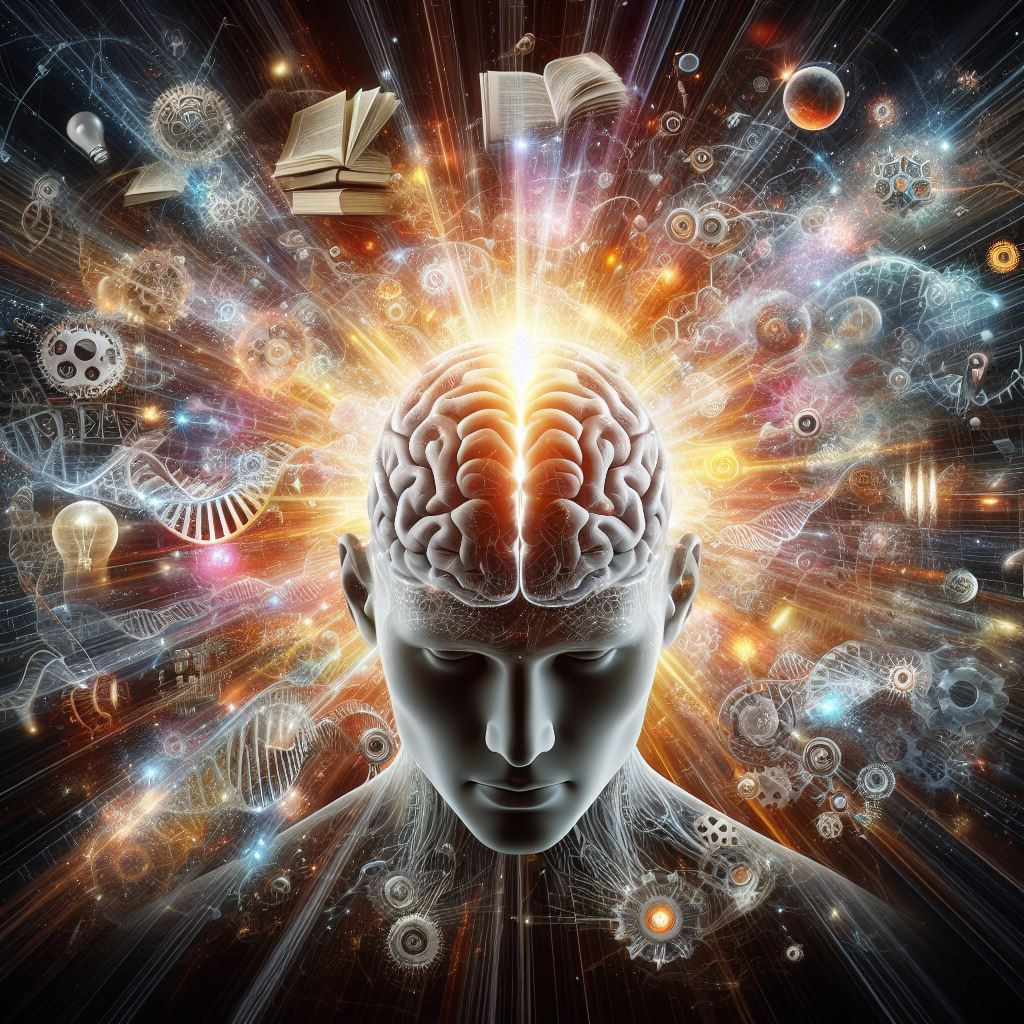
Our historical journey is a testament to the transformative power of knowledge. Fire, for example, not only provided warmth and protection but also facilitated the development of language, a cornerstone of human progress. The printing press, by enabling the mass dissemination of ideas, ushered in the Enlightenment, a period of intellectual and scientific advancement that continues to shape our world today. The last major tipping point arrived with the internet, dramatically accelerating knowledge sharing on a global scale. Now, on the horizon looms AI, poised to take the knowledge revolution to unprecedented heights.
AI: FUELING THE NEXT STAGE OF HUMAN DEVELOPMENT
AI’s potential lies in its ability to analyze vast amounts of data, identify patterns, and solve complex problems beyond human capacity. This presents a multitude of opportunities to improve our lives:
Health and Wellness: AI can revolutionize healthcare by analyzing medical data to predict disease outbreaks, personalize treatment plans, and even assist in drug discovery. Imagine AI-powered diagnostics that can detect illnesses at an early stage, leading to more effective interventions and improved patient outcomes.
Education: AI tutors can personalize learning experiences, catering to individual student needs and learning styles. AI can also automate tedious tasks like grading, allowing educators to focus on more nuanced aspects of instruction.
Communication: AI-powered translation tools can break down language barriers, fostering greater global collaboration and understanding. Imagine real-time communication tools that seamlessly translate conversations, enabling people from different cultures to connect effortlessly.
Transportation: Self-driving vehicles powered by AI have the potential to make transportation safer and more efficient. Imagine a future where traffic accidents are a relic of the past, and commutes are transformed into productive or leisure time.
THE ROAD AHEAD: ETHICAL CONSIDERATIONS AND HUMAN-AI COLLABORATION
While the potential benefits of AI are vast, navigating this future requires careful consideration. Ethical questions surrounding data privacy, bias in algorithms, and the potential for job displacement need to be addressed proactively. The key lies in ensuring that AI functions as a tool to augment human capabilities, not replace them. Human-AI collaboration will be paramount. Humans will continue to provide the ethical compass and creative spark, while AI takes care of the heavy lifting of data analysis and complex computations.
CONCLUSION: A FUTURE FILLED WITH PROMISE
The rise of AI presents a momentous opportunity to propel human development to new heights. By harnessing the power of AI responsibly, we can unlock solutions to some of humanity’s most pressing challenges and create a future brimming with possibilities. It’s this expanded possibility space that sits at the heart of the positive views expressed in the recent study I shared last week. The knowledge explosion fueled by AI is upon us, and it has the potential to redefine what it means to be human – for the better.
Discover more from Reimagining the Future
Subscribe to get the latest posts sent to your email.
 Reimagining the Future
[…] accessible, but dynamically adaptable to meet the diverse needs of individuals and society. This expanding possibility space holds the potential to overcome previous constraints, unlocking boundless opportunities for […]
LikeLike