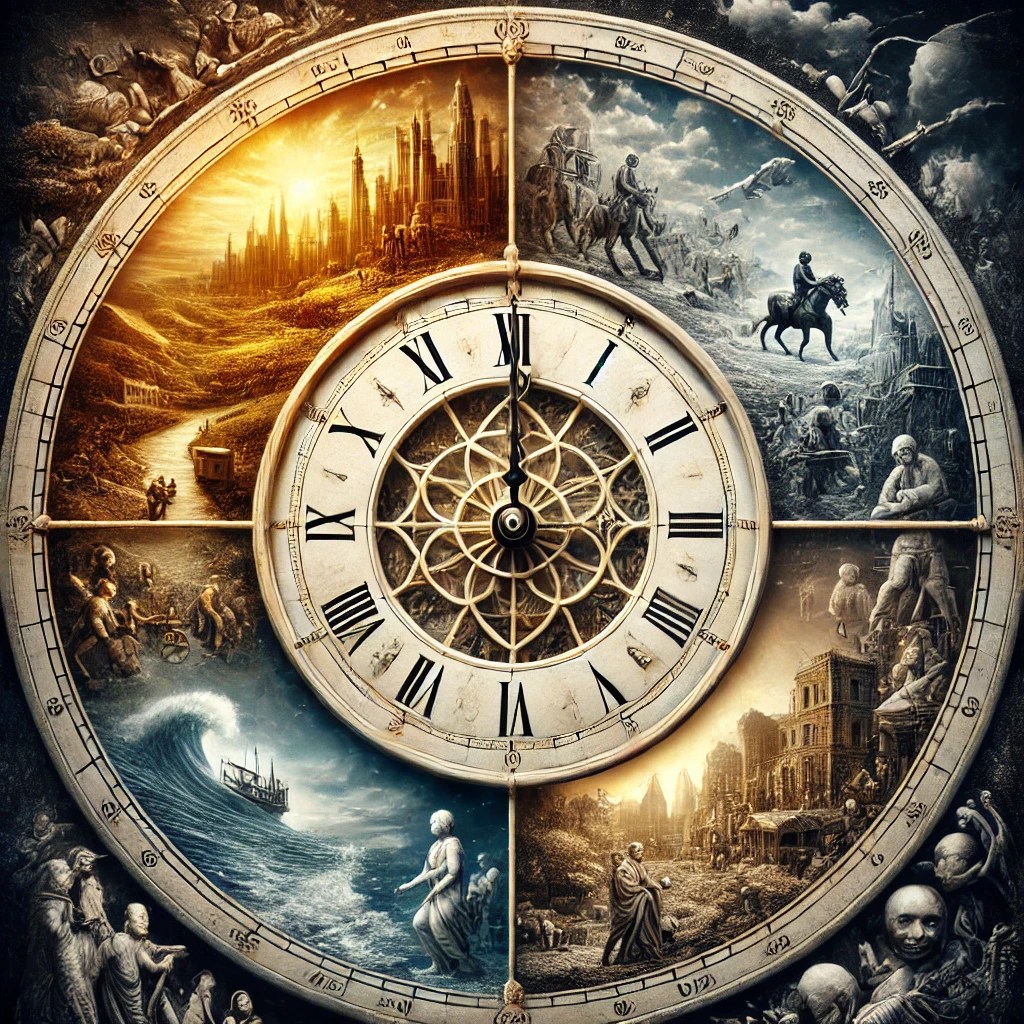
UPDATED FEBRUARY 5TH 2025. The Fourth Turning and its sequel have resonated deeply with readers because they offer a framework for understanding the cyclical nature of history, particularly during times of uncertainty. The books propose that history unfolds in repeating patterns, each marked by distinct generational archetypes and societal moods. According to the authors’ model, we entered a “Crisis” period around 2008, marked by economic turmoil and a growing sense of societal unease. Now, over a decade later, many feel that we are approaching a critical juncture, the resolution of this Crisis, though the precise nature of that resolution remains unclear. This sense of approaching a culmination, combined with the current climate of rapid technological change, political polarization, and global instability, makes the framework offered by The Fourth Turning particularly compelling.
Given the continued interest in this topic, the constant traffic to the original posts, and the increasing relevance of the book’s predictions as we appear to approach the resolution of the current Crisis, I am relaunching my posts on The Fourth Turning. I believe that engaging with these ideas is crucial for navigating the complexities of our time and preparing for the challenges and possibilities that lie ahead. By understanding the cyclical patterns of history, we can gain valuable insights into the present and work towards shaping a more positive future as we move into whatever new era follows this period of upheaval.
Recently, I’ve noticed a significant surge in traffic to my previous articles The Fourth Turning and the Fourth turning is Here. The original book was written in 1997 by Neil Howe and William Strauss and explores the cyclical nature of history. The second book was written last year by surviving author Neil Howe. This increased interest suggests that the book’s insights and predictions are resonating with a growing number of people who are seeking to make sense of the complex and uncertain world we live in today. As I revisit the book’s themes and ideas, it’s clear that the authors’ analysis of historical cycles, archetypes, and the eternal dance between order and disorder is striking a chord with readers who are looking for context and understanding in these turbulent times.
In their seminal work, “The Fourth Turning,” Neil Howe and William Strauss present a groundbreaking theory on the cyclical nature of history, highlighting the recurring patterns and archetypes that shape human societies. The book proposes that history unfolds in a recurring cycle of four stages, or “turnings,” each lasting approximately 20-25 years.
The Four Turnings:
- The High: A period of growth, prosperity, and social cohesion, marked by a strong sense of community and shared values.
- The Awakening: A time of spiritual and social awakening, characterized by a growing sense of individualism and rebellion against established norms.
- The Unraveling: An era of decay and fragmentation, marked by institutional decay, social polarization, and a growing sense of disillusionment.
- The Crisis: A period of intense turmoil and transformation, where old institutions are torn down, and new ones are built.

The Archetypes:
Howe and Strauss identify four recurring archetypes that play a crucial role in shaping these cycles:
- The Prophet: A visionary leader who calls for change and renewal.
- The Nomad: A pragmatic and adaptable individual who navigates the changing landscape.
- The Hero: A courageous leader who takes action to address the crisis.
- The Artist: A creative and innovative thinker who brings new ideas to the forefront.

The Fourth Turning is Here:
Neil Howe’s follow-up book, published on July 18, 2023, serves as an update to the original work, providing new insights and perspectives on the current state of the cycle. Howe argues that we are currently in the midst of the fourth turning, a period of crisis and transformation that will shape the course of human history for generations to come.
Key Takeaways:
- The Fourth Turning offers a compelling framework for understanding the cycles of history and the recurring patterns that shape human societies.
- The four archetypes provide a valuable lens for understanding the roles and motivations of individuals in shaping historical events.
- The books offer a thought-provoking and insightful analysis of the current state of the world, encouraging readers to think critically about the future and our collective role in shaping it.
Overall, “The Fourth Turning” and its follow-up book offer a fascinating and thought-provoking exploration of the cycles of history, providing valuable insights for anyone interested in understanding the complexities of human societies and the forces that shape our world.
OTHER POSTS ON THE TOPIC:
 Inside the Next Transition
Leave a comment