
Robert D. Kaplan’s latest book, Waste Land: A World in Permanent Crisis, presents an unsettling yet necessary exploration into our current global predicament. True to Kaplan’s distinguished career, this book expertly connects historical contexts with today’s increasingly complex reality, a practice that resonates deeply with my own work on examining historical lessons to better understand our evolving future.
Kaplan draws compelling parallels between our present-day circumstances and the precarious environment of Germany’s Weimar Republic, vividly illustrating how societal tensions and global instabilities can converge disastrously. He highlights how the economic fragility and political polarization of the Weimar era mirror today’s challenges, including the rise of populism and the erosion of trust in institutions. This analogy serves as a powerful lens through which to view our own era marked by economic volatility, geopolitical fragmentation, climate change, shifting demographics, disruptive technological advancements, and profound societal shifts driven by the internet and social media. Kaplan convincingly argues that these interconnected crises suggest humanity stands at yet another critical juncture.
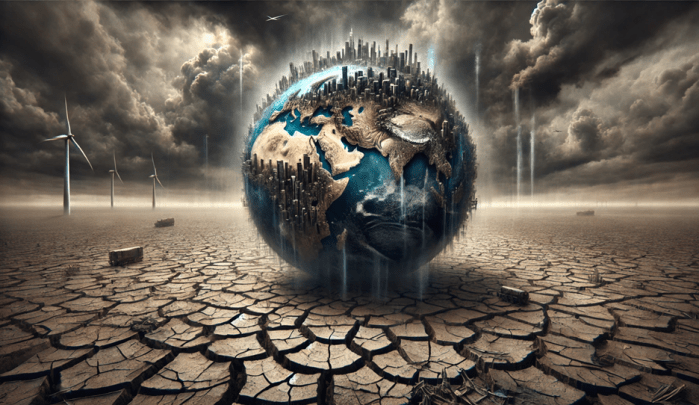
As someone who frequently emphasizes the power of convergence and the unpredictability of complex systems, Kaplan’s analysis resonates deeply with my thinking. He effectively critiques our traditional mental models and beliefs, suggesting they are often ill-suited for navigating rapid and exponential changes. Kaplan echoes a sentiment I strongly hold: we must urgently reorient our mental models, recognizing that linear frameworks from the past may not adequately guide us in today’s interconnected and rapidly evolving world.
Kaplan’s exploration of governance and stability, particularly his cautionary stance on the limits of mass democracy during acute crises, challenges readers to reconsider assumptions about resilience and adaptability. He argues that democratic systems, while ideal in stable times, may struggle to respond effectively to rapid and overlapping crises due to their deliberative nature. He also highlights the increasing necessity for pragmatic and adaptable leadership in times of crisis.
Kaplan also critically explores the role modern technology and digital media play in amplifying global fragility. He effectively highlights how our unprecedented interconnectedness can rapidly spread localized crises across borders, magnifying their scale and intensity. Additionally, his analysis of declining major global powers like the United States, China, and Russia underscores how cultural deterioration, leadership challenges, and systemic weaknesses compound their vulnerability. By grounding his arguments in literature and philosophy, notably referencing T.S. Eliot’s seminal poem The Waste Land, Kaplan provides a deeper, richer context for understanding the precariousness of our modern condition.
Perhaps most challenging is Kaplan’s notion of a permanent state of crisis – a world continuously in flux rather than occasionally disrupted. While I greatly value his candid realism, readers might appreciate a more extensive exploration of actionable pathways and potential positive outcomes alongside the stark realities presented. For instance, Kaplan briefly touches on the role of innovation and technological solutions in mitigating crises but does not extensively delve into how these might practically foster resilience. Balancing realism with insights into emerging possibilities could strengthen the narrative, offering greater guidance for those seeking proactive solutions.
Overall, “Waste Land: A World in Permanent Crisis” is an insightful, thought-provoking work that significantly contributes to conversations about our uncertain future. Leaders, policymakers, and thinkers will find Kaplan’s historical insights indispensable, reinforcing the need for continual learning, unlearning, and strategic reorientation in an ever-evolving global landscape. Although the book’s grim outlook may feel overwhelming at times, its call to rethink our assumptions and embrace adaptability is timely and necessary. Kaplan’s work serves as a stark reminder that, in a world of continuous crisis, the only constant is change – and our ability to navigate it will define our future. I have added the book to my library.
Discover more from Reimagining the Future
Subscribe to get the latest posts sent to your email.
 Reimagining the Future
An interesting analysis of modern events viewed through the lens of history. However, Kaplan’s book is marred by his antiIsrael bias. Israel’s defense in response to Hamas’ butchery of civilians and thousands of missiles was not a “brute-force response”. Mr. Kaplan should read the work of military historian John Spencer.
LikeLike