Much is said about the critical role that science and technology play in shaping the future. This area of convergence continues to have a profound impact on that future. I have described the importance of convergence in various posts in the past, highlighting the impact of other domains like geopolitics, philosophy, and society. Another key domain is the economy. Understanding the global economy is critical to illuminating possible futures. The role of Central Banks has been instrumental in navigating extreme events like COVID-19, as well as the various boom and bust financial cycles of the past.
(more…)Tag: Economics
-
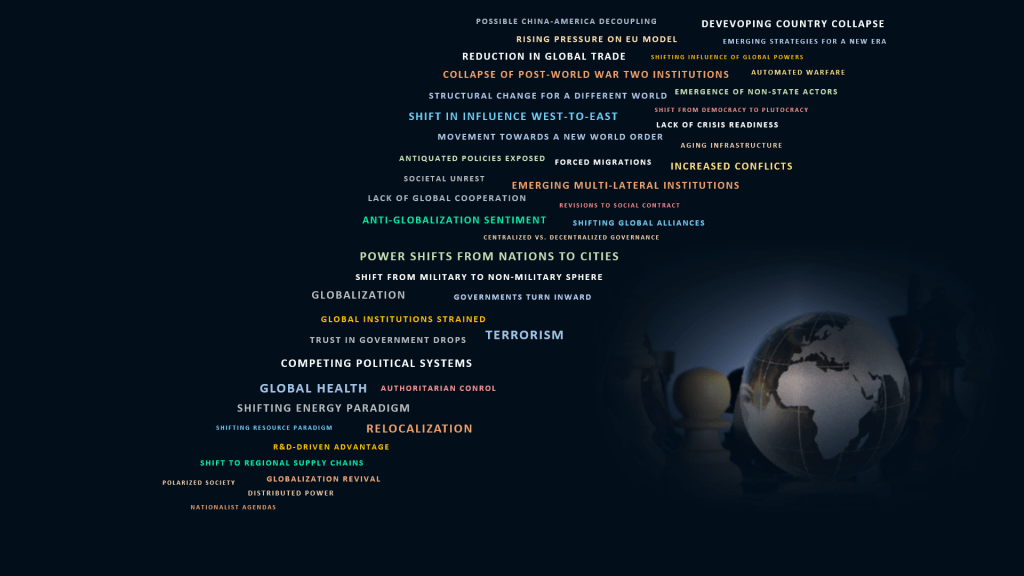
A Growing Number Of Building Blocks Make Prediction Impossible
I have been of the opinion that the number of building blocks across multiple domains makes prediction impossible. As a result, understanding the future is about rehearsing it versus predicting it. That ambiguity makes many uncomfortable. Humans like certainty, but we live in a world that is very uncertain. Many will argue that this has always been the case. But it should be increasingly clear that periods like this emerging phase transition have only occurred a handful of times in human history. We want to rely on methods that have proven effective in the past. We find comfort in applying those methods to drive a degree of certainty. One need only look at these building blocks to see rehearsal is the only way to identify possible futures.
(more…) -
The Profit Paradox
I finished another book and added it to my book library. The Profit Paradox was written by economist Jan Eeckhout and focuses on the decline of competition in the market. This decline, and the resulting dominance of large firms, has contributed to inequality, reduced innovation, and dropped the labor share of the economy.
(more…) -
COVID-19 And The New Great Depression
In a new book by James Rickards, the author explores both the COVID-19 pandemic and its economic impact. A prolific writer, Economist, and adviser, Mr. Rickards predicts years of economic turbulence ahead. In The New Great Depression, Mr. Rickards sees the pandemic through an historical lens, where crisis presents a gateway between one world and the next. With an eye towards history, he concludes that the Keynes practical definition of a depression fits, and we are now in a new depression that is more far reaching than a mere technical recession. Along the way, the author wades into controversial topics such as China’s role in spreading the virus and the lockdown that ensued (which he calls the biggest policy blunder ever).
(more…) -
Are We Heading Towards A New World Order?
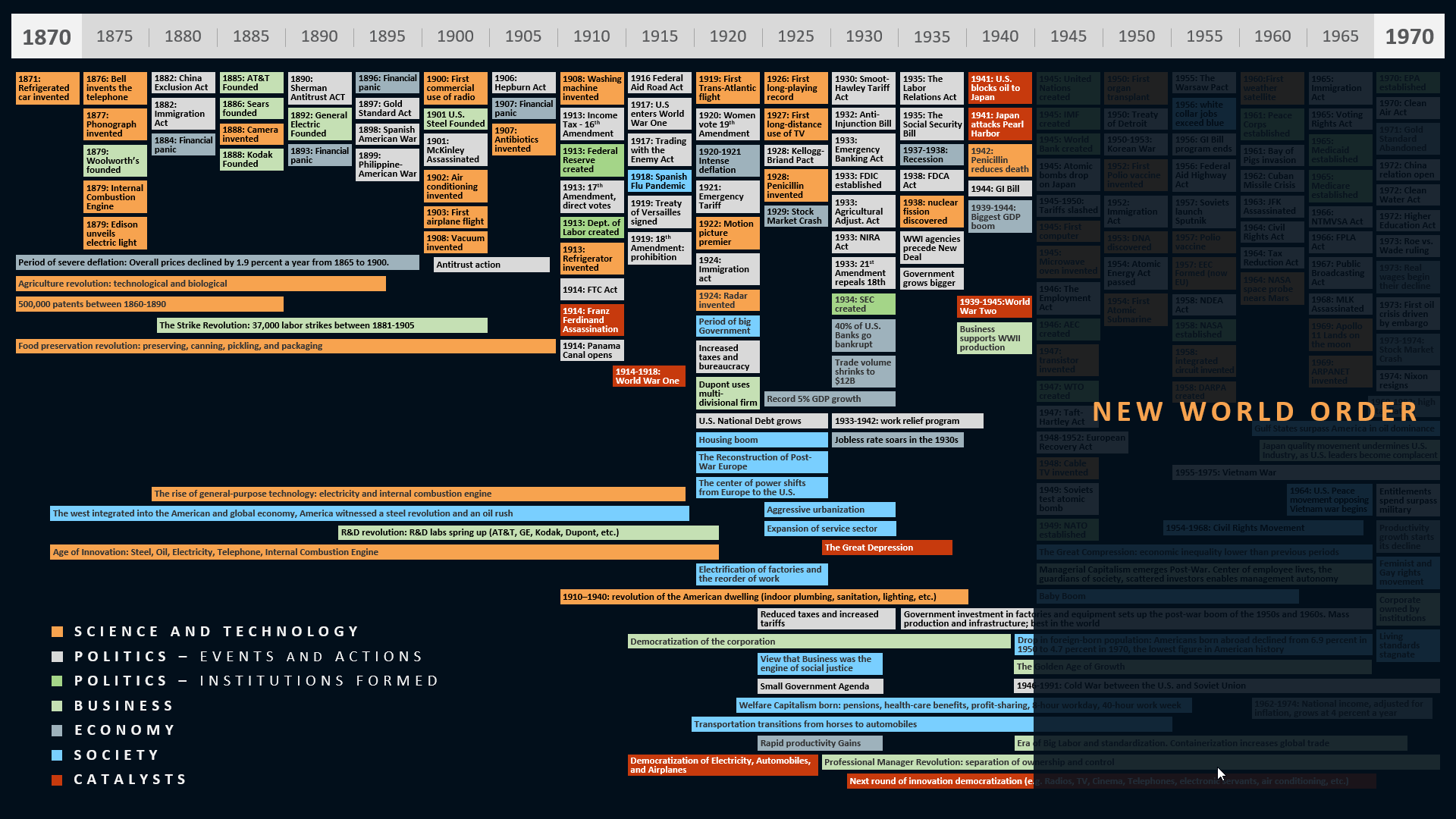
After World War Two, 730 delegates from all 44 Allied nations gathered in the U.S. at the Mount Washington Hotel in Bretton Woods, New Hampshire. The Bretton Woods Conference aimed to regulate the international monetary and financial order after the war ended. Held from July 1 to 22, 1944, agreements were signed and ratified by member governments, establishing the institutions that represented a new world order. This led to what was called the Bretton Woods system for international commercial and financial relations.
(more…) -
What History Tells Us About Deglobalization
In looking at a Post Pandemic Society, I took a Journey to the 1920s and 1930s to understand what history might tell us about our emerging future. I have been amazed at the eerie similarities between our present day and that period a century ago (see visual below). If anyone is interested in exploring the cycles of history, I highly recommend the book The Fourth Turning. In the meantime, this recent Article explores a similar comparison to that time in history with a focus on deglobalization. Per the article:
“The post-pandemic world economy seems likely to be a far less globalized economy, with political leaders and the public rejecting openness in a manner unlike anything seen since the tariff wars and competitive devaluations of the 1930s.”
-
Assessing A Post Pandemic Future: A Video
What might a post-pandemic society look like? In a Recent Post, I attempted to address that question by taking a journey backward to a similar time; exactly a century ago. What does a backward journey have to do with a post-pandemic society? The answer lies in a famous quote:
“The further backward you look, the further forward you can see” Winston Churchill
My colleagues (Kevin Mulcahy, Rose Rodriguez, and April Harris) created a video that captures the Blog Content: A journey to the past, and then a look ahead. You can find other videos that focus on a reimagined future on this YouTube Channel.
-
Coronavirus: Permanent Change? 34 Big Thinkers Explore the Possibilities
While the immediate focus of our global health crisis remains on the present, as we approach the other side, many will focus on a post-pandemic future. Painting pictures of possible futures was already critical in this time of rapid change; the pandemic elevates the urgency. I have been sharing the perspectives of many global thinkers in the interest of providing foresight to those who will need it when the focus shifts. A virtual session focused on a post-pandemic society is being planned, and I will likely participate. In discussing that possibility, I was presented with this Article.
-
Is The Canary Dead?
In 2018 I shared a video that I use in presentations titled The Great Reset. The video features economist Tyler Cowen as he describes our current trajectory and the possibility of a great reset. He has talked about strong indicators that this great reset is already underway – and that was before the world began to envision A Post Pandemic Society. Mr. Cowen thinks about these indicators as canaries in the coal mine. As he describes it, miners used to take canaries with them to provide an alarm when levels of toxic gases were too high. The birds were much more susceptible to the gases and would show signs of distress – or even die – before the miners were in grave danger.
-
Capitalism Alone
I just added Capitalism Alone to my Book Library. Written by Branko Milanovic,
 the book chronicles the journey of capitalism towards the dominant economic system in the world. A major focus of the book is the comparison of Liberal Capitalism in the west yo Political Capitalism exemplified by China. Another book that instructs from a historical context – providing possible Guidance as we look forward. A great look into why communism and socialism failed, how they are linked, and what the future of capitalism might look like. The book abstract from Amazon is included below.
ABSTRACT
We are all capitalists now. For the first time in human history, the globe is dominated by one economic system. In Capitalism, Alone, leading economist Branko Milanovic explains the reasons for this decisive historical shift since the days of feudalism and, later, communism. Surveying the varieties of capitalism, he asks: What are the prospects for a fairer world now that capitalism is the only game in town? His conclusions are sobering, but not fatalistic. Capitalism gets much wrong, but also much right―and it is not going anywhere. Our task is to improve it.
Milanovic argues that capitalism has triumphed because it works. It delivers prosperity and gratifies human desires for autonomy. But it comes with a moral price, pushing us to treat material success as the ultimate goal. And it offers no guarantee of stability. In the West, liberal capitalism creaks under the strains of inequality and capitalist excess. That model now fights for hearts and minds with political capitalism, exemplified by China, which many claim is more efficient, but which is more vulnerable to corruption and, when growth is slow, social unrest. As for the economic problems of the Global South, Milanovic offers a creative, if controversial, plan for large-scale migration. Looking to the future, he dismisses prophets who proclaim some single outcome to be inevitable, whether worldwide prosperity or robot-driven mass unemployment. Capitalism is a risky system. But it is a human system. Our choices, and how clearly we see them, will determine how it serves us.
-
A Future Thinking Canvas
Our exponential pace is due in part to the overwhelming number of building blocks available to innovate. Understanding how these building blocks combine provides a glimpse into possible futures. In this visual, dots connect to portray the building blocks that are likely to extend our healthy lives – a key emerging future scenario.

-
Techno-Optimist or Techno-Pessimist?
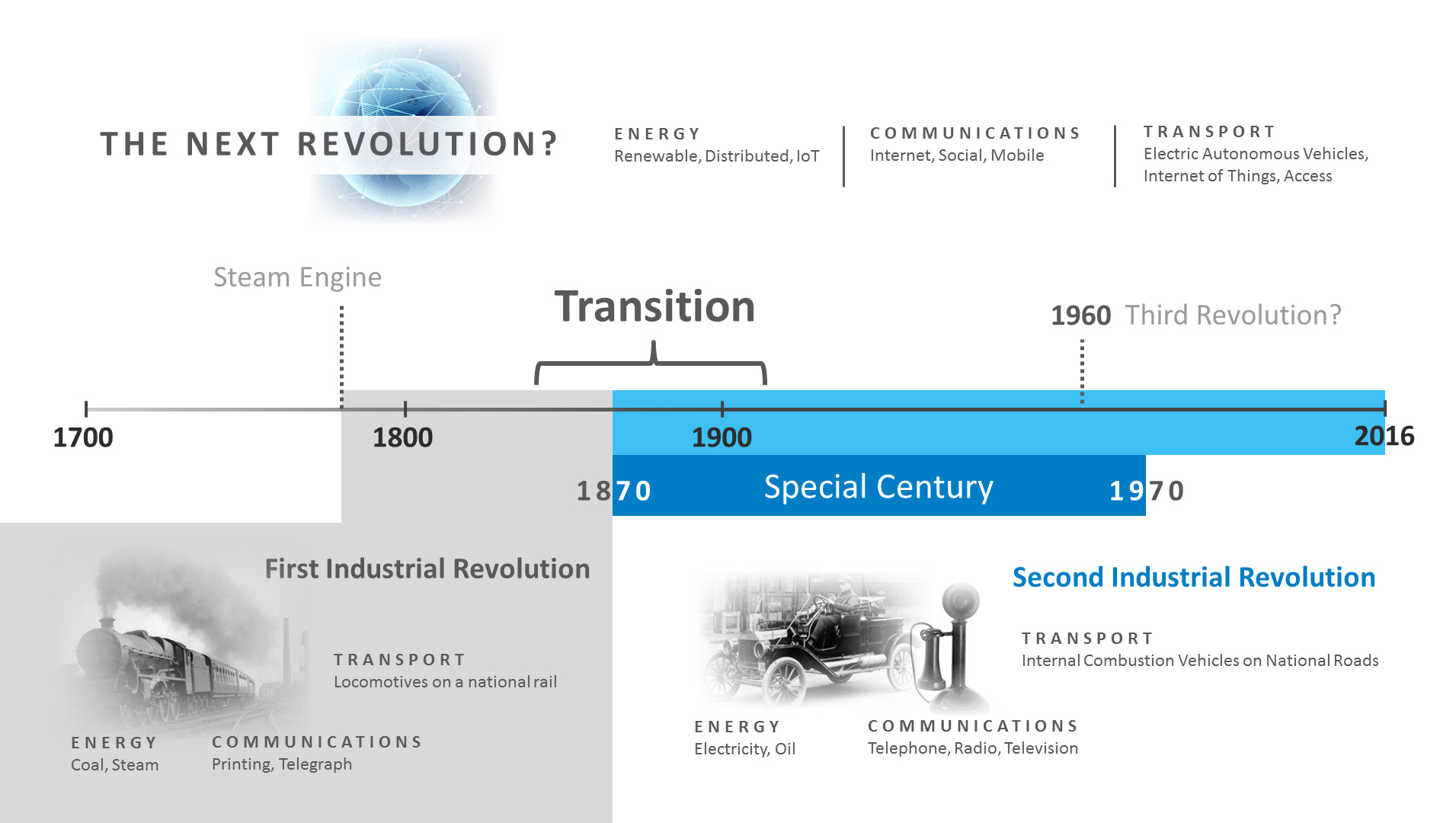
A recent book by Robert J. Gordon titled The Rise and Fall of American Growth shines a light on technological innovation and its past and future impact on growth. The premise of the book is that the innovations of the special century (1870 – 1970) cannot be replicated. As such, the author does not envision a return to growth for America (hence the title). The book is very well written, and I will touch on aspects of it in future posts. For this post, I’d like to gauge the reader’s level of optimism or pessimism.

