Are you curious, imaginative, and collaborative? If so, you have what it takes to be a scenario planner. This brilliant video via Peter Schwartz is a must see.
(more…)Author: Frank Diana
-
Living In Uncertain Times
The title of an upcoming presentation I will deliver next week is “Adapting to Uncertainty.” It should be very clear by now that we live in extremely uncertain times. I maintain that the world has not been this uncertain since a series of twentieth century catalysts established our modern day. The reason lies in the similarities between our current times and that period decades ago. The world back then experienced uncertainty across multiple domains: science, technology, society, geopolitics, economics, and business. The breadth of change occurring across those domains made the period one of the most turbulent in human history. The uncertainty of our current world did not just emerge, it has been years in the making. As it did in that earlier period, the convergence of multiple forces created the current environment. In studying those forces, our ability to adapt became a central tenet of my thinking, alongside seeing the future and continually rehearsing it.
(more…) -
A Future Shaped By Generational Differences
(more…)Overall, in 2021, Gen X (anyone born from 1965 to 1980) spent the most money of any U.S. generation, with an average annual expenditure of $83,357
Preethi Lodha – How Americans Spend Their Money, By Generation -
A Conversation With Ameca – The Humanoid Robot
Ameca has already proven to be an impressive demonstration of state-of-the-art humanoid robots, with her uncanny ability to contort her face into extremely believable, human-like expressions, ranging from disbelief to disgust. Now, thanks to the power of GPT 3, Ameca is able to converse as well, in an impressive extension of what modern robots are capable of.
(more…) -

Digital Twins Reach A Tipping Point

I had the pleasure of joining Alan Shimel of Techstrong TV for a short Interview on digital twins. Our discussion explored the growing number of scenarios enabled by the convergence of multiple technologies. We discussed its application in the context of food and health in the short term, the Metaverse and smart cities in the medium term, and the off-planet economy in the long term. Alan does a great job with these interviews. You can explore several topics at Techstrong TV.
-
Purpose Plus Profit
I just finished reading my latest book titled Purpose + Profit. The book was written by Harvard professor George Serafeim. Being purpose-driven is no longer a brand or marketing gimmick, but a sea change driven by multiple forces. The book provides data to support the coexistence of both purpose and profit. In fact, it makes the case that purpose-driven companies have better outcomes. In 2017, I spoke about the need for a hybrid of purpose and profit. It is refreshing to read the many examples of how that exact scenario is playing out. Even more encouraging is the advancement in available data that allows us to measure impact – something the author calls impact weighted accounting. I recommend the book and have added it to my library. The Amazon abstract is included below.
(more…) -
Robot Shows A Wide Range Of Facial Expressions
When I first posted a video of Ameca defending her personal space, the reaction ranged from fascinating to creepy. I would expect a similar reaction to this new video released by Engineered Arts. They have been working on teaching Ameca a wider range of facial expressions, with twelve new actuators added. See for yourself.
(more…) -
The Final Stages Of The Fourth Turning
Update July 19, 2024: since I posted this in 2022, surviving author Neil Howe launched a follow up book last year titled The fourth Turning is Here. The number of visits to this original post has ramped considerably, signaling a resonance with the books message. As a result, I recently posted additional thoughts on the topic here.
It was 2019 when I finished a book titled The Fourth Turning. I found myself referring to it a couple of weeks ago during a conversation about the cycles of history. I went back to the book after our discussion given the many changes the world experienced since I added it to my library. The repeated cycles of history described by the book remain both fascinating and ominous.
(more…) -
Digital Twins Have Evolved
I had the pleasure recently of talking to Fernando Guarneros Olmos about the evolving world of digital twins. Fernando is a journalist with a special interest in business related to technology and video games. Our discussion was captured in an article titled Digital twins also help prevent famine.
(more…) -
Solving Humanities Greatest Challenges
Every so often, the knowledge base of society expands in a way that can be felt across multiple domains. When science pushed technology to new heights starting in the 1870s, it put society on a path towards transformative change. With science continuing to produce amazing breakthroughs in a synergistic relationship with technology, it feels much like that period so long ago. Take a look at the headlines from the past week:
(more…) -
Why Ecosystems? Why Now?
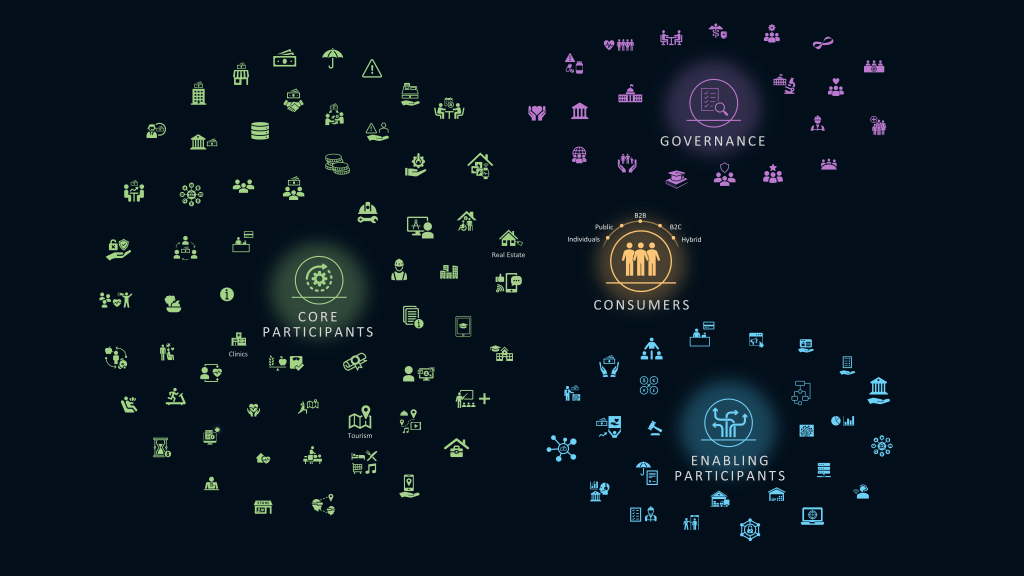
For at least seven years, the concept of ecosystems has been discussed and defined in various ways, while sometimes applied in a context that dilutes its eventual impact. At the highest level, an ecosystem is a network of connected stakeholders interacting in ways that create and capture value for all participants. Why has this ecosystem phenomenon emerged now and why do people expect it to drive structural change? Once again, history may provide an answer.
(more…) -
The New Fire
I just finished reading the latest addition to my book library. The New Fire was written by Ben Buchanan and Andrew Imbrie. The book explores artificial intelligence (AI) through the lens of geopolitics, specifically, the prospects for democracy versus autocracy. A worrying possibility is highlighted in the book; that AI will do more for autocracy than democracy. In comparing artificial intelligence to fire, the authors make a comparison that I explored in a recent poll. Fire is very destructive, but as the authors state, it is also the basis for civilization. Humans learned to tame the destructive nature of fire, while harnessing its power. That is the precise analogy to AI that the book studies.
(more…) -
Relocalization
Are there other forces lurking that could indeed lead to relocalization? Might a world where our food, energy, and products are created locally drive deglobalization? An open question with massive implications. Relocalization is a geopolitical building block – one of many that contribute to future thinking exercises.
(more…) -
The Changing Human Life Cycle
Given the recent focus on demographics, I went back to review a book in my library titled “The Great Demographic Reversal.” In a post that reviewed the book, I mentioned that the authors state several times that their findings are controversial and counter to the views of mainstream economists. By way of review, the authors concluded that the future is one of:
(more…) -
Deglobalization
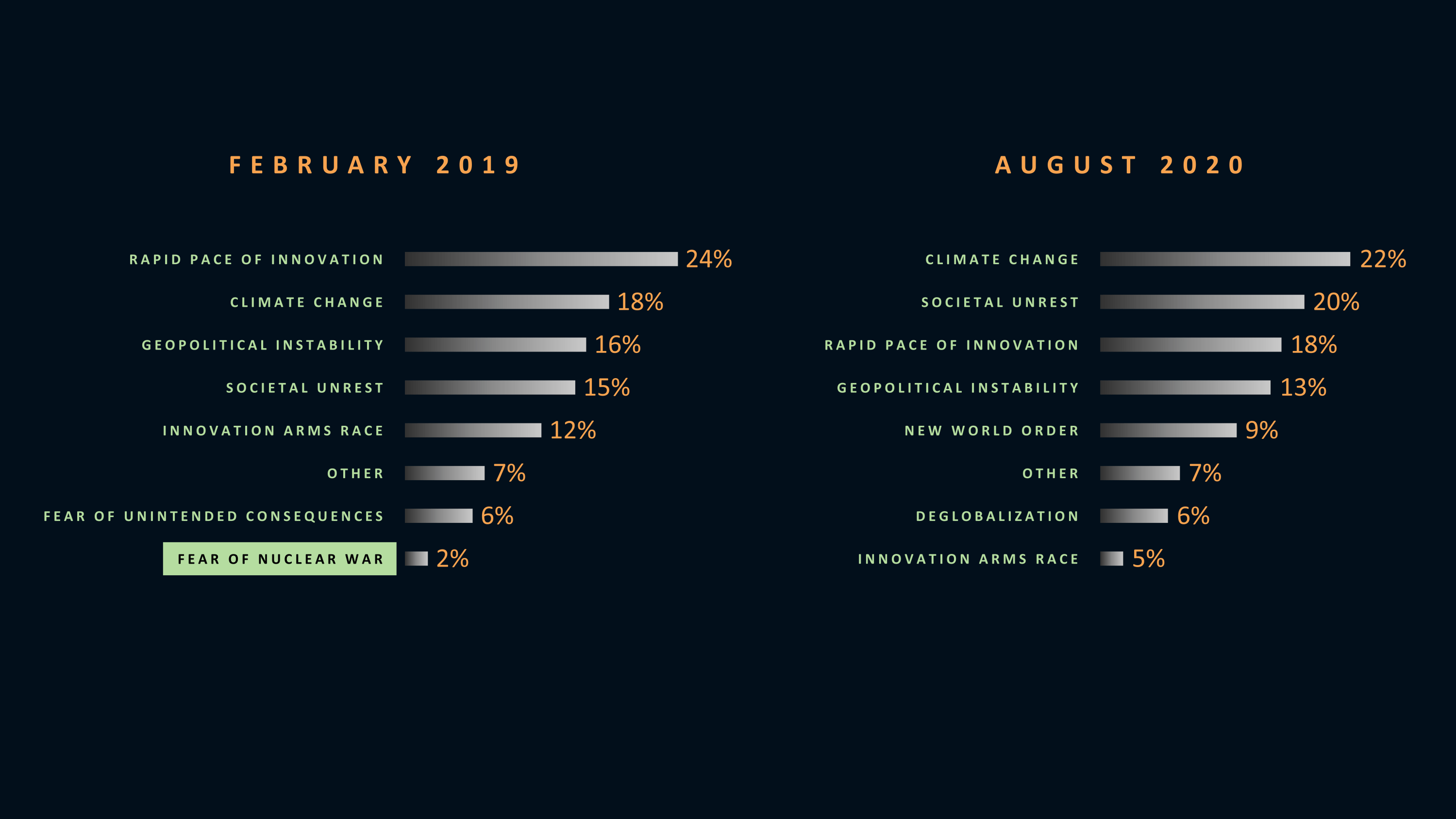
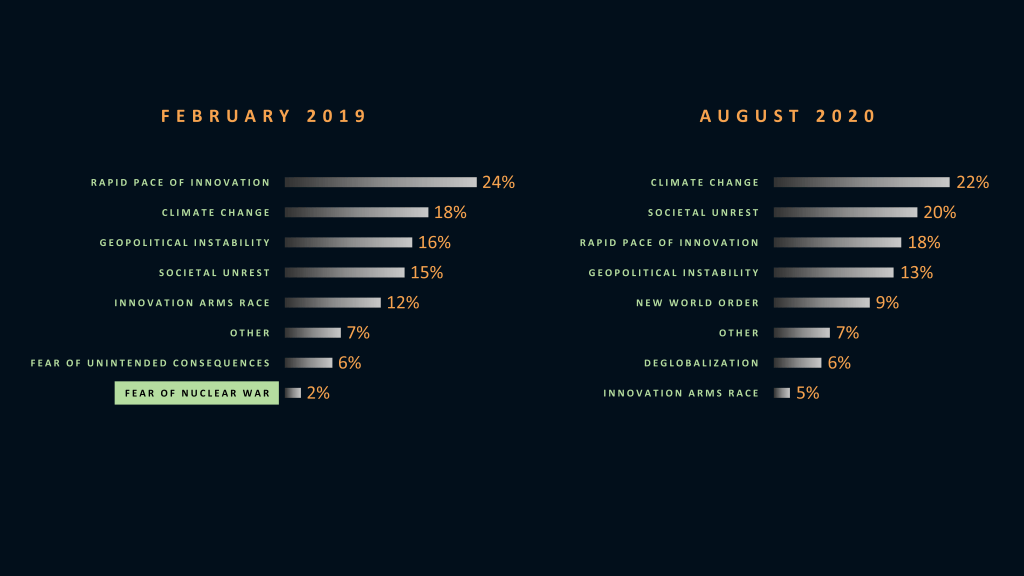
Deglobalization is a geopolitical building block with massive implications as it converges with its societal counterparts. In my August 2020 poll on the catalysts that drive change, deglobalization entered the list. It was not surprising, given the supply chain concerns that emerged in the early days of the pandemic. But is deglobalization likely? This recent article explores that question.
(more…) -
The Two Sides Of Population Growth
My last two posts focused on labor shortages and population growth; two critical societal building blocks that converge in ways that shape our future. Continuing with that theme, this recent article looks at these building blocks through the lens of China.
China has edged over a demographic precipice: Its population has begun to shrink. United Nations data published on Monday showed that the long-anticipated tipping point came in the first half of the year; it’s a significant moment for a country whose large population helped transform it into a manufacturing powerhouse
(more…) -
The Looming Labor Shortage
In a post yesterday on population growth, I shared a fascinating visual that looked at the age structure of our population in 2017 versus projections for 2100. The tweet is shared again below, click on arrow in the visual to see the changes.
Population size is important in several ways. Historically, experts worried about societies ability to sustain an ever-growing population. With climate change issues mounting, those concerns remain. However, a scenario where our global populations shrink brings a different set of challenges. As this article on projected labor shortages describes, the growth rate of an economy is determined by two factors: growth in hours worked and growth in productivity. The sustained economic growth of the last 250 years can be attributed to a growing skilled workforce (education played a major role) and major innovations that drove productivity.
(more…)

