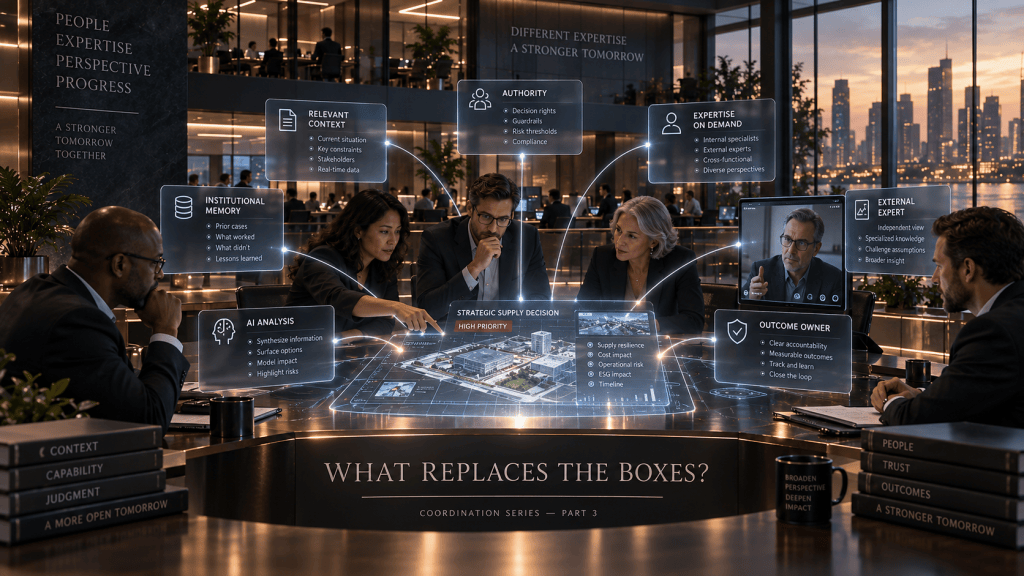
Part three of a three-part series on the changing architecture of coordination.
In Part One, I argued that AI is changing the economics of coordination. Some of the work that once had to be embedded permanently inside jobs, departments, and reporting relationships can increasingly be assembled around a need. Part Two looked at the other side of that shift. Those structures were carrying much more than the visible work. They were also carrying context, accountability, and the means by which people developed judgment.
(more…)
